Skip to content
12 Axes Test

Secede: Meaning and Examples of Secession

To secede is to formally withdraw from a political union, such as a state, a federation or a country, usually to become independent.

Where do you stand?

Statement 1 of 3

A region whose people vote for independence should be free to ⁠.

Nothing is sent anywhere.

What does secession mean?

Secession is the act of a region or group leaving the country it belongs to. It can be negotiated and peaceful, as with the Czech and Slovak split in 1993, or contested and violent. Most national constitutions do not provide a right to secede, and international law treats a state’s territorial integrity as a core principle.

Debates over secession usually set a region’s right to self-determination against the country’s right to remain whole. Examples range from the American Civil War, which began when Southern states tried to secede, to Scotland’s 2014 independence referendum and Catalonia’s contested 2017 referendum.

Who were the key historical thinkers behind secession?

Influential figures in the 12 axes thinker pool who advocated, analyzed or shaped ideas around this concept.

James Madison

James Madison

Statesman · 1751–1836

Principal drafter of the US Constitution and the Bill of Rights, and the fourth president, who argued that dividing and balancing power protects liberty.

Federal vs UnitaryFederal

“Federalist No. 39 calls the new government neither wholly federal nor wholly national.”

Henry David Thoreau

Henry David Thoreau

American essayist & naturalist · 1817–1862

An American essayist who lived at Walden Pond, spent a night in jail rather than pay a poll tax, and wrote Civil Disobedience on resisting unjust government.

Federal vs UnitaryFederal

“Individual conscience and local autonomy supersede national state edicts.”

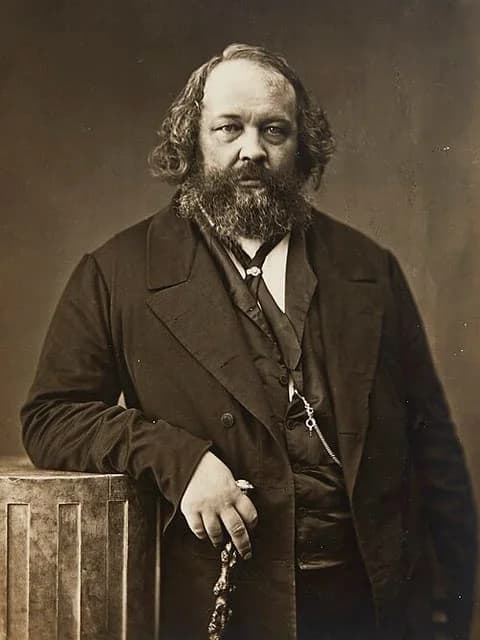
Mikhail Bakunin

Mikhail Bakunin

Russian anarchist · 1814–1876

A Russian revolutionary who argued that the state and organised religion must be abolished together, and who fell out with Marx in the First International.

Federal vs UnitaryFederal

“Complete destruction of the sovereign state in favor of free autonomous communes.”

What are some examples of secession?

Real cases that people point to when they use the word.

  1. Czechoslovakia’s 1993 “velvet divorce” into the Czech Republic and Slovakia, which was negotiated and peaceful.

  2. Scotland’s 2014 referendum, agreed by the UK government, in which voters chose to stay by 55% to 45%.

  3. Catalonia’s 2017 referendum, which Spain’s courts ruled unconstitutional.

  4. South Sudan’s independence from Sudan in 2011 after a referendum.

What are the arguments for and against secession?

Reasonable people disagree about this. These are the strongest points made on each side.

Arguments in favor

  • Supports self-determination: people should be able to choose their own government
  • Can resolve long-running conflicts between regions and the center

Arguments against and open questions

  • Can break up economies, trade ties and shared institutions
  • Raises questions about minorities in the new state and about which regions might follow

How does secession show up in the 12 axes test?

The test asks about it in a statement. Your answer moves one axis score.

Agreeing that a region whose people vote for independence should be free to secede moves your score toward the Federal side of the Federal vs Unitary axis, because it favors regional self-rule over a single central authority.

Which way agreeing pushes the score

FederalUnitary

Agreeing with a statement about secession moves your score toward Federal.

Secede: frequently asked questions

Secession is the process of leaving an existing state or union. Independence is the resulting condition of being a self-governing state. A region that secedes aims to achieve independence.

It depends on the country. Most constitutions do not allow it, a few set out a procedure, and international law neither clearly forbids nor guarantees it. Many peaceful cases have relied on an agreement with the existing government.

On the 12 axes, this term sits on the Federal vs Unitary axis, which asks: “Should regions have powers of their own, or should one national government set the rules for everyone?” Agreeing with a statement about it moves your score toward Federal.

Something else on your mind? Get in touch

Where do you stand on Federal vs Unitary?

Three statements gave you a first reading. The full test scores all twelve axes and finds your closest countries and ideologies.