12 Axes Countries
Enter your 12 axes scores and see which countries match them best. Each of the 131 countries here has an estimated profile on the same twelve axes, so you can compare your result with the world.
Your 12 scores
Drag each slider to your result. If you took the test on another site, enter the percentages it gave you. Matches update as you move.
Governmental
Diplomatic
Economic
Societal
Closest matches
Matches compare your scores with editorial estimates. They are for discussion, not a verdict. How matching works
Take the test insteadHow does the country match work?
Three steps, all inside your browser.
- 1
Enter your twelve scores
Use the sliders to set the percentage you got on each axis, from this test or from another version of the test.
- 2
Compare with every country
Your scores are compared with each country's estimated profile, axis by axis. One big gap counts for more than several small ones.
- 3
Read the closest matches
Countries are ranked by match percentage. Open any of them to see its full profile and the axes where you differ.
Browse all countries by region
131 countries
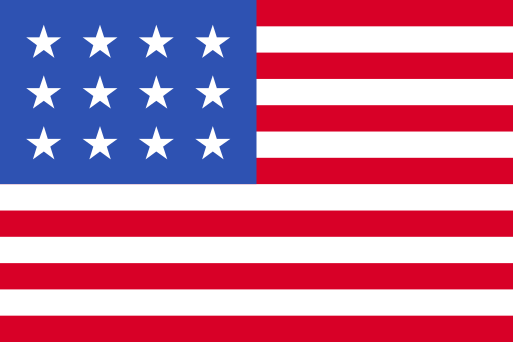 United StatesFederal presidential republicA federal republic with strong states, a written constitution with broad free-speech protections, a large military and a market-oriented economy.
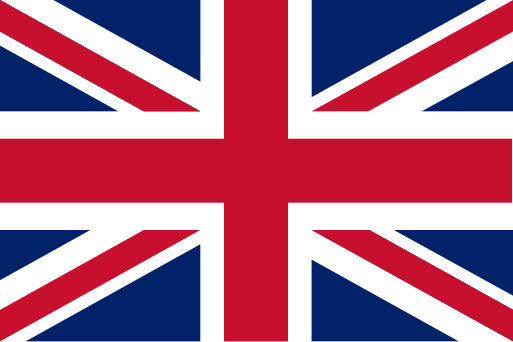 United KingdomParliamentary constitutional monarchy with devolved governmentsA unitary state with devolved parliaments in Scotland, Wales and Northern Ireland, an unwritten constitution and a long tradition of parliamentary sovereignty.
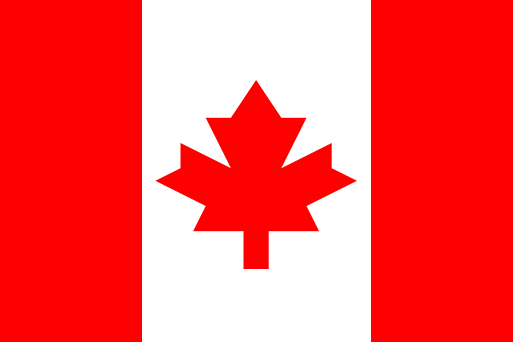 CanadaFederal parliamentary constitutional monarchyA federation of ten provinces and three territories with official multiculturalism, universal health coverage and two official languages.
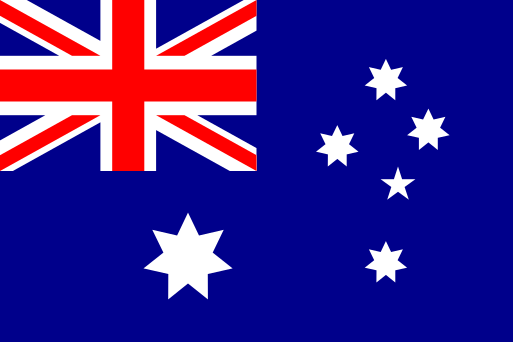 AustraliaFederal parliamentary constitutional monarchyA federation of six states and several territories with compulsory voting, a points-based immigration system and an official policy of multiculturalism.
 GermanyFederal parliamentary republicA federation of 16 states with powerful courts, a social market economy and a postwar political culture that is wary of concentrated power.
 SwedenParliamentary constitutional monarchyA generous welfare state with a large public sector, strong secular norms and, after two centuries of non-alignment, NATO membership since 2024.
 NorwayParliamentary constitutional monarchyA wealthy welfare state with a state-owned oil fund, outside the EU but closely tied to it through the European Economic Area.
 FinlandParliamentary republicA consensus-minded Nordic welfare state with universal conscription, a long border with Russia and NATO membership since 2023.
 NetherlandsParliamentary constitutional monarchyA trading nation known for coalition governments, liberal social policy and an open economy, with an ongoing debate about integration.
 SwitzerlandFederal republic with direct democracyA confederation of 26 cantons where citizens vote on laws several times a year and neutrality is a founding principle.
 SpainParliamentary constitutional monarchyA decentralized state of 17 autonomous communities with their own parliaments, where regional identity, especially in Catalonia and the Basque Country, is a central political question.
 ArgentinaFederal presidential republicA federation with a long tradition of Peronism and, since 2023, a government pursuing deep market reforms and spending cuts.
 BrazilFederal presidential republicLatin America’s largest country, a federation of 26 states with a very mixed population, an active evangelical movement and polarized politics.
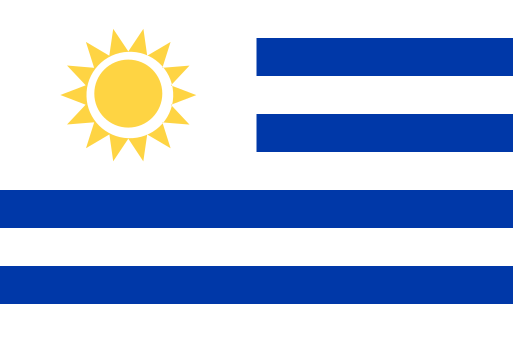 UruguayUnitary presidential republicOne of Latin America’s most secular and consolidated democracies, with early reforms on divorce, same-sex marriage and cannabis regulation.
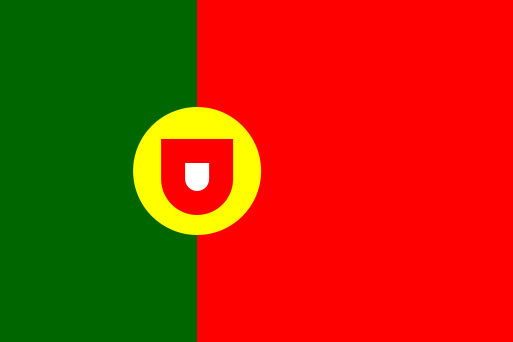 PortugalSemi-presidential republicA stable democracy since 1974 with a mixed economy, strong Atlantic and European ties and some of Europe’s most liberal social laws.
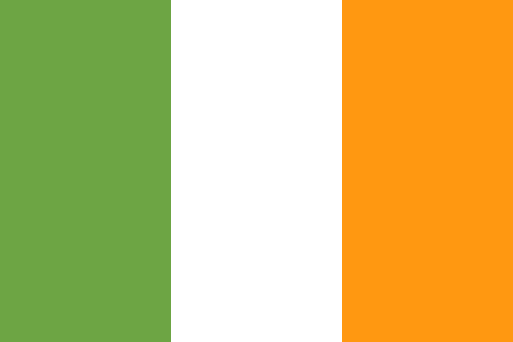 IrelandParliamentary republicA small, open economy with a tradition of military neutrality, a written constitution and rapid social change over the past generation.
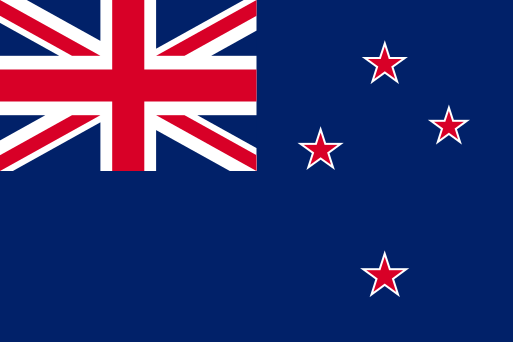 New ZealandUnitary parliamentary constitutional monarchyA single-chamber parliamentary democracy with proportional representation, a Treaty of Waitangi partnership with Māori and one of the world’s most open economies.
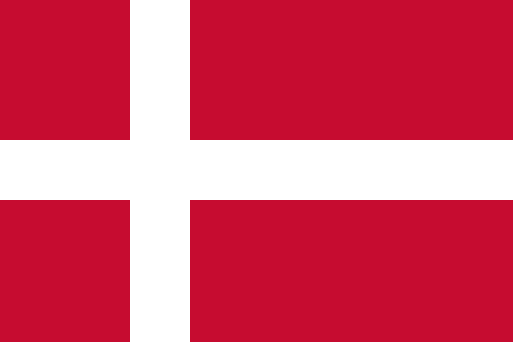 DenmarkParliamentary constitutional monarchyA high-tax welfare state with strong trust in institutions, open trade and one of Europe’s strictest approaches to immigration and integration.
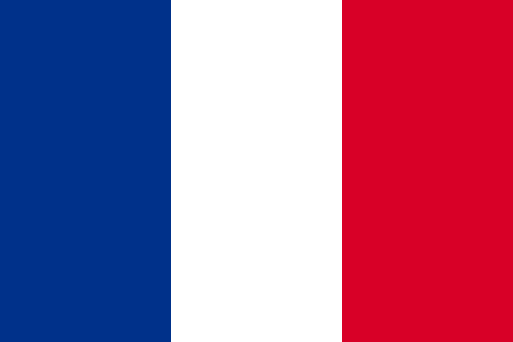 FranceSemi-presidential republicA centralized state built on strict secularism (laïcité) and a shared civic identity, with a large public sector and a strong role for the state in the economy.
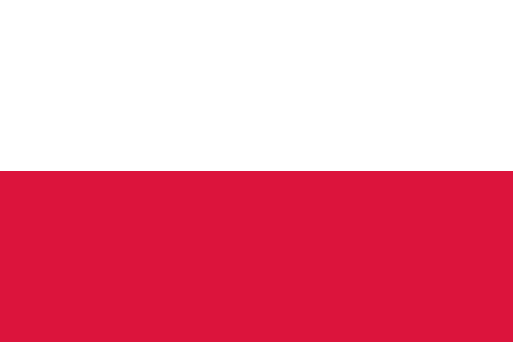 PolandSemi-presidential republicA large Central European democracy with a strong Catholic tradition, deep security concerns about Russia and a fast-growing economy.
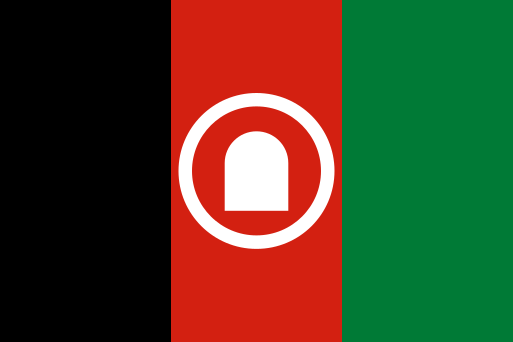 AfghanistanIslamic emirate (authoritarian)A country governed by the Taliban since 2021 under a strict interpretation of Islamic law.
 AlbaniaParliamentary republicA NATO member and EU candidate that moved from one of Europe’s most closed regimes to a market democracy after 1991.
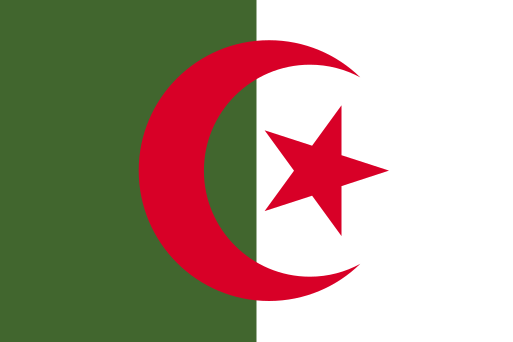 AlgeriaPresidential republicA large gas-exporting republic with a strong role for the military and the state in politics and the economy.
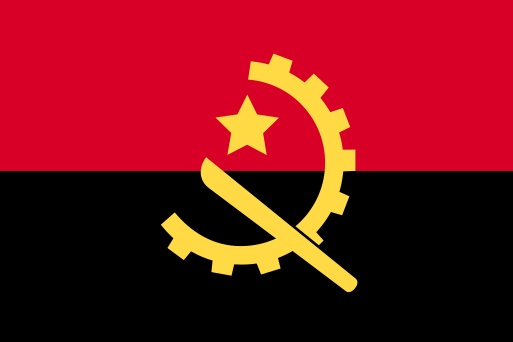 AngolaPresidential republicAn oil-exporting republic governed by the same party since independence in 1975.
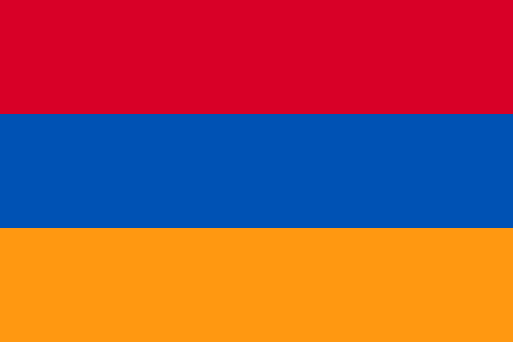 ArmeniaParliamentary republicA small landlocked republic that moved from a presidential to a parliamentary system in 2015 and is rethinking its security ties.
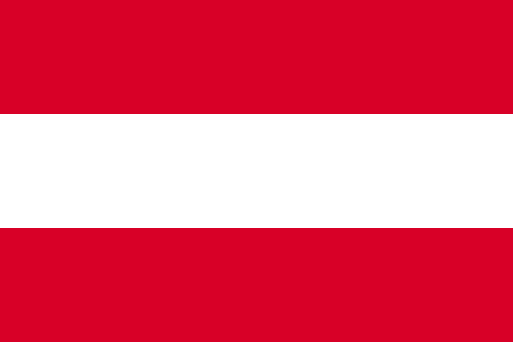 AustriaFederal parliamentary republicA neutral federal republic with a strong tradition of social partnership between employers, unions and the state.
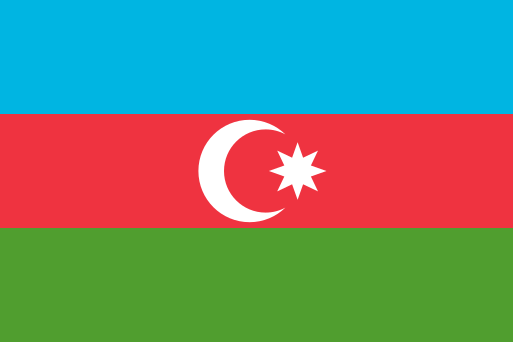 AzerbaijanPresidential republic (authoritarian)An oil- and gas-exporting state led by the Aliyev family since 1993, which regained control of Nagorno-Karabakh in 2023.
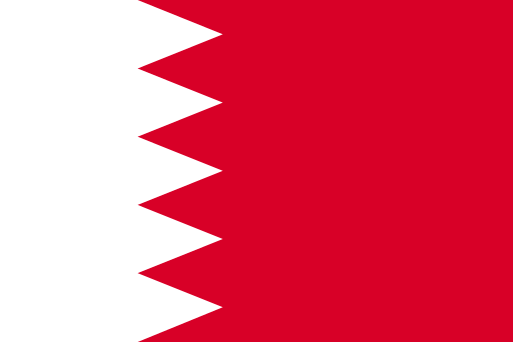 BahrainConstitutional monarchyA Gulf island kingdom led by a hereditary monarch, with a mixed Sunni and Shia population.
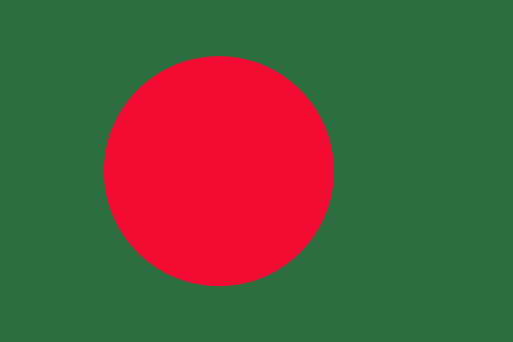 BangladeshParliamentary republicA densely populated Muslim-majority country with a secular constitutional tradition, where politics has been highly polarized and was reshaped by the 2024 uprising.
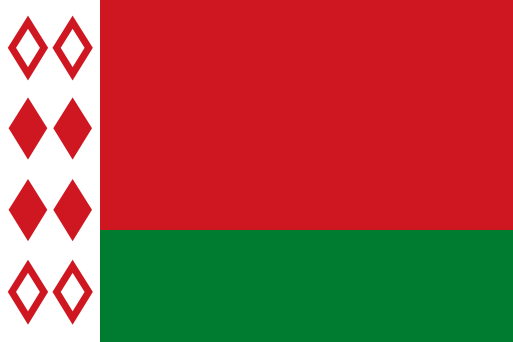 BelarusPresidential republic (authoritarian)A tightly controlled state led by the same president since 1994, with a large public sector and close ties to Russia.
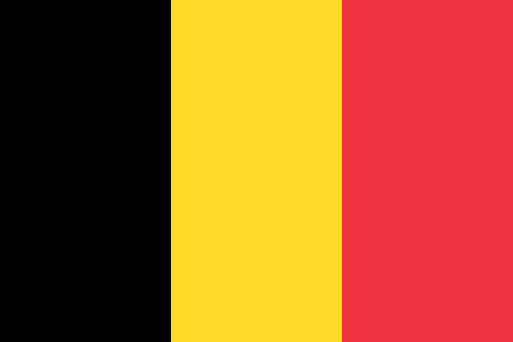 BelgiumFederal parliamentary constitutional monarchyA federation of Flemish, Walloon and Brussels regions and three language communities, where building coalitions is a national art.
 BhutanParliamentary constitutional monarchyA Himalayan kingdom that became a constitutional monarchy in 2008 and is known for measuring national progress by “Gross National Happiness”.
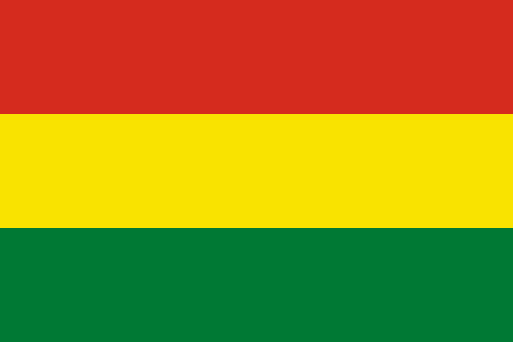 BoliviaUnitary presidential republic (plurinational state)A plurinational state that recognizes dozens of Indigenous peoples and has a strong tradition of state involvement in natural resources.
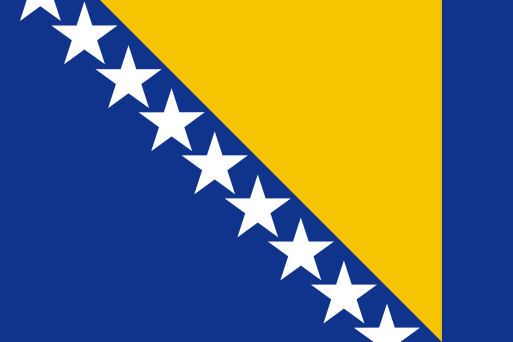 Bosnia and HerzegovinaFederal parliamentary republic with power-sharingA state of two entities and a three-member presidency, built on the 1995 power-sharing agreement that ended the war.
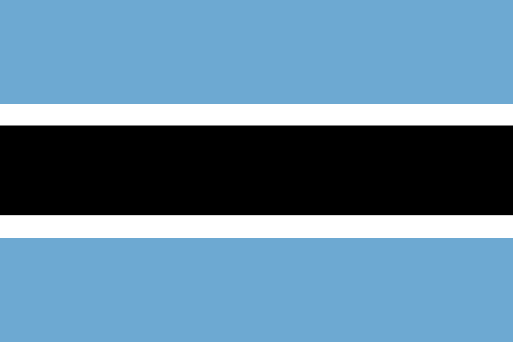 BotswanaParliamentary republicA diamond-rich, stable democracy that has held regular multiparty elections since independence in 1966, including a change of ruling party in 2024.
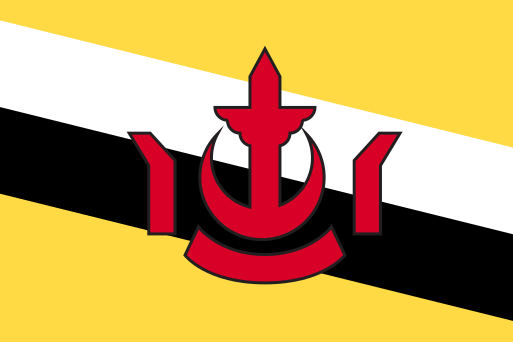 BruneiAbsolute monarchy (sultanate)A small, oil-rich sultanate with a hereditary ruler and a legal system that includes Islamic law.
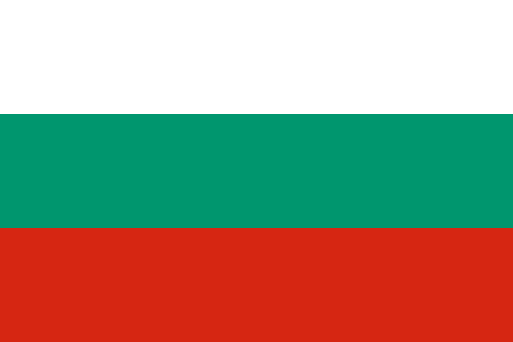 BulgariaParliamentary republicAn EU and NATO member with frequent early elections and persistent concerns about corruption.
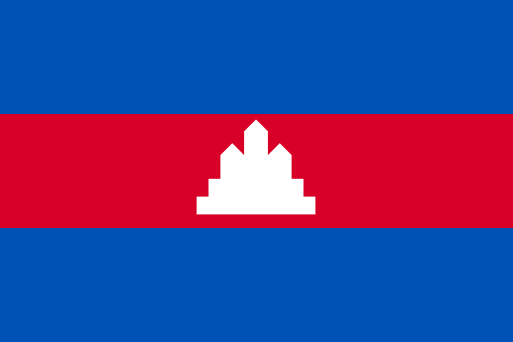 CambodiaConstitutional monarchyA kingdom where one party and a dominant leader family have governed for decades.
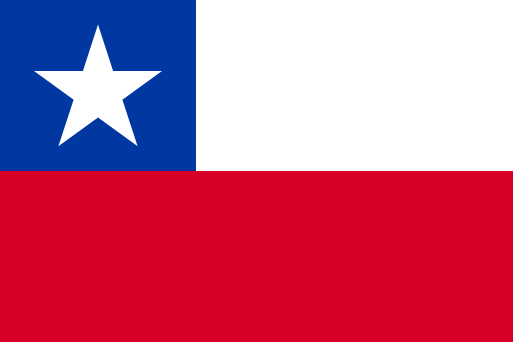 ChileUnitary presidential republicOne of Latin America’s most market-oriented economies, which between 2019 and 2023 held a national debate over rewriting its constitution.
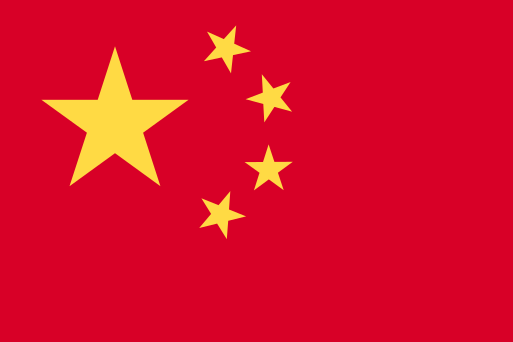 ChinaOne-party socialist republicA one-party state led by the Communist Party, with a mixed economy in which the state steers key sectors and the party has the final word on politics.
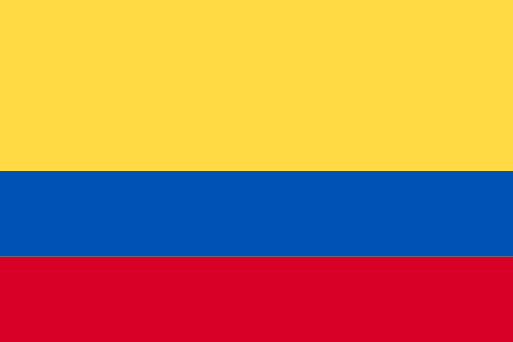 ColombiaUnitary presidential republicA decentralized unitary state still working through the aftermath of a long internal conflict and its 2016 peace agreement.
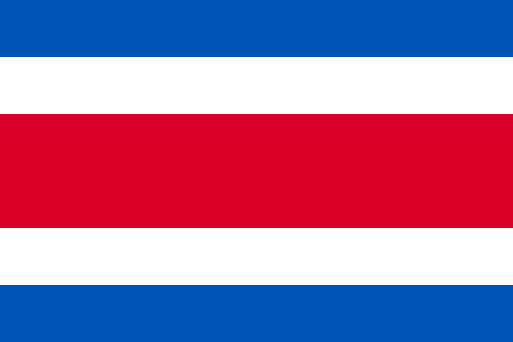 Costa RicaPresidential republicA stable democracy that abolished its army in 1948 and invests heavily in education, health and conservation.
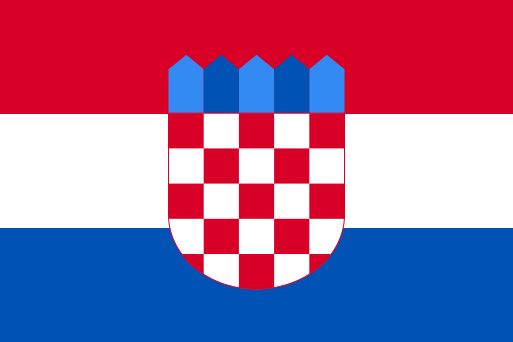 CroatiaParliamentary republicAn EU member since 2013 and euro-area member since 2023, whose politics balances Catholic conservatism with a tourism-driven economy.
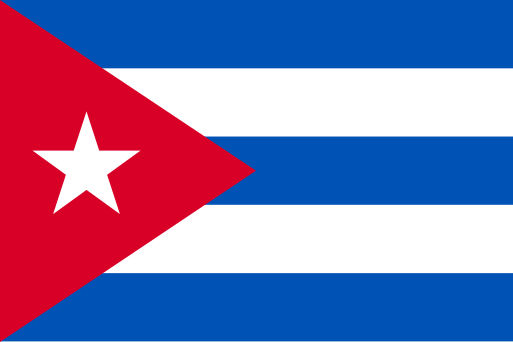 CubaOne-party socialist republicA single-party state with a planned economy, universal public health and education, and tight limits on political opposition.
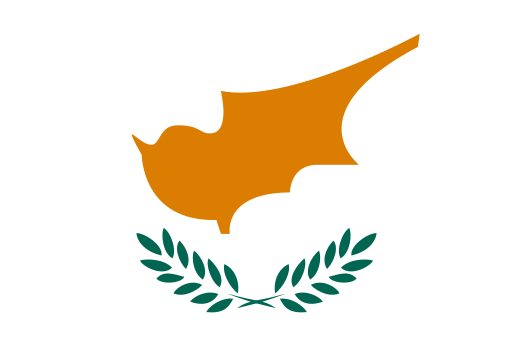 CyprusPresidential republicAn EU member whose politics is shaped by the division of the island since 1974.
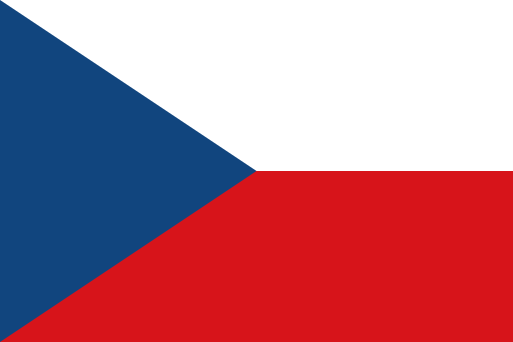 CzechiaParliamentary republicOne of Europe’s least religious countries, with an open, export-driven economy and a cautious attitude toward deeper EU integration.
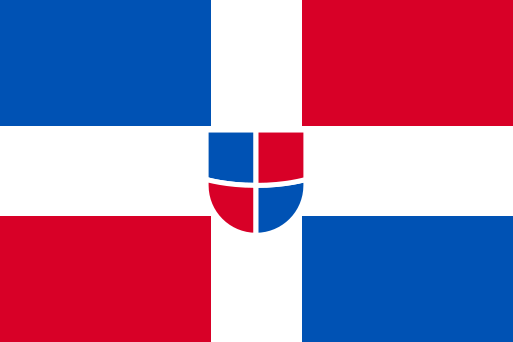 Dominican RepublicPresidential republicA Caribbean republic with a tourism-led economy and socially conservative attitudes.
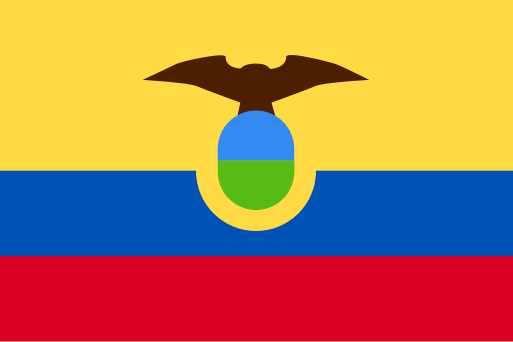 EcuadorUnitary presidential republicAn Andean republic that uses the US dollar and whose politics has been marked by security crises and sharp swings between left and right.
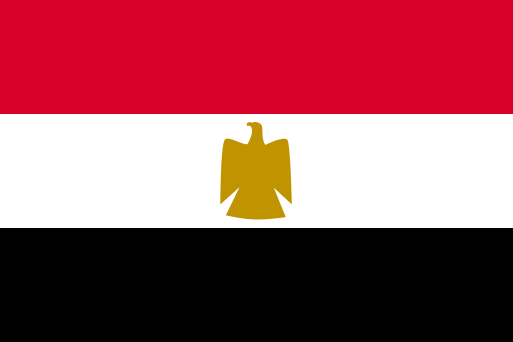 EgyptPresidential republicThe Arab world’s most populous country, with a strong presidency, a large military role in the economy and an important role for Al-Azhar in religious life.
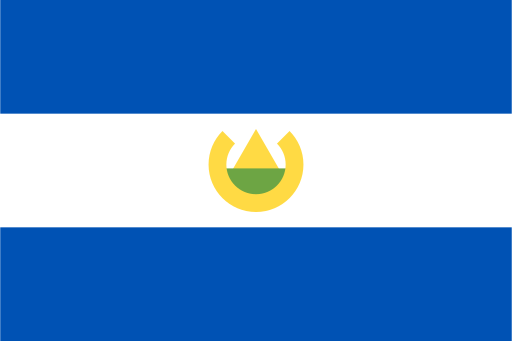 El SalvadorPresidential republicA small Central American republic whose government has pursued a sweeping crackdown on gangs, with sharp debate about rights and checks and balances.
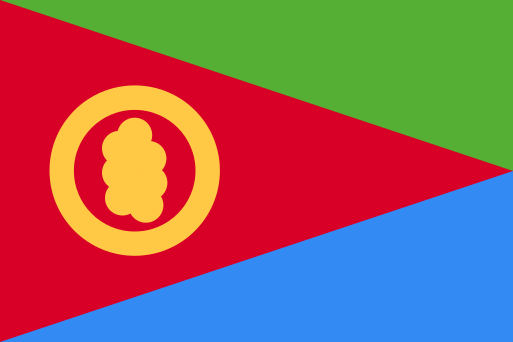 EritreaSingle-party presidential republic (authoritarian)A one-party state with no national elections since independence in 1993 and with mandatory national service.
 EstoniaParliamentary republicA digital-first state with a business-friendly tax system, one of Europe’s least religious populations and a strong focus on security.
 EthiopiaFederal parliamentary republicA federation organized around ethnic regions, with a long history of independence and a recent period of armed conflict.
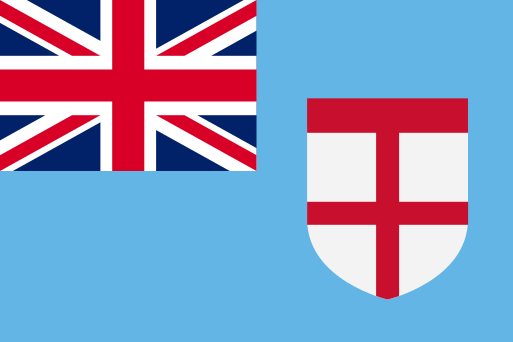 FijiParliamentary republicA Pacific island republic with a diverse population that has seen several coups and a return to elections.
 GeorgiaParliamentary republicA Caucasus country with an EU membership goal and a market-oriented economy, where tension has grown between the government and pro-EU protesters.
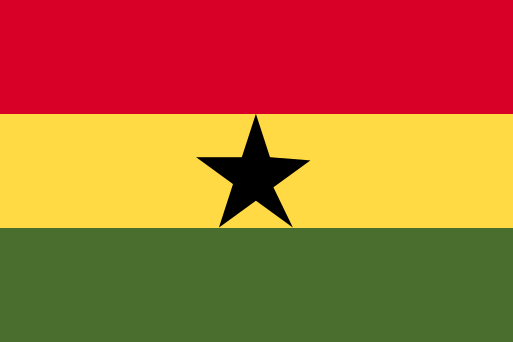 GhanaPresidential republicA stable West African democracy with peaceful transfers of power, a Christian-majority population and a growing economy.
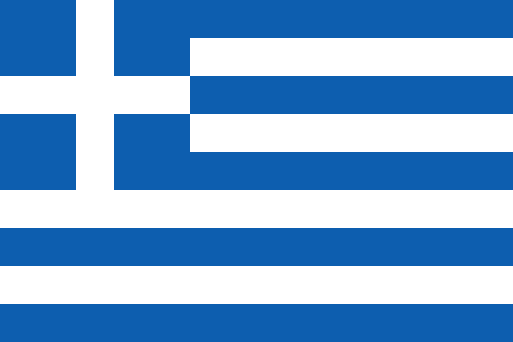 GreeceParliamentary republicA republic where the Orthodox Church has a constitutionally recognized place, and where the debt crisis reshaped politics in the 2010s.
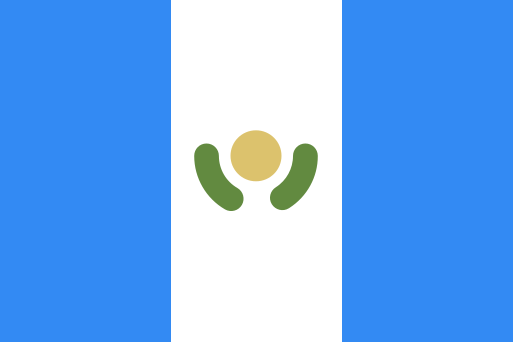 GuatemalaPresidential republicCentral America’s largest country, with a large Indigenous population, a socially conservative culture and a history of civil conflict.
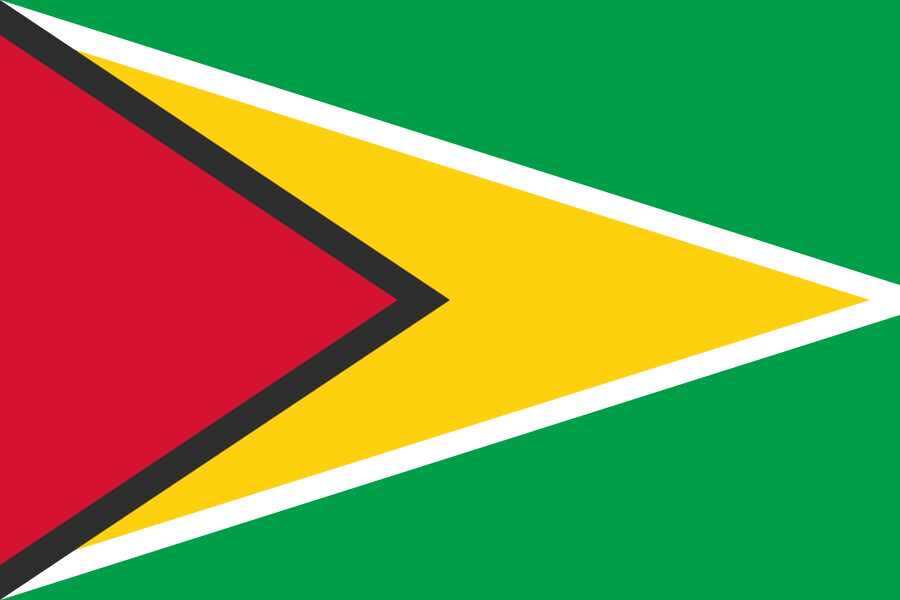 GuyanaPresidential republicA small South American country with a diverse population and a fast-growing economy since offshore oil began flowing in 2019.
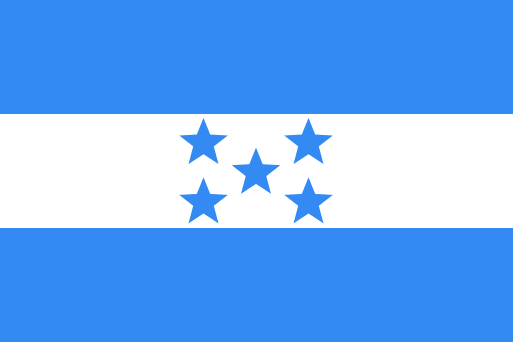 HondurasPresidential republicA Central American republic facing high violence and inequality, with socially conservative attitudes.
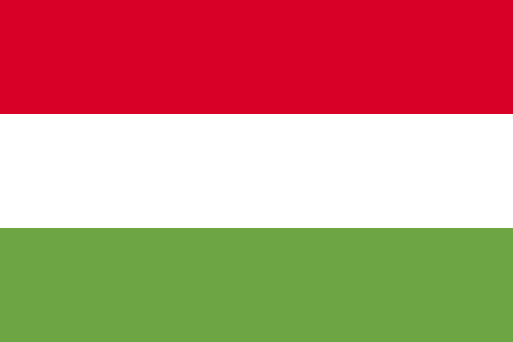 HungaryParliamentary republicAn EU member whose government from 2010 promoted an openly “illiberal” model of national and Christian conservatism, which critics said weakened checks and balances.
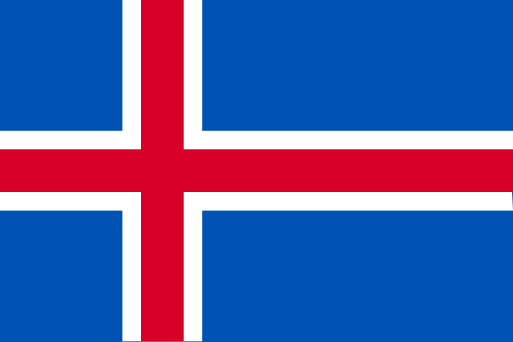 IcelandParliamentary republicA small island democracy with no standing army, one of the world’s oldest parliaments and high levels of gender equality.
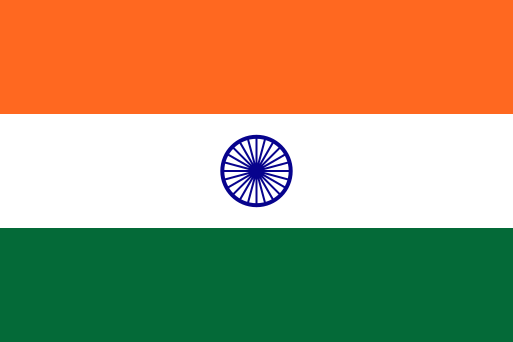 IndiaFederal parliamentary republicThe world’s most populous democracy, a federation of 28 states with great linguistic and religious diversity and a politically powerful central government.
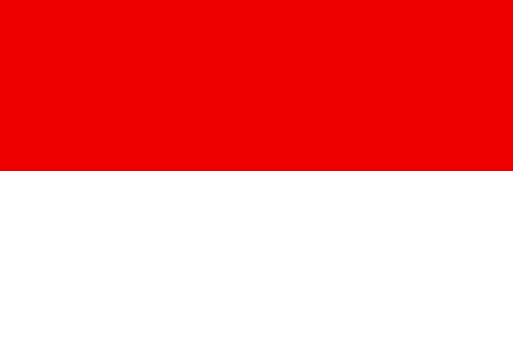 IndonesiaPresidential republicThe world’s largest Muslim-majority democracy, an archipelago of more than 17,000 islands whose national ideology, Pancasila, stresses unity in diversity.
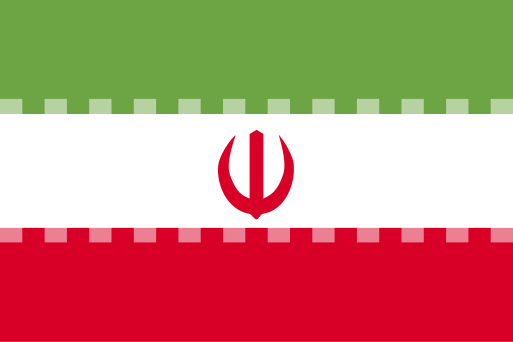 IranIslamic republicA republic with elected bodies working under a Supreme Leader and clerical oversight, where Islamic law shapes public life.
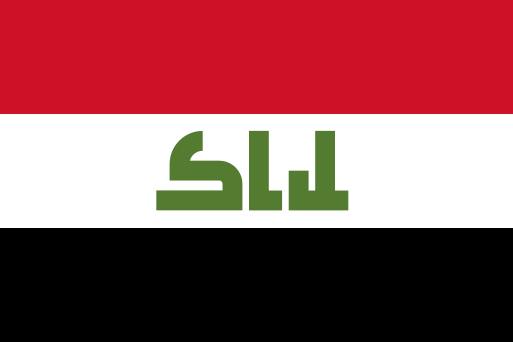 IraqFederal parliamentary republicA federation with a semi-autonomous Kurdistan Region and a sectarian power-sharing system established after 2003.
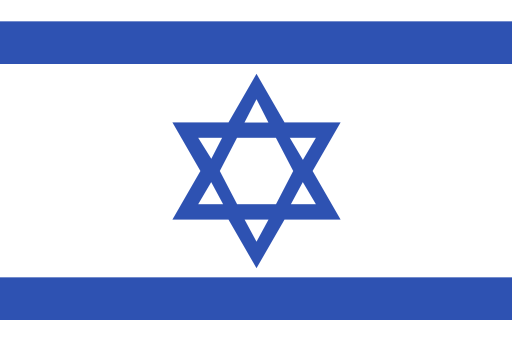 IsraelParliamentary republicA parliamentary democracy with no single written constitution and a conscript army, shaped by security concerns and by the role of religion in public life.
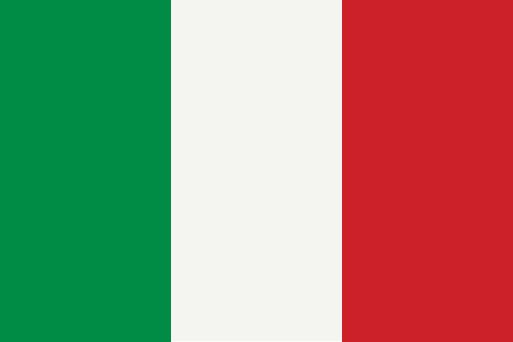 ItalyParliamentary republicA regionalized republic with frequent changes of government, a large public debt and a society where the Catholic Church still carries cultural weight.
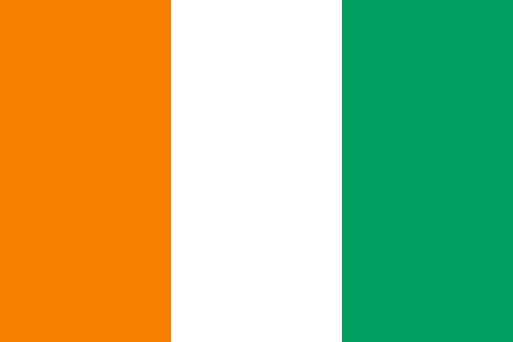 Ivory CoastPresidential republicA West African cocoa exporter, officially Côte d’Ivoire, that has recovered from civil conflict into one of the region’s faster-growing economies.
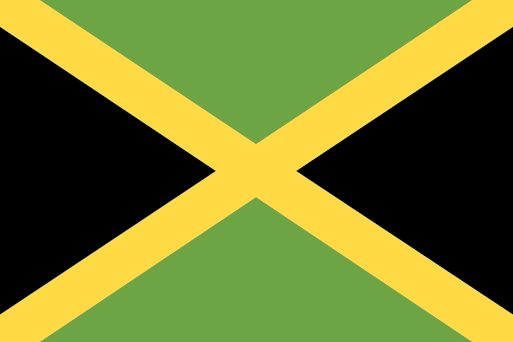 JamaicaParliamentary constitutional monarchyA Caribbean parliamentary democracy and Commonwealth realm, with strong religious and traditional social attitudes.
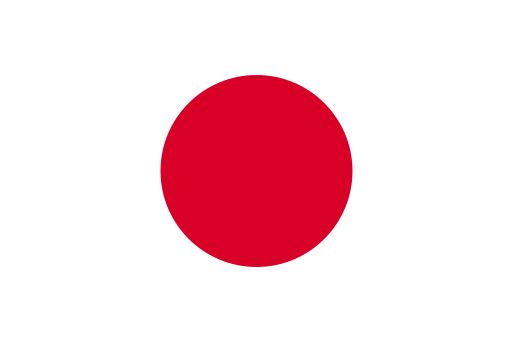 JapanParliamentary constitutional monarchyA unitary parliamentary democracy with a pacifist constitution, a very homogeneous society and a leading role in advanced technology.
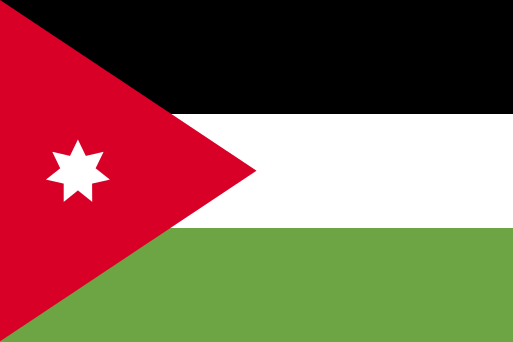 JordanConstitutional monarchyA monarchy where the king holds wide powers and an elected parliament plays a limited role.
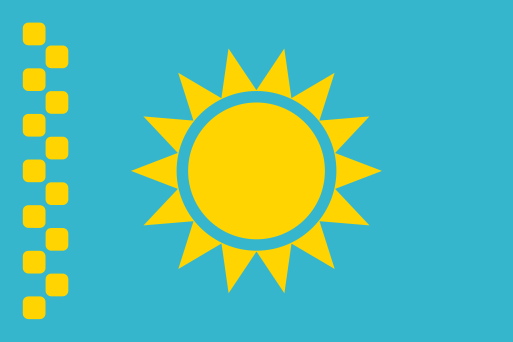 KazakhstanPresidential republicThe largest Central Asian economy, a resource exporter with a strong presidency.
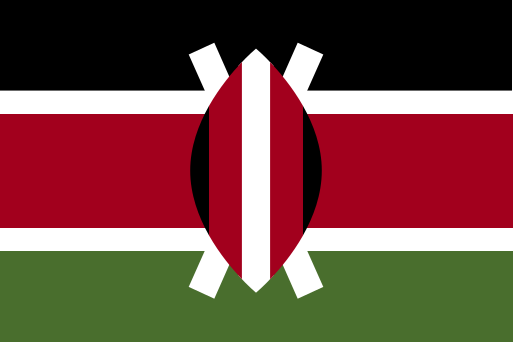 KenyaPresidential republic with devolved countiesA regional hub with 47 elected county governments and an active civil society.
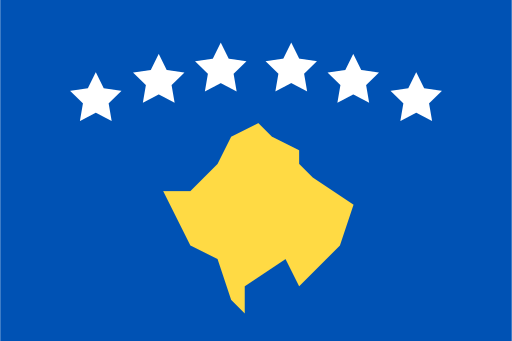 KosovoParliamentary republicA young state that declared independence from Serbia in 2008, recognized by many but not all countries, with a very young population.
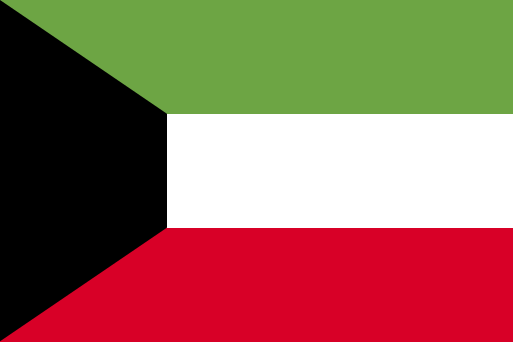 KuwaitConstitutional emirateA Gulf emirate with a ruling family at the center of politics and a history of an unusually active elected parliament.
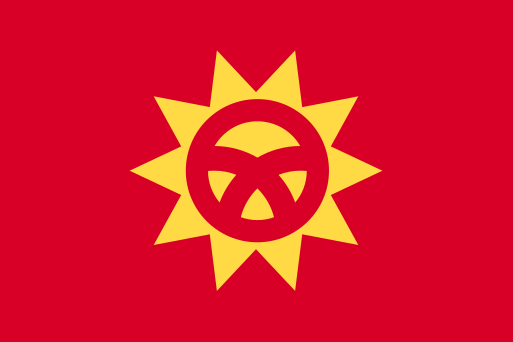 KyrgyzstanPresidential republicA mountainous Central Asian republic with a history of political turnover and a recently strengthened presidency.
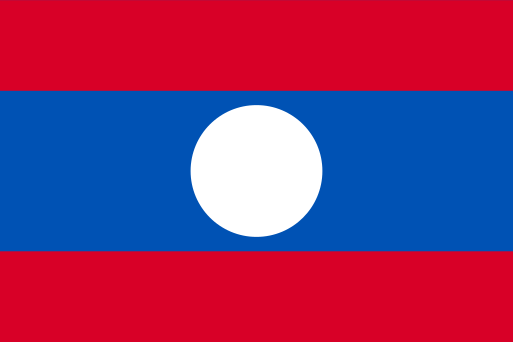 LaosOne-party socialist republicA landlocked one-party state with an economy closely tied to its neighbors.
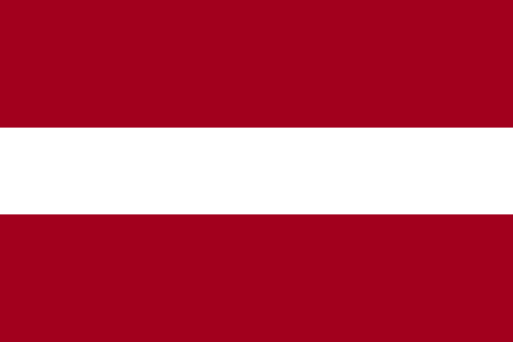 LatviaParliamentary republicA Baltic EU and NATO member with a large Russian-speaking minority and a strong emphasis on national language and security.
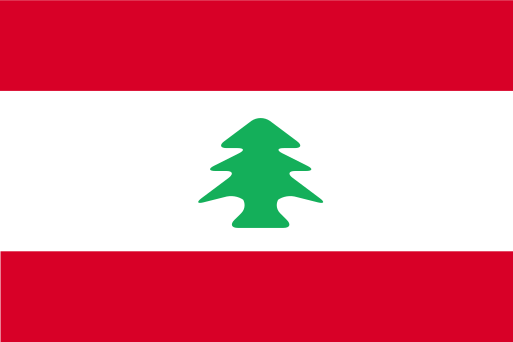 LebanonParliamentary republic with confessional power-sharingA country where government posts are divided between religious communities, and where a deep economic crisis since 2019 has reshaped politics.
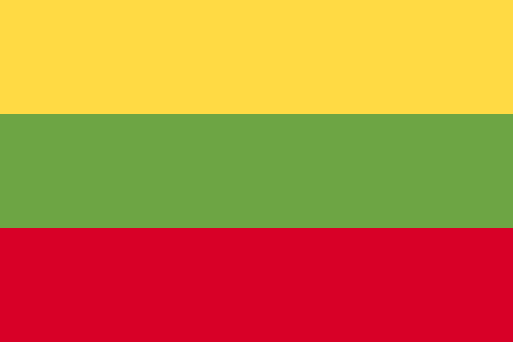 LithuaniaSemi-presidential republicA Baltic EU and NATO member that was the first Soviet republic to declare independence and is among the most vocal supporters of Ukraine.
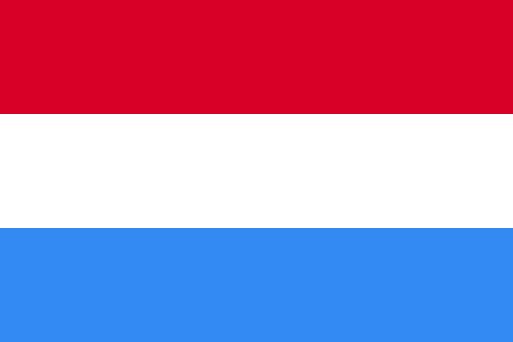 LuxembourgParliamentary constitutional monarchy (grand duchy)A tiny, wealthy state at the heart of the EU whose economy rests on finance and cross-border commuting.
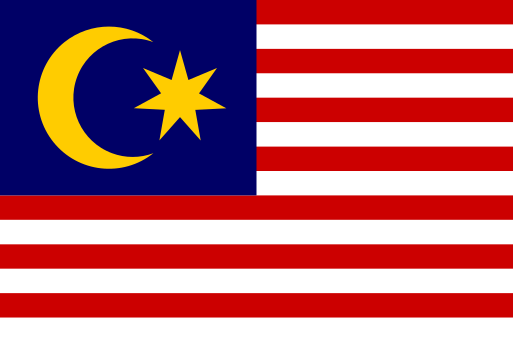 MalaysiaFederal parliamentary constitutional monarchyA federation of 13 states with an elected king chosen from among the sultans, where Islam is the official religion and policies support the Malay majority.
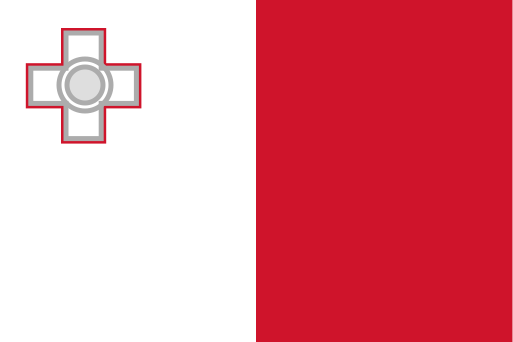 MaltaParliamentary republicA small EU island state with a Catholic heritage that has nonetheless legalized divorce and same-sex marriage in recent years.
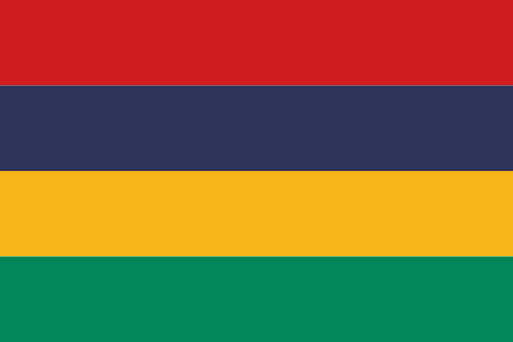 MauritiusParliamentary republicAn island democracy with no standing army, a diverse population and one of Africa’s most open economies.
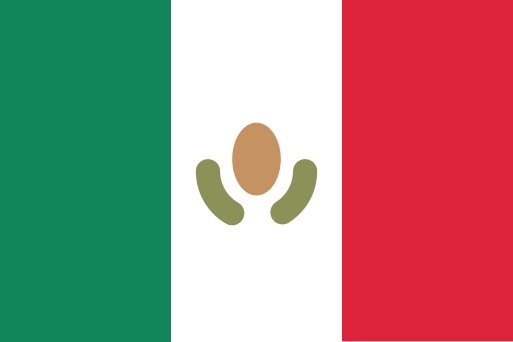 MexicoFederal presidential republicA federation of 31 states and Mexico City, with a large economy tightly linked to the United States and a long tradition of secular government.
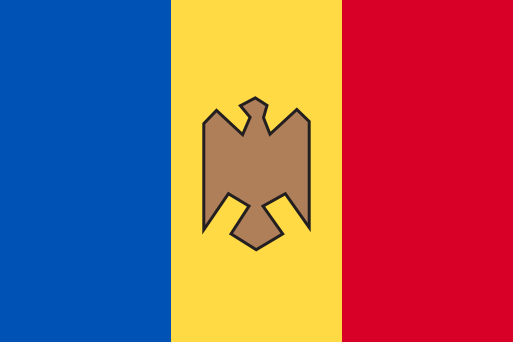 MoldovaParliamentary republicA small EU candidate between Romania and Ukraine, among Europe’s poorest countries and divided over its ties to Russia and the EU.
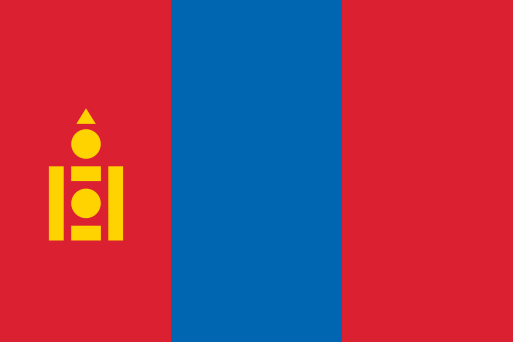 MongoliaSemi-presidential republicA landlocked democracy between Russia and China with a mining-led economy and a strong nomadic heritage.
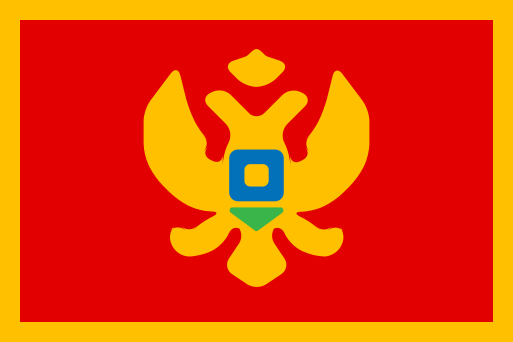 MontenegroParliamentary republicA small NATO member and EU candidate on the Adriatic, independent since 2006.
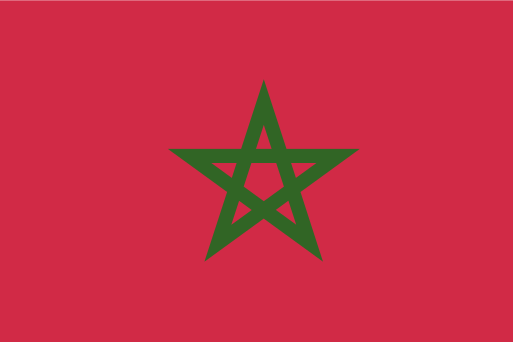 MoroccoConstitutional monarchyA kingdom where the monarch holds strong executive and religious authority alongside an elected parliament.
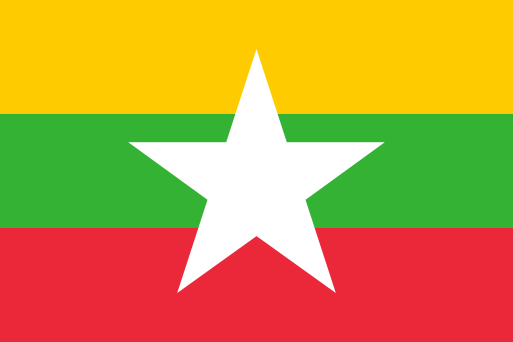 MyanmarMilitary-led stateA country governed by its military since the 2021 coup, with armed conflict in many regions.
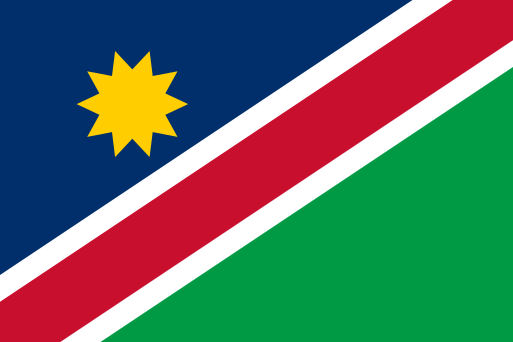 NamibiaSemi-presidential republicA sparsely populated southern African democracy that gained independence in 1990.
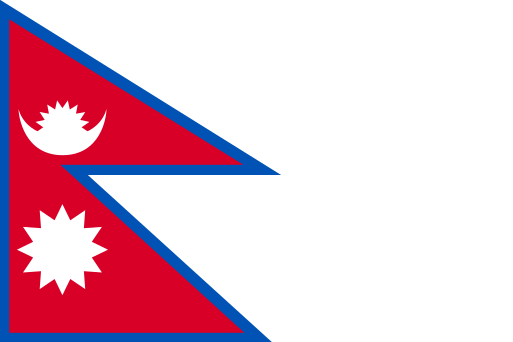 NepalFederal parliamentary republicA Himalayan republic that abolished its monarchy in 2008 and adopted a federal constitution in 2015.
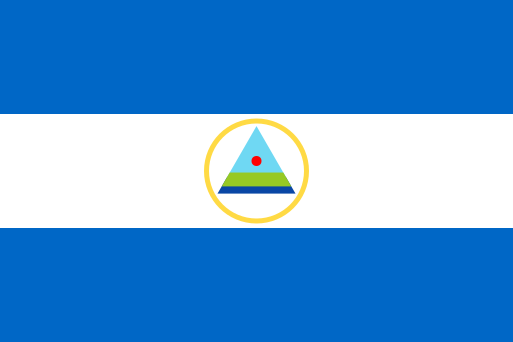 NicaraguaPresidential republic (authoritarian)A country where power has been concentrated around the presidency, and where opposition and civil society have faced heavy restrictions since 2018.
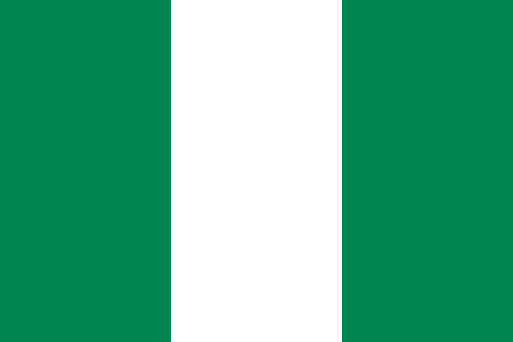 NigeriaFederal presidential republicAfrica’s most populous country, a federation of 36 states split roughly between a mostly Muslim north and a mostly Christian south.
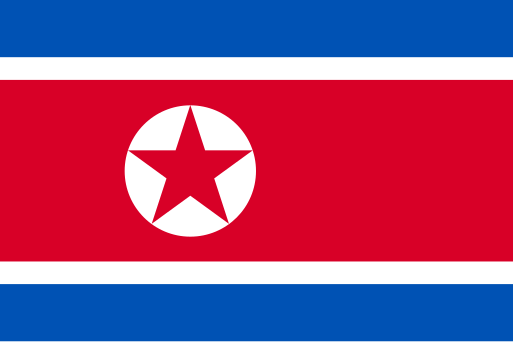 North KoreaOne-party state (authoritarian)A closed, hereditary one-party state with a centrally planned economy and an extensive security apparatus.
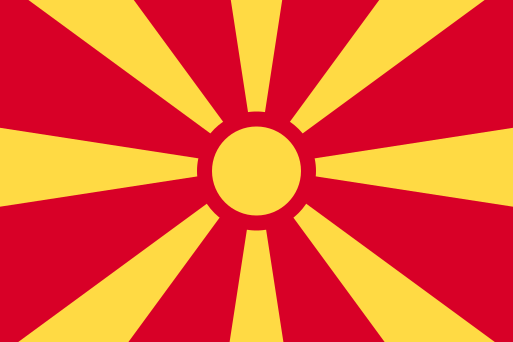 North MacedoniaParliamentary republicA NATO member and EU candidate where power-sharing between Macedonians and Albanians underpins politics.
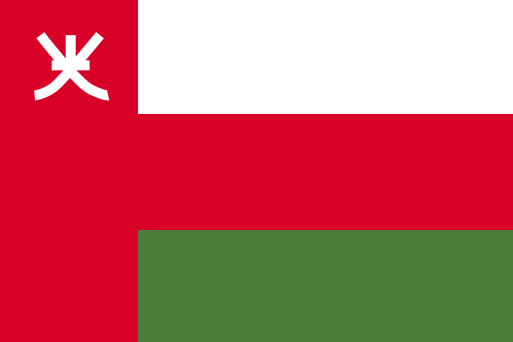 OmanAbsolute monarchy (sultanate)A sultanate known for a neutral, mediating foreign policy and a distinctive Ibadi Islamic tradition.
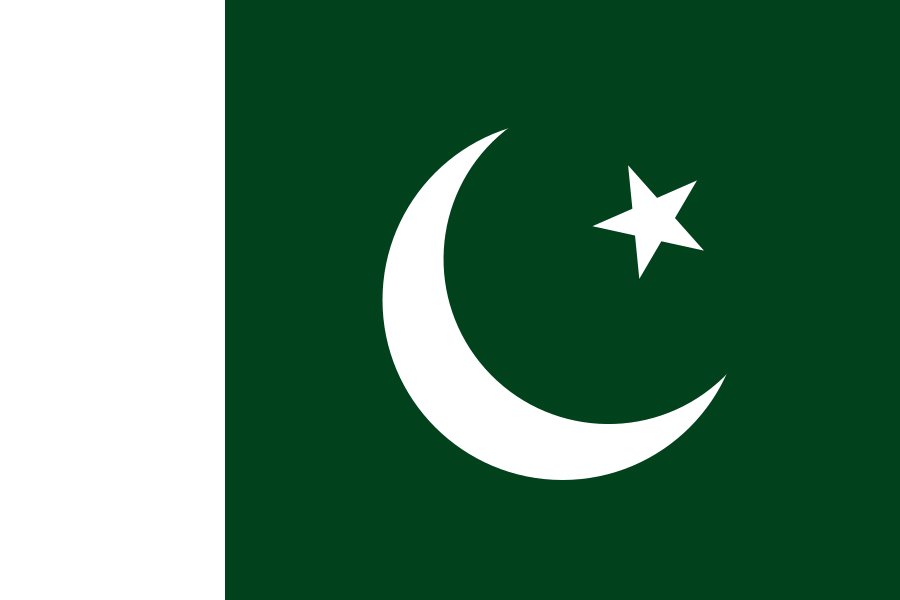 PakistanFederal parliamentary republicAn Islamic republic whose politics has been shaped by a powerful military and by the role of Islam in law and public life.
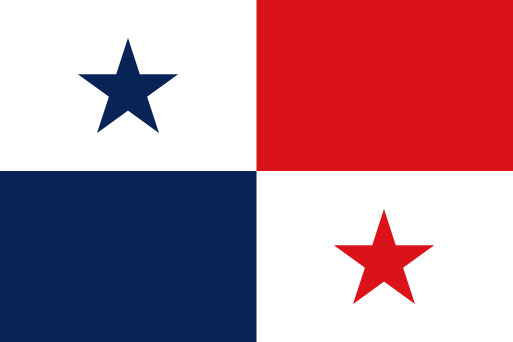 PanamaPresidential republicA trade and logistics hub built around the canal, with no standing army since 1990.
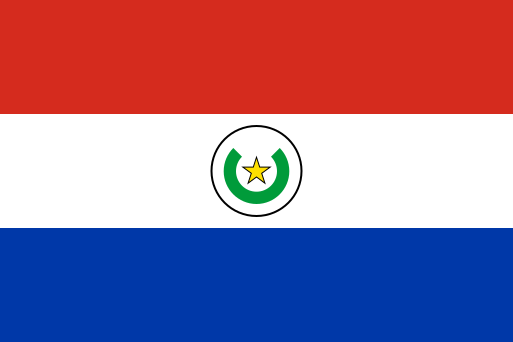 ParaguayUnitary presidential republicA landlocked, socially conservative republic with a Guaraní and Spanish bilingual culture and a market-friendly economy.
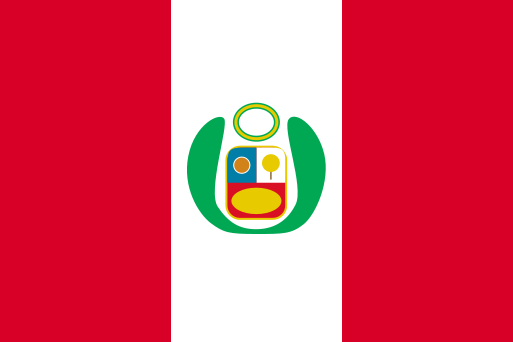 PeruUnitary presidential republicA resource-exporting republic with a market-oriented economy and frequent political instability.
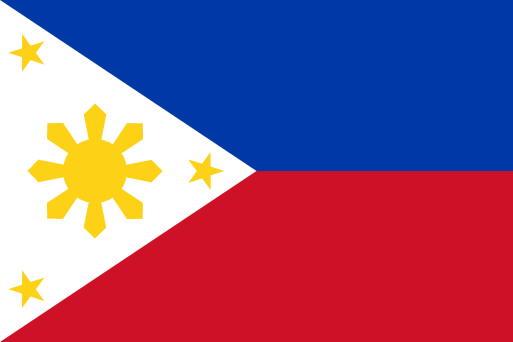 PhilippinesPresidential republicA presidential democracy and Asia’s largest Catholic-majority country, with a lively political culture and strong family networks.
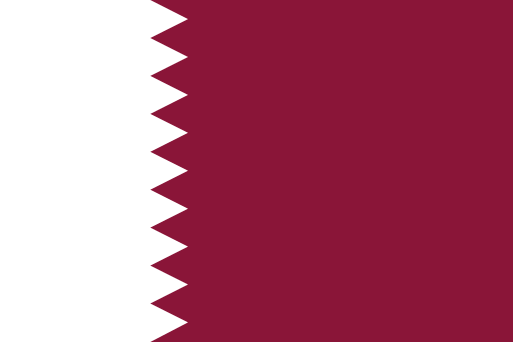 QatarAbsolute monarchyA wealthy gas-exporting emirate with a small citizen population and a large migrant workforce.
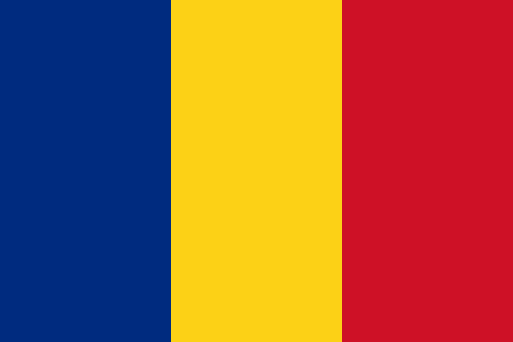 RomaniaSemi-presidential republicA large EU and NATO member with an influential Orthodox Church, a fast-growing economy and a long-running fight against corruption.
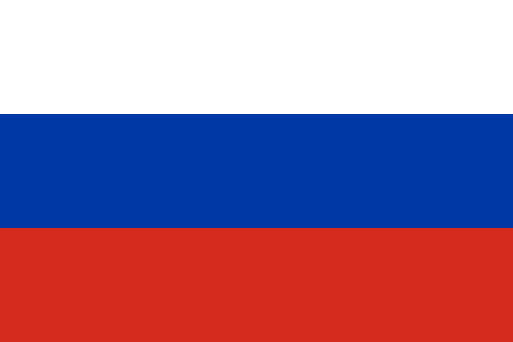 RussiaFederal semi-presidential republic (authoritarian)A nominal federation with a highly centralized, president-led system, a large state role in strategic industries and a close relationship between the state and the Orthodox Church.
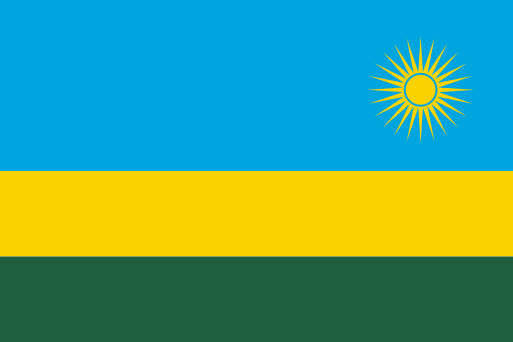 RwandaPresidential republicA small, centralized state that rebuilt after the 1994 genocide and prioritizes order, development and technology.
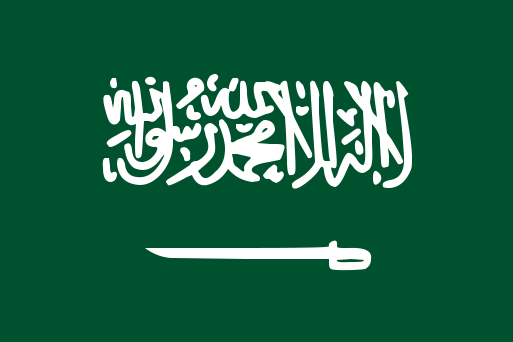 Saudi ArabiaAbsolute monarchyA hereditary monarchy with a state-led, oil-based economy and a legal system grounded in Islamic law, now diversifying under a broad modernization plan.
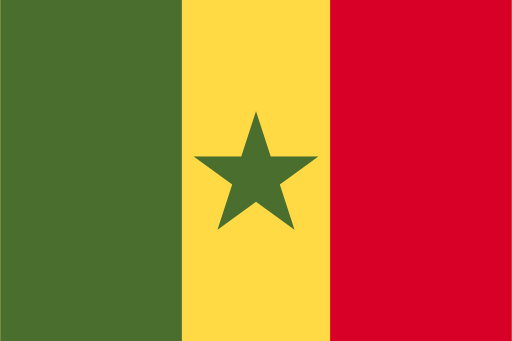 SenegalPresidential republicA West African republic known for its record of peaceful transfers of power and for a Sufi-influenced Muslim culture.
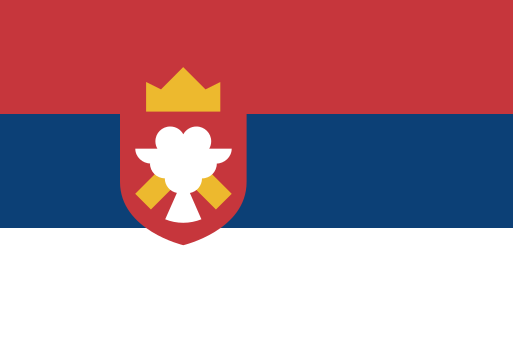 SerbiaParliamentary republicAn EU candidate that balances ties with the EU, Russia and China, and where the status of Kosovo remains a central issue.
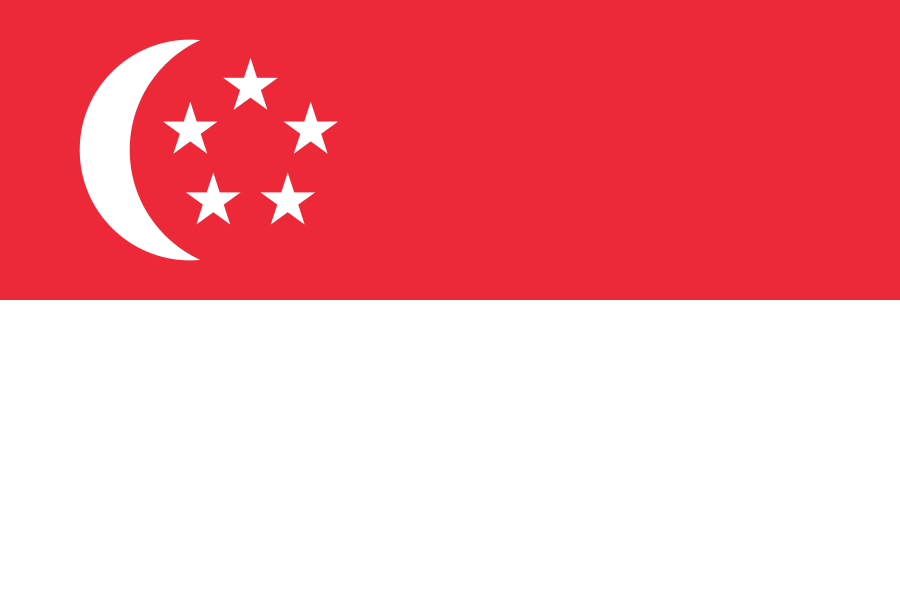 SingaporeParliamentary republic (dominant-party)A city-state with a dominant governing party, strict public-order laws and one of the world’s most open, business-friendly economies.
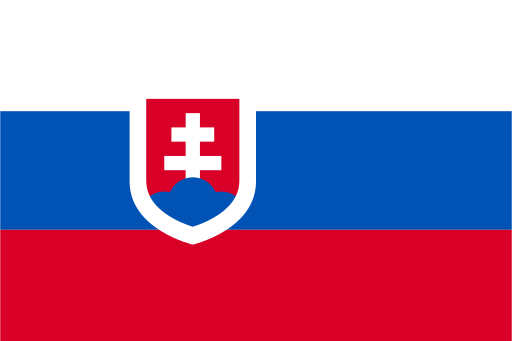 SlovakiaParliamentary republicA euro-area EU member that mixes conservative social values with a state-influenced economy, and where relations with Russia and Ukraine divide politics.
 SloveniaParliamentary republicA small EU member with a strong social-market tradition and well-developed public services.
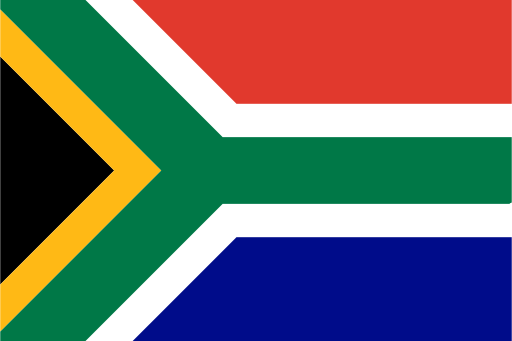 South AfricaParliamentary republic with strong provincesA constitutional democracy with a celebrated post-apartheid constitution, nine provinces and multiple official languages.
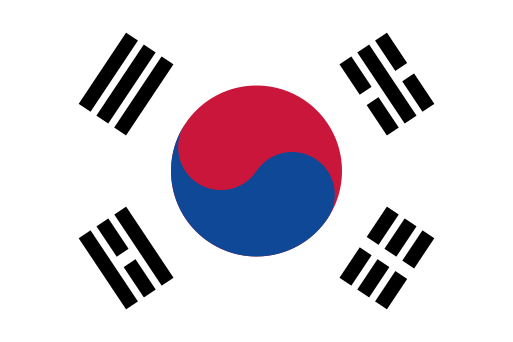 South KoreaPresidential republicA technologically advanced democracy with a conscript army, a competitive market economy and a rapidly changing society.
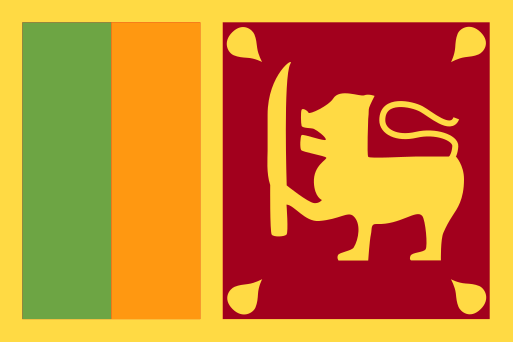 Sri LankaSemi-presidential republicAn island republic that went through a deep economic crisis in 2022 and is rebuilding its finances and politics.
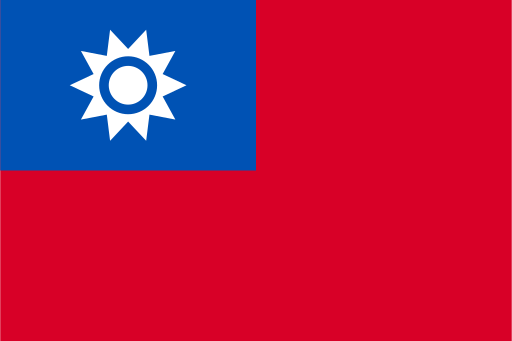 TaiwanSemi-presidential republicA self-governing democracy with a high-tech economy, whose political status is disputed by China.
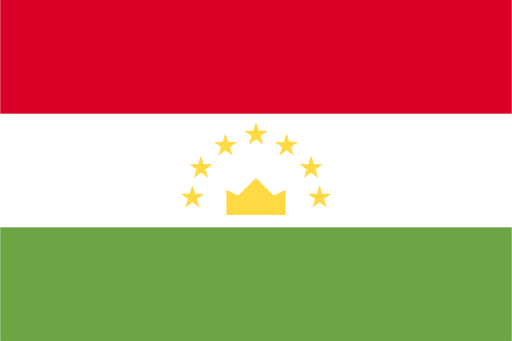 TajikistanPresidential republic (authoritarian)A mountainous Central Asian republic governed by the same president since 1992.
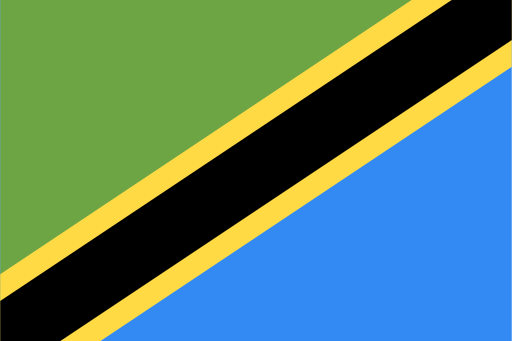 TanzaniaPresidential republicA union of mainland Tanganyika and Zanzibar that has been led by one party since independence.
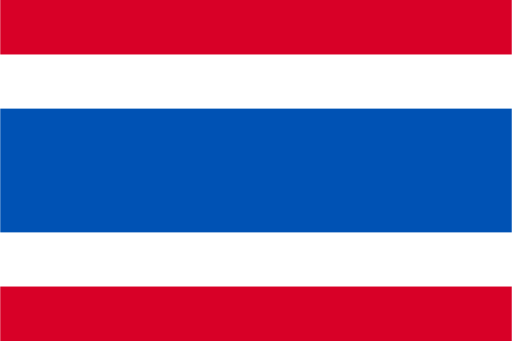 ThailandParliamentary constitutional monarchyA constitutional monarchy where the crown, the military and Buddhism hold central roles, and where democratic politics has been interrupted by coups.
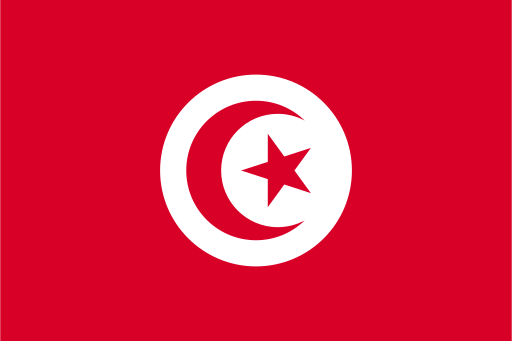 TunisiaPresidential republicThe birthplace of the Arab Spring, whose president has concentrated power since 2021.
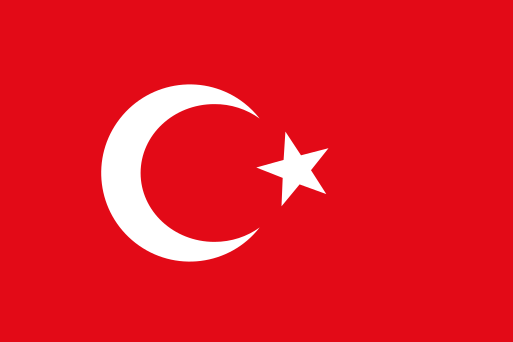 TurkeyPresidential republicA presidential republic, officially called Türkiye, that is a NATO member and a bridge between Europe and Asia, with a strong secular tradition now contested by religious-conservative politics.
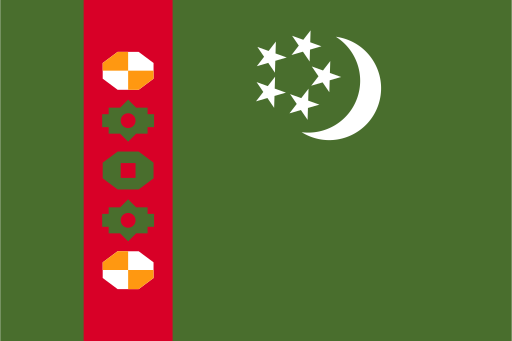 TurkmenistanPresidential republic (authoritarian)A gas-rich, highly closed state with a dominant presidency and tight restrictions on media and political activity.
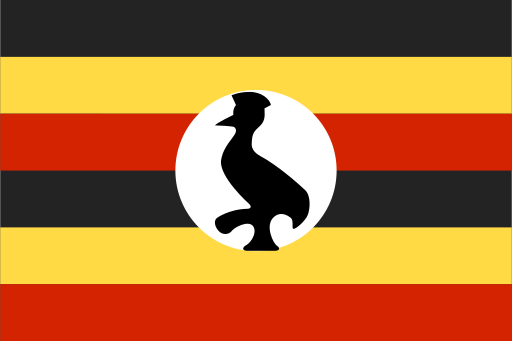 UgandaPresidential republicAn East African republic led by the same president since 1986, with socially conservative laws.
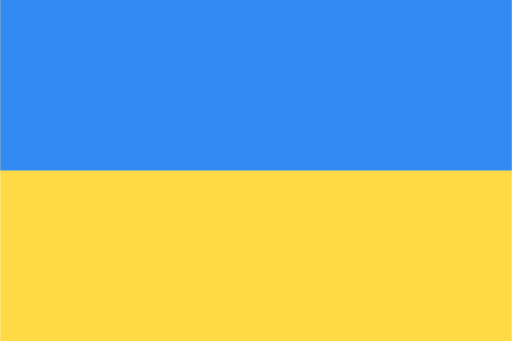 UkraineSemi-presidential republicA large European country defending itself against Russia’s full-scale invasion since 2022 while pursuing EU membership.
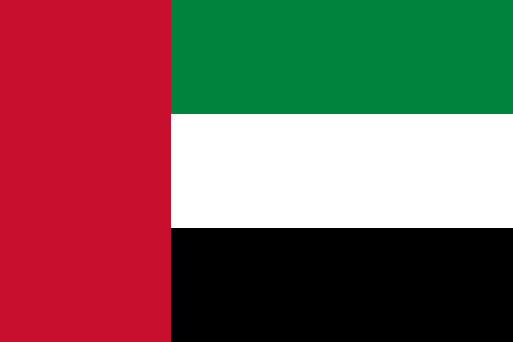 United Arab EmiratesFederation of hereditary monarchiesA federation of seven emirates with an open, globally connected economy and a political system with limited public participation.
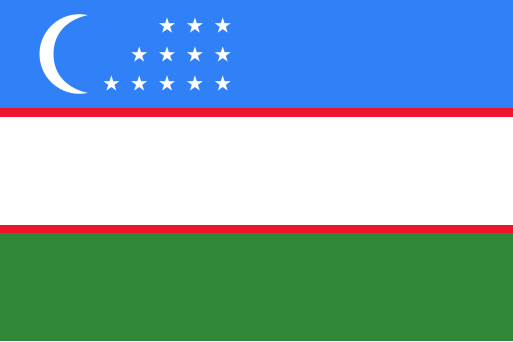 UzbekistanPresidential republicA populous Central Asian republic with a strong presidency that has been opening its economy in recent years.
 VenezuelaFederal presidential republic (authoritarian)A formally federal republic where power has long been concentrated in the presidency, with a prolonged economic and political crisis that has driven millions to emigrate.
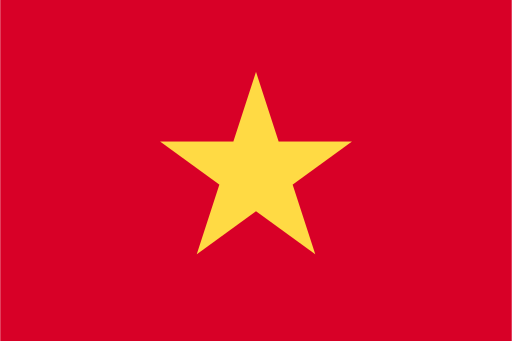 VietnamOne-party socialist republicA one-party state with a market-oriented economy that is deeply integrated into global trade.
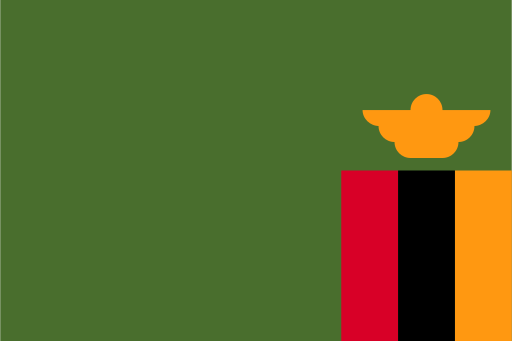 ZambiaPresidential republicA copper-exporting republic that has seen several peaceful changes of government.
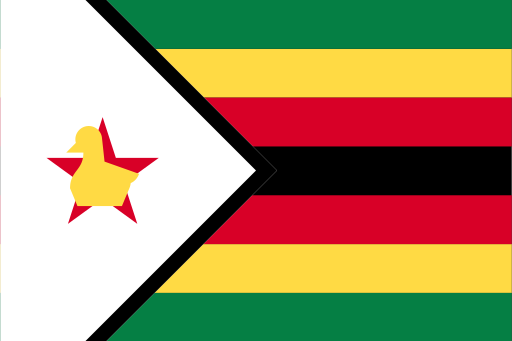 ZimbabwePresidential republicA southern African republic where one party has governed since 1980 amid prolonged economic difficulties.
Where do the country profiles come from?
They are editorial estimates, not survey results.
Systems and mainstream politics
A profile reflects long-run patterns in a country's political system and mainstream politics, not the latest news.
Not what every citizen thinks
People in every country hold a wide range of views. A profile describes institutions and the political mainstream, not individuals.
Made for comparison
The numbers exist so scores can be compared and discussed. They are not rankings of quality.
Frequently asked questions
Something else on your mind? Get in touch
Not sure of your scores yet?
Take the test to get all twelve in a few minutes. The country match comes with your result.