Banking Crisis or Regime Collapse? The Fall of ueno bank and Santiago Peña in Paraguay
12 Axes Test ·
On November 3, 2026, the Central Bank of Paraguay (BCP) seized and initiated resolution proceedings for ueno bank after discovering a critical capital shortfall and uncollateralized loans funnelled to its parent conglomerate (Grupo Vázquez). The regulatory freeze locked nearly 3 million customer accounts and exposed hundreds of millions in public pension reserves from the Social Security Institute (IPS). The ensuing public outrage triggered a lightning political crisis: when President Santiago Peña attempted to step down on November 5 to preserve his lifetime Senate immunity, Congress unanimously rejected his resignation (78–0 in the Chamber of Deputies) and removed him by a 44–0 Senate vote on November 6, swearing in Vice President Pedro Alliana and placing Peña in pretrial military detention.
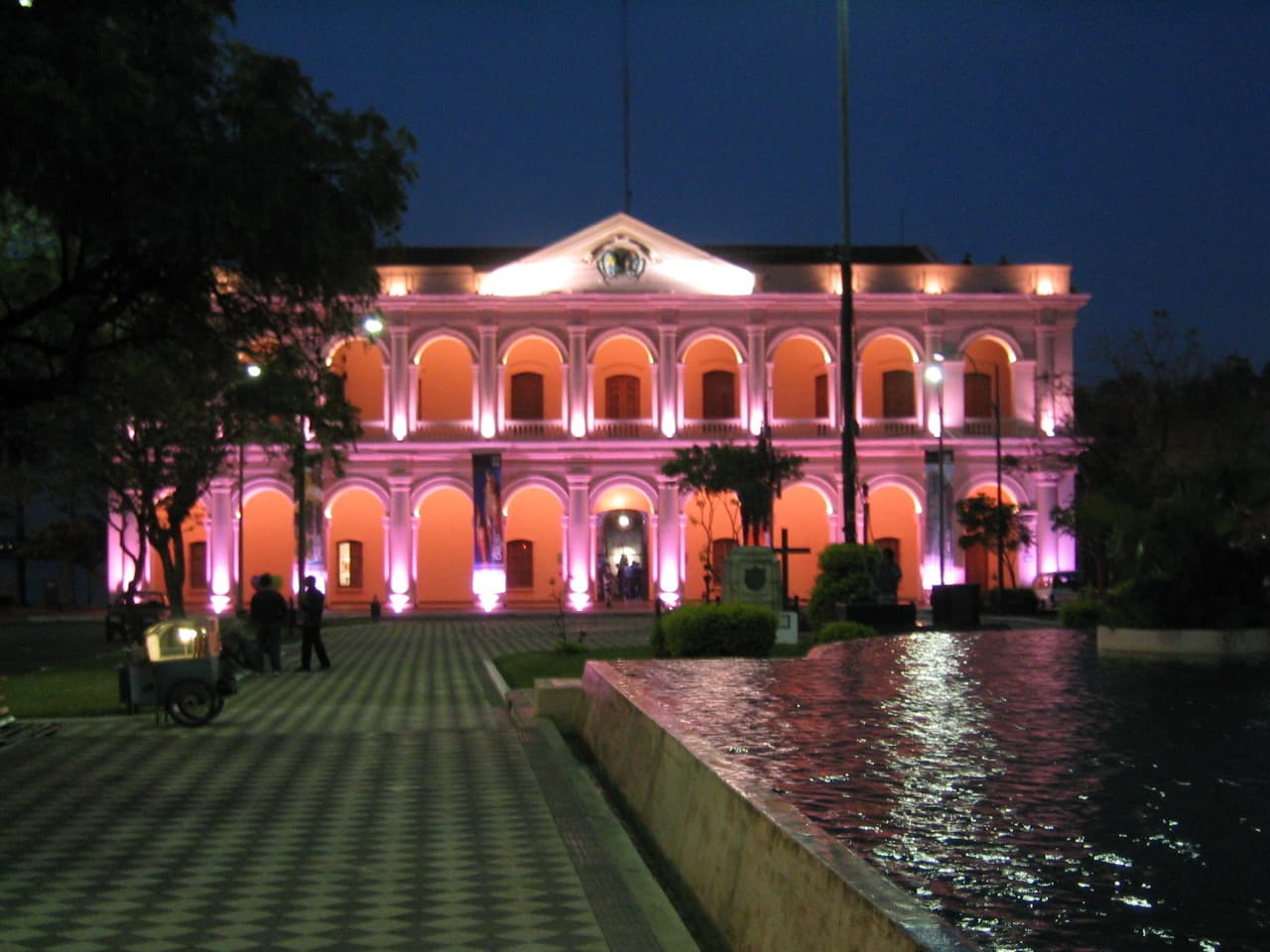
From Bank Takeover to Presidential Impeachment
From the aggressive absorption of Visión Banco and controversial pension placements in 2024–2025, to the fatal solvency collapse and lightning removal of the head of state in November 2026.
Merger and absorption of Visión Banco
ueno bank formally absorbed the branch network and deposit base of the traditional retail lender Visión Banco with regulatory approval from the BCP, ballooning its customer base to over 2.9 million accounts—more than 60% of Paraguay’s adult population.
IPS pension fund injection amid migration glitches
While account migration from Visión Banco triggered widespread public anger over app blackouts and ATM rejections, the board of the Social Security Institute (IPS) approved purchasing G. 250 billion in ueno bank bonds, initiating a heavy concentration of retirement funds into the lender.
Conflict-of-interest revelations over Peña’s shares
Opposition lawmakers, led by Senator Celeste Amarilla, revealed that President Santiago Peña’s sworn asset declaration listed G. 6.144 billion in shares of Ueno Holding (a 1.58% stake), igniting charges of self-dealing while state deposits were steered into the bank.
Forced corporate divestment under fire
Facing escalating political pressure and media scrutiny, Ueno Holding notified the BCP of a capital reduction to buy out and redeem Peña’s shares at par value, an emergency move aimed at defusing allegations of unlawful official enrichment.
Source: BCP · Peña Share Redemption
Audits flag insider loans and pension cap breaches
Supervisory reports warned that IPS deposits in ueno bank violated statutory concentration limits under the 2023 Pensions Act (Law 7235/2023), while inspectors flagged millions in uncollateralized loans extended directly to affiliated entities of Grupo Vázquez.
Central Bank finding of institutional insolvency
The BCP Board of Directors determined that, following balance sheet adjustments for non-performing insider loans, ueno bank’s solvency ratio had plunged below half the mandatory legal minimum, rendering it commercially unviable.
Regulatory intervention and account freeze
The Central Bank publicly announced the bank’s resolution, dismissed the executive board, and appointed official administrators. The mobile banking app and branch teller windows were shuttered immediately, trapping customer savings.
Pension alarm and street mobilizations
Public unions and civil society groups erupted in protest across downtown Asunción upon revelations that public pensions, utility reserves, and state deposits totaling hundreds of millions of dollars were trapped in the insolvent lender.
Source: BCP · Deposit Recovery FAQ
Resignation rejected and summary impeachment launched
Abandoning the presidency, Santiago Peña announced his resignation via social media hoping to claim ex-officio Senate immunity. The Chamber of Deputies voted 78–0 to reject his resignation outright and voted to begin formal impeachment proceedings.
Source: 1992 Constitution · Art. 225
Unanimous Senate conviction and Alliana sworn in
The Senate voted 44–0 to convict and remove Peña for malfeasance and breach of trust. Vice President Pedro Alliana was immediately sworn in as President of Paraguay to serve out the remainder of the term.
Criminal indictment and military detention
The Attorney General’s Office indicted Peña for breach of trust and unlawful self-enrichment, and a criminal judge ordered him remanded into pretrial custody at a military garrison. The Alliana administration accelerated emergency payouts from the Deposit Guarantee Fund (FGD).
Source: Attorney General · Indictment
The Faces Behind the Crisis
The constitutional denouement reflects a clash between technocratic governance, oligarchic commercial networks, and the survival instincts of a dominant party machine.

Santiago Peña
Impeached President (2023–2026)
An orthodox economist with a career at the IMF and Central Bank who later served as Finance Minister. Elected with the backing of Horacio Cartes but lacking a grassroots base inside the Colorado Party, his historical equity in Ueno Holding and state deposit steering left him without political shelter when the bank collapsed.
Photo: Presidency of the Republic of Paraguay (CC BY 4.0)
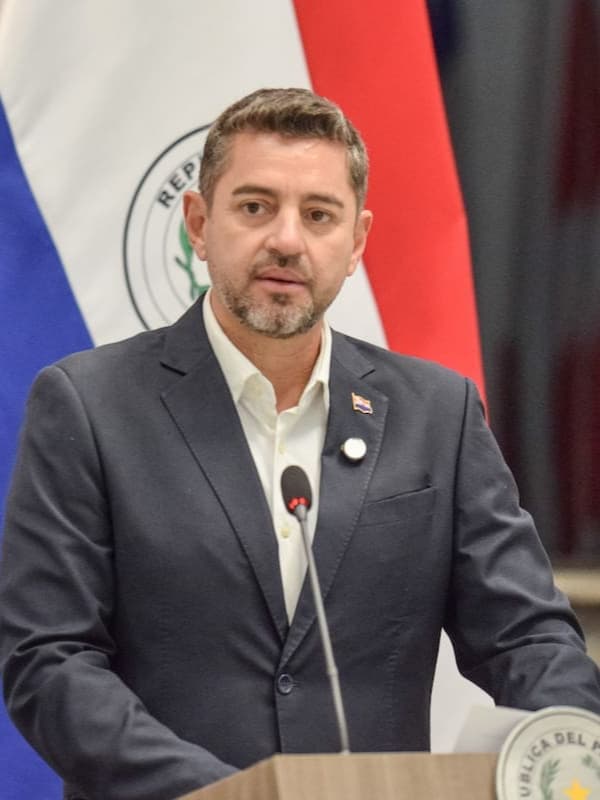
Pedro Alliana
President of Paraguay (In Office)
Former President of the Chamber of Deputies and former Chairman of the Colorado Party (ANR). A loyal lieutenant of Horacio Cartes and stalwart of the Honor Colorado faction, his immediate swearing-in allowed the party machine to retain the executive branch without an institutional void.
Photo: Chamber of Deputies of Paraguay (Public domain)
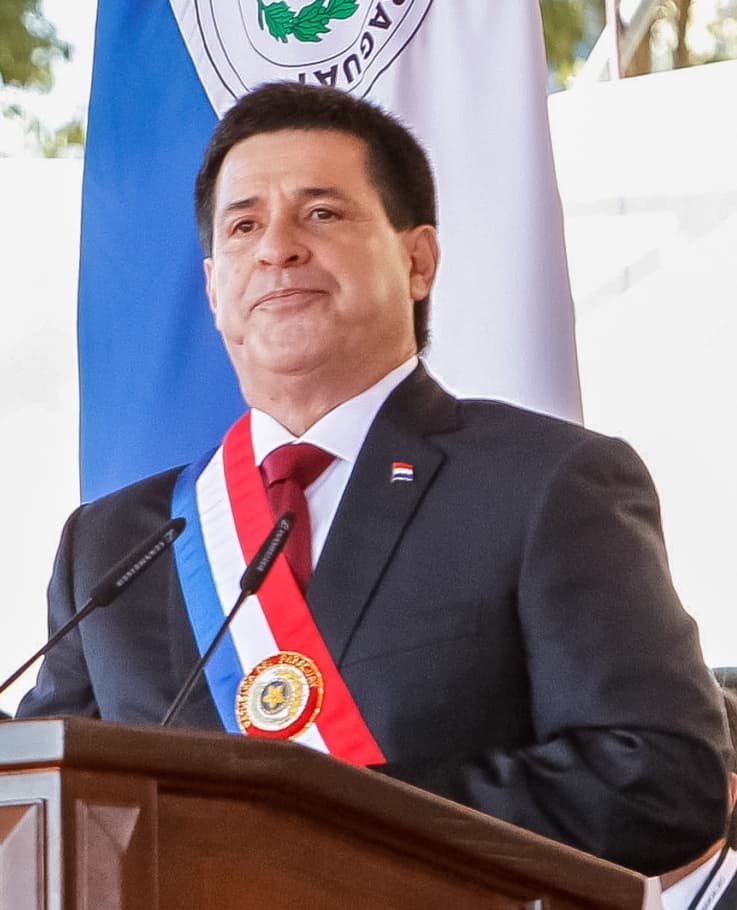
Horacio Cartes
ANR Chairman & Honor Colorado Leader
Former President of Paraguay (2013–2018) and tycoon with tobacco and financial holdings (Banco Basa). Despite US sanctions, he controls the party apparatus. When public outrage threatened the Colorado regime, Cartes instructed his congressional bloc to impeach Peña, executing a sacrificial firewall.
Photo: Presidency of the Republic of Paraguay (CC BY-SA 3.0)
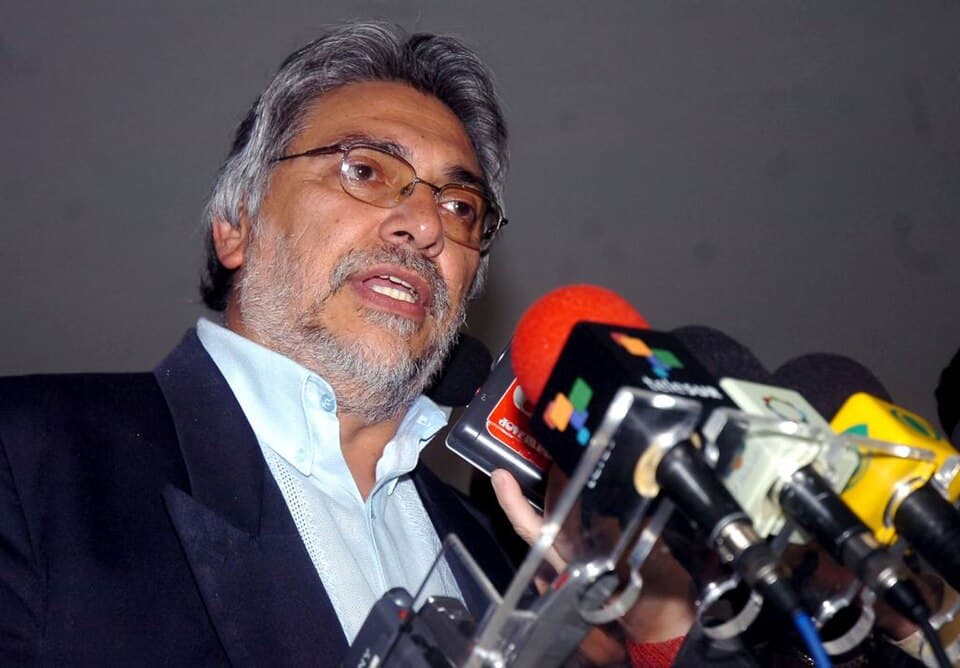
Fernando Lugo
Historical Precedent (President 2008–2012)
The sole non-Colorado head of state in seven decades. In June 2012, following the Curuguaty land clash, he was ousted in a lightning 48-hour impeachment trial orchestrated by the opposition-controlled Congress. The 2026 crisis mobilized the exact same constitutional mechanism.
Photo: Presidency of the Republic of Paraguay (CC BY 3.0)
The Colorado Party & the "Firewall" Doctrine
Why did the ruling party bloc vote unanimously to impeach its own president? The answer lies in the 70-year institutional resilience of the National Republican Association (ANR).
The 70-Year Hegemony and the Seccionales
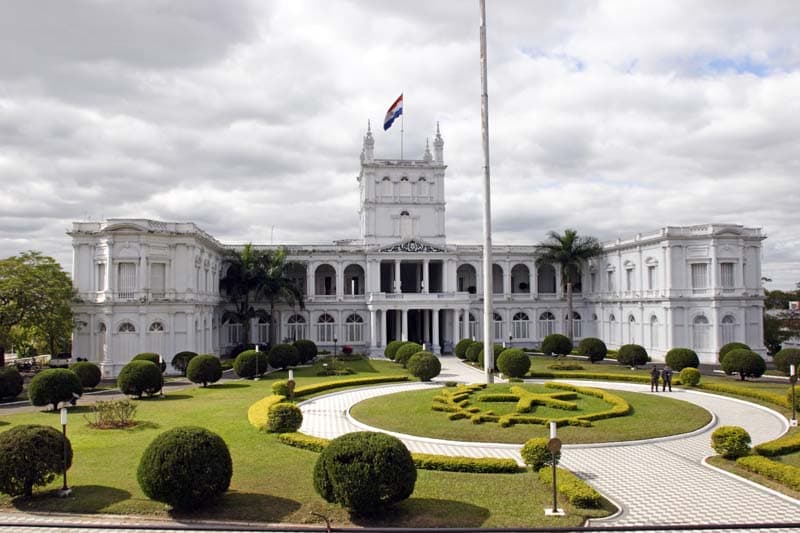
The National Republican Association (ANR / Colorado Party) has governed Paraguay almost uninterrupted since 1947. Its dominance is anchored in local ward committees (Seccionales Coloradas) that function as de facto welfare centers, dispensing public jobs, healthcare access, and emergency cash in exchange for generational voter loyalty.
State Capture and Connected Banking
For decades, the boundaries between private banks tied to party oligarchs and public fund deposits (including the IPS pension fund and bi-national Itaipú royalties) have remained porous. Weak regulatory independence allowed high-risk lending to affiliated conglomerates without adequate collateral.
The Party Firewall Doctrine
In Paraguay’s political calculus, the president is expendable if their continued tenure imperils the survival of the ruling party. Faced with furious retirees and middle-class depositors, the party leadership sacrificed Peña to the courts and elevated Alliana, preserving total legislative and executive control.
Echoes of 2012: The 48-Hour Impeachment Tradition
In June 2012, Paraguay stunned Latin America when leftist President Fernando Lugo was stripped of power in under 48 hours following the Curuguaty agrarian massacre. Regional neighbors denounced the move as a "soft parliamentary coup," while Paraguayan lawmakers defended the constitutionality of Article 225.
In November 2026, the same constitutional apparatus functioned with identical speed against Santiago Peña: 78–0 in the Chamber of Deputies and 44–0 in the Senate. Unlike rigid presidential systems in the United States or Brazil, Paraguay’s Congress functions in practice with the prerogative of a parliament, capable of issuing a fatal vote of no confidence whenever elite coalitions break down.
Intervention, Bailout, or Nationalization?
Public debate frequently conflates emergency regulatory intervention with state nationalization. Banking law and Central Bank resolution powers distinguish two separate dimensions: prudential risk containment versus capital ownership.
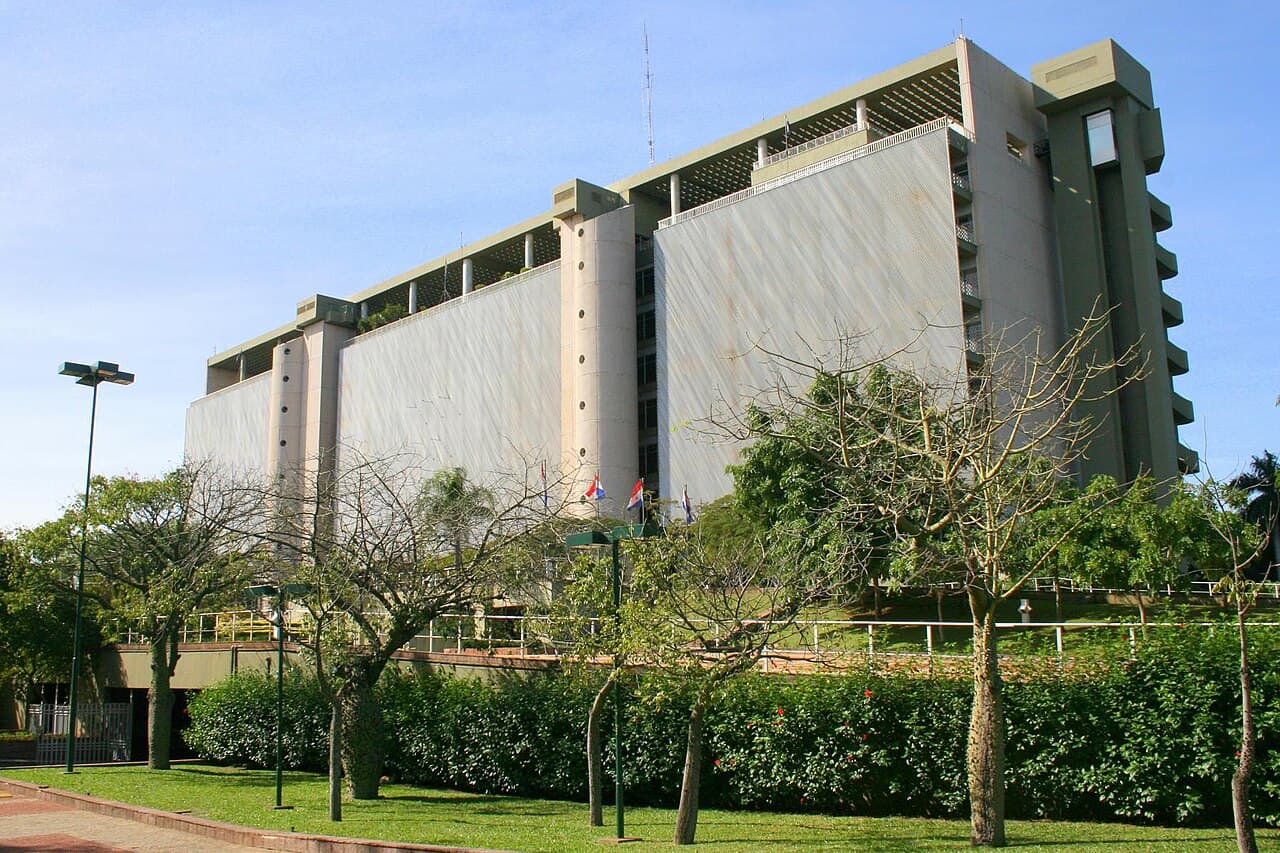
Prudential Supervision
Who watches the balance sheet?
Regulators enforce capital buffers, liquidity rules, and related-party loan limits to prevent private bank risks from spilling into public coffers.
Bank Resolution
How to contain systemic fallout?
A specialized administrative framework to intervene in and wind down an insolvent institution without triggering a cascading run on the payments system.
Government Bailout
Who bears the loss?
Direct injections of public cash or state balance-sheet guarantees to keep a lender afloat, frequently creating systemic moral hazard.
Nationalization
Who takes ownership?
The sovereign state permanently acquires majority equity or voting control, transforming the private lender into a public institution.
Three Statutory Resolution Paths Under Law 2334/03
The Deposit Guarantee Fund (FGD) is not an unearned taxpayer bailout for reckless bankers, but a mutual insurance reserve pre-funded by financial institutions themselves. Paraguayan Law 2334/03
Asset and deposit transfer to solvent banks
Healthy domestic institutions take over customer deposits in exchange for high-quality loan portfolios carved out from the failed bank.
Asset-recovery fiduciary trust
Non-performing loans and insider transactions are sequestered into an independent liquidation trust to recover value over time.
Direct insurance compensation
The FGD issues direct compensation checks to covered retail depositors, assuming senior creditor status against the bank’s bankrupt estate.
The Fallout: 3 Million Depositors and Pension Risk
The 2024 absorption of Visión Banco transformed an agile fintech into Paraguay’s largest mass-market bank. When it failed, the fallout was not merely a corporate restructuring, but a seismic shock to household finances nationwide.
- Retail depositors (up to 75 minimum wages)
Covered under statutory FGD insurance. The Central Bank rolled out advance emergency distributions to defuse grassroots civil unrest.
- Pension funds (IPS) & corporate accounts
Uninsured institutional deposits and bond holdings are subordinated to the liquidation of remaining assets and recovery of questionable insider loans.
Source: BCP · Deposit Recovery FAQ
- Controlling shareholders (Grupo Vázquez)
Corporate equity rights were extinguished by the resolution decree. Beyond total capital write-downs, executives face criminal probes for asset stripping.
The Case Across the 12 Axes
Regulatory intervention rules and bank equity ownership represent distinct decisions. You can hold differing stances on each axis.
How far should the state intervene in banking collapses?
You may advocate strict regulatory intervention with early public guarantees, or insist that equity holders and creditors absorb losses without state backstops.
Who should safeguard national deposits and pensions?
The fundamental debate over whether retirement reserves and essential payment utilities belong in state institutions or competitive private financial markets.
Is fast-track impeachment democratic oversight or elite regime preservation?
You might interpret a unanimous legislative conviction as constitutional accountability to the populace, or as an oligarchic machine purging an executive to safeguard its own grip on power.
Who Should Absorb the Losses?
The Financial Stability Argument: When a single bank holds the payroll accounts of 60% of working adults and hundreds of millions in public pension reserves, allowing an uncontrolled collapse triggers a systemic banking panic that devastates the real economy. Proponents of this view justify swift regulatory intervention and emergency deposit guarantees.
The Moral Hazard Argument: If private banks operate knowing that public balance sheets will always step in to protect customer balances, executives face perverse incentives to engage in reckless related-party lending, privatizing gains during expansions while socializing losses in busts.
This crisis demonstrates why political philosophy cannot be reduced to a single axis: one may support strict regulatory intervention to safeguard ordinary depositors while simultaneously demanding criminal prosecution and full asset forfeiture for controlling shareholders. Distinguishing these nuances is the core purpose of the 12 axes in Paraguay and around the globe.
Facing a systemic bank collapse, would you prioritize stability or punish moral hazard?
Test your principles on the 12-axis spectrum: find where you stand on state intervention, public versus private asset ownership, and constitutional checks on power.
Explore Your Stance on the QuizPrimary Sources & Credits
Official Documents & Statutes
- Central Bank of Paraguay (BCP) · Financial Stability Report, June 2024 (Visión Banco absorption)
- Central Bank of Paraguay (BCP) · Initiation of resolution proceedings for ueno bank (Nov 3, 2026)
- Central Bank of Paraguay · Announcement of Deposit Guarantee Fund (FGD) advance payments to retail savers
- Central Bank of Paraguay · Commencement of guarantee payouts to depositors of ueno bank
- Central Bank of Paraguay · Frequently Asked Questions on deposits and payouts for ueno bank
- Library of the National Congress · Law 2334/03 on Deposit Guarantees and Bank Resolution
- Constitution of Paraguay (1992) · Article 225 (Impeachment / Juicio Político)
- Senate of the Republic of Paraguay · Resolution of conviction and removal of the President
- Public Prosecutor’s Office of Paraguay · Indictment for breach of trust and self-enrichment
- Social Security Institute (IPS) · Allocation of G. 250 billion into financial bonds (August 2024)
- Comptroller General of the Republic · Santiago Peña’s Sworn Asset Declaration (Ueno Holding shares)
- Ueno Holding SAECA / BCP · Capital reduction and redemption of shares held by President Peña (March–April 2025)
- Superintendency of Retirement and Pensions · Regulatory caps on financial institutional investments (Law 7235/2023)
Image Credits (Wikimedia Commons)
- Congreso Nacional de Paraguay: Wikimedia Commons / CC BY-SA 3.0
- Santiago Peña: Presidencia de la República del Paraguay (CC BY 4.0)
- Pedro Alliana: Cámara de Diputados de Paraguay (Dominio público)
- Horacio Cartes: Presidencia de la República del Paraguay (CC BY-SA 3.0)
- Fernando Lugo: Presidencia de la República del Paraguay (CC BY 3.0)
- Banco Central del Paraguay: Foto por Felipe Méndez (CC BY-SA 4.0)
- Palacio de los López: Foto por David Perez (CC BY 3.0)