Skip to content
12 Axes Test

Collectivize vs Privatize

The Collectivize vs Privatize axis asks who should own the economy and how wealth should be shared: the public, through the state or collectives, or individuals and private firms.

Economic domain0% Collectivize ⟷ 100% Privatize
Collectivize

Key parts of the economy, such as land, utilities and major industries, should be owned or controlled by the public or by workers, with wealth shared more equally.

vs
Privatize

Property and businesses should be privately owned, and people should keep the rewards of their work and investment.

0% (Collectivize)50% Neutral100% (Privatize)

The question this axis asks: Should important industries and wealth be shared collectively, or owned and kept privately?

Where do you stand?

Statement 1 of 3

Key industries such as energy, transport and water should be publicly owned.

Nothing is sent anywhere.

What is Collectivize vs Privatize?

The question this axis asks

Should important industries and wealth be shared collectively, or owned and kept privately?

This axis covers ownership (nationalizing or privatizing industries, land and utilities), taxation and redistribution, welfare, and ideas such as a universal basic income or land reform. It asks who should own productive property and how much wealth should be redistributed.

It is related to, but different from, the next axis. Collectivize vs Privatize is about ownership and distribution. Planned vs Laissez-faire is about how much the government directs and regulates the economy.

What does each side believe?

Neither side is better or worse. They are different answers to the same question.

What does Collectivize mean?

Key parts of the economy, such as land, utilities and major industries, should be owned or controlled by the public or by workers, with wealth shared more equally.

Typical positions

  • Key industries should be publicly owned
  • Wealth should be redistributed to reduce inequality
  • Healthcare and basic needs should be provided by the state
  • Land and resources can be shared or redistributed
  • A universal basic income can secure everyone’s needs
What does Privatize mean?

Property and businesses should be privately owned, and people should keep the rewards of their work and investment.

Typical positions

  • Private companies are more efficient than the state
  • People should keep what they earn
  • Private property is the foundation of prosperity
  • State-owned companies should be sold
  • Generous welfare can weaken incentives to work

What does your Collectivize vs Privatize score mean?

Scores run from 0% to 100% toward Privatize. Here is how to read them.

ScoreWhat it suggests
0–15%Very strongly Collectivize
16–30%Strongly Collectivize
31–43%Leaning Collectivize
44–56%Near the middle
57–69%Leaning Privatize
70–84%Strongly Privatize
85–100%Very strongly Privatize

A middle score suggests a mixed economy: private business with a meaningful public sector and safety net.

How does Collectivize vs Privatize play out in the real world?

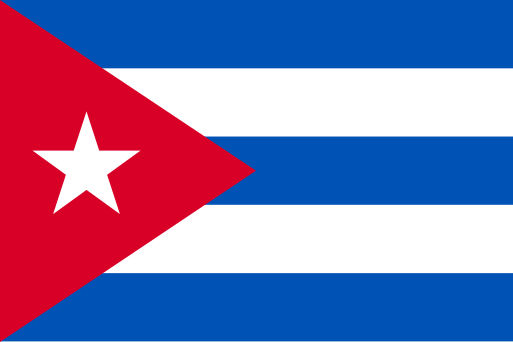
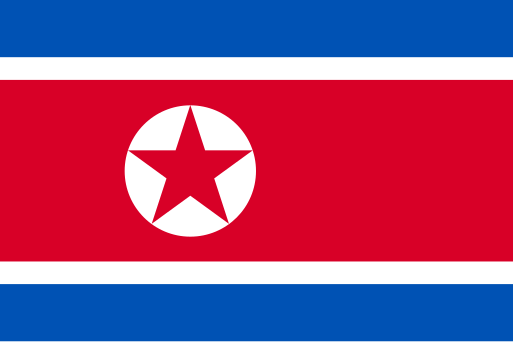
Few economies sit at either end. The Nordic countries combine high taxes and universal services with mostly private ownership, China and Vietnam keep large state sectors alongside private business, and the United States leans toward private ownership with lower redistribution. Estimated profiles of countries and ideologies at each end of this axis.

These are editorial estimates for discussion, not rankings of quality.

What do people get wrong about Collectivize vs Privatize?

  • Collectivize does not mean communism. Many people on this side want a mixed economy with strong public services.
  • Privatize does not mean no government. Most people on this side still want courts, roads and a basic safety net.

Frequently asked questions about Collectivize vs Privatize

To bring property, industries or farms under shared, public or cooperative ownership and control, instead of private ownership.

To transfer a business or service from public ownership to private owners, or more generally to favor private ownership over state ownership.

This axis is about who owns assets and how wealth is distributed. The Planned vs Laissez-faire axis is about how much the state directs and regulates economic activity.

Something else on your mind? Get in touch

Ready for all twelve?

Three statements show one axis. The full test scores every axis and finds your closest countries and ideologies.