Skip to content
12 Axes Test

Planned vs Laissez-faire

The Planned vs Laissez-faire axis asks how much the government should direct the economy: through plans, regulation and support for industries, or by leaving markets to work on their own.

Economic domain0% Planned ⟷ 100% Laissez-faire
Planned

The government should guide the economy through planning, regulation and intervention.

vs
Laissez-faire

Markets should be left largely free of government direction, with prices set by supply and demand.

0% (Planned)50% Neutral100% (Laissez-faire)

The question this axis asks: Should government steer the economy, or should markets decide?

Where do you stand?

Statement 1 of 3

The government should plan key parts of the economy instead of leaving them to the market.

Nothing is sent anywhere.

What is Planned vs Laissez-faire?

The question this axis asks

Should government steer the economy, or should markets decide?

This axis covers regulation, price controls, minimum wages, subsidies, industrial policy and economic planning. It asks about the amount of government direction, not about who owns the firms.

People on the Planned side argue that markets fail without guidance, for example on pollution, monopolies or essential goods. People on the Laissez-faire side argue that decentralized markets use information better than any planner and that intervention causes distortion.

What does each side believe?

Neither side is better or worse. They are different answers to the same question.

What does Planned mean?

The government should guide the economy through planning, regulation and intervention.

Typical positions

  • Governments should plan and support key industries
  • Regulation is needed to protect workers, consumers and the environment
  • The prices of essentials can be capped
  • Subsidies protect jobs and strategic sectors
What does Laissez-faire mean?

Markets should be left largely free of government direction, with prices set by supply and demand.

Typical positions

  • Prices and wages should be set by supply and demand
  • Subsidies distort markets
  • Fewer regulations are better
  • Government should only enforce contracts and property rights

What does your Planned vs Laissez-faire score mean?

Scores run from 0% to 100% toward Laissez-faire. Here is how to read them.

ScoreWhat it suggests
0–15%Very strongly Planned
16–30%Strongly Planned
31–43%Leaning Planned
44–56%Near the middle
57–69%Leaning Laissez-faire
70–84%Strongly Laissez-faire
85–100%Very strongly Laissez-faire

A middle score suggests you want markets to do most of the work, with rules and selective support from government.

How does Planned vs Laissez-faire play out in the real world?

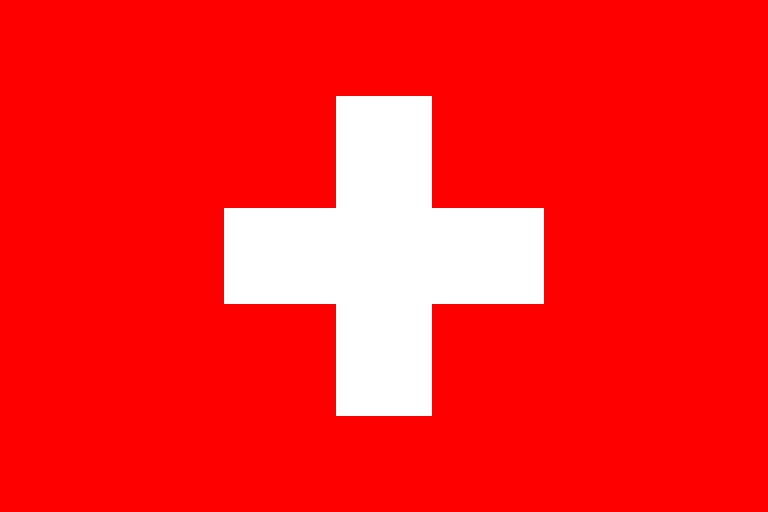
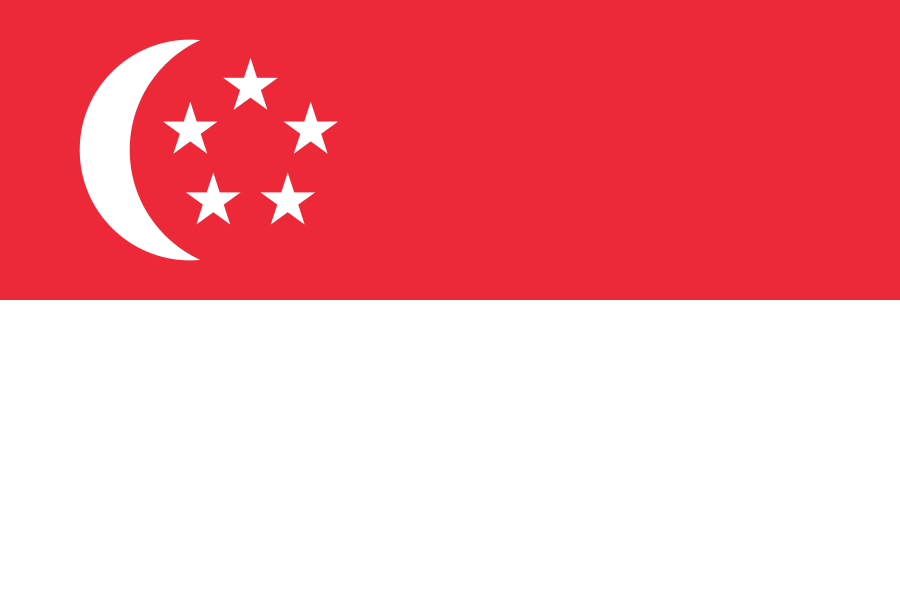
Economic freedom indexes rank places such as Singapore, Switzerland and New Zealand as highly market-oriented, while countries such as China and, in some periods, France and Argentina have used more state direction. Most countries combine market competition with significant regulation. Estimated profiles of countries and ideologies at each end of this axis.

These are editorial estimates for discussion, not rankings of quality.

What do people get wrong about Planned vs Laissez-faire?

  • Laissez-faire is French for “let it be”. It means leaving markets alone, not having no laws.
  • Planned does not necessarily mean a Soviet-style command economy. It also includes industrial policy and regulation in market economies.

Frequently asked questions about Planned vs Laissez-faire

It is a French phrase meaning “let it be” or “let them do”. In economics it means the government should interfere as little as possible with markets.

Not exactly. A planned or command economy is one in which the state directs production and prices. Communist states used it, but many market economies also practice planning in some sectors, such as infrastructure or industrial policy.

Yes. A country can have mostly private firms but heavy regulation, subsidies and state guidance of key sectors.

Something else on your mind? Get in touch

Ready for all twelve?

Three statements show one axis. The full test scores every axis and finds your closest countries and ideologies.