Skip to content
12 Axes Test

Social construct: Meaning and Examples

A social construct is an idea or category that exists because people in a society have agreed to treat it as real, rather than because of an objective fact of nature.

Where do you stand?

Statement 1 of 3

Gender roles are mostly rather than natural differences.

Nothing is sent anywhere.

What does social construct mean?

Money, borders, citizenship and the rules of a game are everyday examples: they are real in their effects, but they exist because people share the belief and behave accordingly. Sociologists use the idea to show how categories that seem natural can vary across cultures and over time.

Debate arises when the idea is applied to categories such as gender or race. Many scholars argue that the meanings and social roles attached to these categories are socially constructed, while others stress that biology also plays a role and that treating something as constructed does not make it unreal or unimportant. Positions often follow political lines, but the underlying questions are empirical and philosophical.
Who were the key historical thinkers behind social construct?

Influential figures in the 12 axes thinker pool who advocated, analyzed or shaped ideas around this concept.

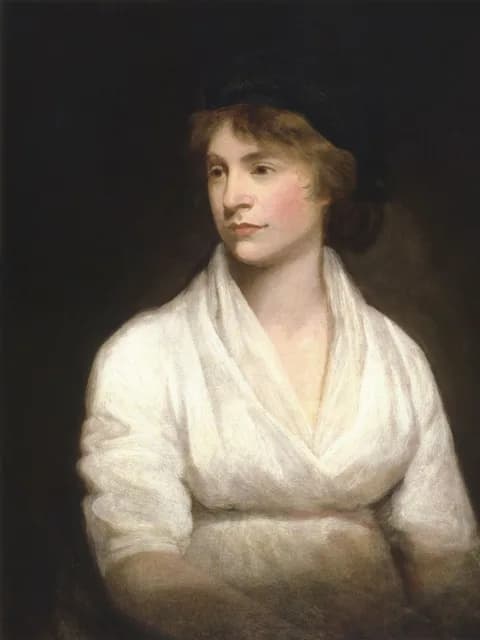
Mary Wollstonecraft

Mary Wollstonecraft

Writer & advocate of equality · 1759–1797

She argued that women should develop as independent, rational citizens, with education and rights rather than dependence on inherited privilege.

Progressive vs TraditionalProgressive

“Equal education challenges conventional gender hierarchy.”

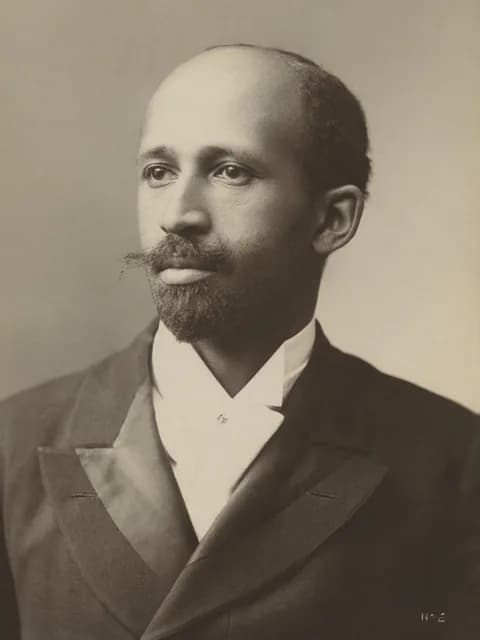
W. E. B. Du Bois

W. E. B. Du Bois

Sociologist & civil rights leader · 1868–1963

An American sociologist who co-founded the NAACP and argued that Black Americans should claim full citizenship without giving up a spirit of their own, then turned to Pan-Africanism, socialism and the peace movement.

Progressive vs TraditionalProgressive

“The Stanford Encyclopedia reads his early politics as expressive modernization, which brings the masses into the norms of modern life while heeding the ethos of the folk.”

What are some examples of social construct?

Real cases that people point to when they use the word.

  1. Money: its value rests on shared trust, not on any natural property.

  2. National borders, which change with agreements and wars.

  3. The meanings of gender roles, which differ between societies and eras.

What are the arguments for and against social construct?

Reasonable people disagree about this. These are the strongest points made on each side.

Arguments in favor

  • Helps explain why norms and categories change over time and place
  • Encourages questioning customs that appear natural but may be arbitrary

Arguments against and open questions

  • Critics say it can downplay the role of biology and evolution
  • Some argue the claim is overused and can be hard to test

How does social construct show up in the 12 axes test?

The test asks about it in a statement. Your answer moves one axis score.

Agreeing that gender roles are mostly social constructs moves your score toward the Progressive side of the Progressive vs Traditional axis.

Which way agreeing pushes the score

ProgressiveTraditional

Agreeing with a statement about social construct moves your score toward Progressive.

Social construct: frequently asked questions

No. Social constructs can be very real in their effects, as money and laws are. The term says that something depends on shared human agreement, not that it does not matter.

Money, national borders and time zones are common examples. They exist because people collectively accept and follow them.

On the 12 axes, this term sits on the Progressive vs Traditional axis, which asks: “Should society move on from old customs, or protect them?” Agreeing with a statement about it moves your score toward Progressive.

Something else on your mind? Get in touch

Where do you stand on Progressive vs Traditional?

Three statements gave you a first reading. The full test scores all twelve axes and finds your closest countries and ideologies.