
Skip to content
12 Axes Test

Social Democracy

Social democracy combines a market economy and democratic politics with a strong welfare state, public services and regulation, aiming to reduce inequality.

How close are you to Social Democracy?

Take the test and your match with Social Democracy shows up here. It is worked out in your browser and never sent anywhere.

Your alignment--%
Agree onTop 3 axes
Differ onKey gaps

What is Social Democracy?

Social democrats accept private enterprise and competitive markets but pair them with progressive taxation, universal services such as health care and education, and strong labor rights. The goal is to share the gains of growth widely without abolishing private ownership.

The model is most closely associated with the Nordic countries and with many postwar governments in Western Europe, though parties in this tradition differ widely on how far to go.

What are the core ideas of Social Democracy?

The ideas that most people in this tradition would sign up to.

  • Democratic government and civil liberties come first
  • A mixed economy with substantial public services
  • Progressive taxation to fund the welfare state
  • Strong unions and workplace protections
  • International cooperation and trade, with safeguards

Where does Social Democracy come from?

It grew out of the late-19th-century socialist movement, when many socialists chose to pursue reform through elections and parliaments rather than revolution.

Which historical thinkers are closest to Social Democracy?

Thinkers whose documented positions on the 12 axes align most closely with this ideology.

Albert Camus

Albert Camus

French-Algerian author · 1913–1960

A French-Algerian writer who wrote on the absurd and on revolt, broke with the communist left over its tolerance of terror, and opposed the death penalty.

Closest aligned axisMilitarist vs Pacifist

“Principled condemnation of capital punishment and indiscriminate political terrorism.”
Nelson Mandela

Nelson Mandela

South African president · 1918–2013

A South African lawyer imprisoned for 27 years for his part in the fight against apartheid, who became the first president elected by all South Africans in 1994.

Closest aligned axisPlanned vs Laissez-faire

“His government’s 1996 GEAR policy kept South Africa’s mixed economy but stressed growth through market economics and foreign investment, and none of the proposed nationalisation went ahead.”

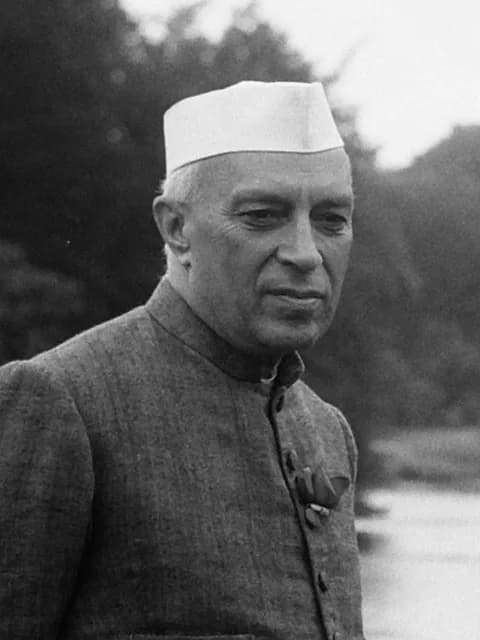
Jawaharlal Nehru

Jawaharlal Nehru

Prime Minister of India · 1889–1964

The first prime minister of independent India, who built a secular parliamentary democracy, a mixed economy with five-year plans, and a policy of non-alignment.

Closest aligned axisIrreligious vs Religious

“Made a secular state a founding principle of independent India, keeping religion out of public institutions.”

Where does Social Democracy sit on the 12 axes?

These are its strongest leanings, followed by all twelve axes. They describe the typical version of the tradition.

Strongest leanings

Governmental

Federal vs Unitary
Federal 45%55% Unitary
Democratic vs Autocratic
Democratic 92%8% Autocratic
Security vs Freedom
Security 18%82% Freedom

Diplomatic

Nationalism vs Internationalism
Nationalism 22%78% Internationalism
Militarist vs Pacifist
Militarist 30%70% Pacifist
Assimilationist vs Multiculturalist
Assimilationist 30%70% Multiculturalist

Economic

Collectivize vs Privatize
Collectivize 65%35% Privatize
Planned vs Laissez-faire
Planned 60%40% Laissez-faire
Isolationism vs Globalism
Isolationism 28%72% Globalism

Societal

Irreligious vs Religious
Irreligious 78%22% Religious
Progressive vs Traditional
Progressive 78%22% Traditional
Acceleration vs Bioconservative
Acceleration 60%40% Bioconservative

Editorial estimates for comparison and discussion. Real people and parties in this tradition vary.

Which countries are closest to Social Democracy?

Countries whose estimated profile is most like this ideology. No country follows a single ideology, so read this as a comparison, not a label.

What are the main criticisms of Social Democracy?

Every tradition has critics. These are the objections most often raised.

  • Critics on the right argue that high taxes and regulation can slow growth and weaken incentives to work.
  • Critics on the left argue that it leaves the basic power structure of capitalism intact.

Social Democracy: frequently asked questions

Social democracy combines a market economy and democratic politics with a strong welfare state, public services and regulation, aiming to reduce inequality.

It depends on the question, because left and right mix several things. On the 12 axes, Social Democracy sits closest to public ownership and state direction on economics and to faster social change on social values.

By estimated profile, the closest are Norway, Sweden, and Spain. No country follows one ideology purely, so treat this as a comparison, not a label.

Critics on the right argue that high taxes and regulation can slow growth and weaken incentives to work. Critics on the left argue that it leaves the basic power structure of capitalism intact.

Take the 12 axes test. It scores you on twelve axes and shows how closely your profile matches Social Democracy and every other ideology on this site. The calculation happens in your browser.

Something else on your mind? Get in touch

Do you agree with Social Democracy?

The test scores you on all twelve axes and ranks every ideology by how well it matches you.