Skip to content
12 Axes Test

Isolationism vs Globalism

The Isolationism vs Globalism axis asks how open a country’s economy should be: protected and self-reliant, or integrated into global trade and finance.

Economic domain0% Isolationism ⟷ 100% Globalism
Isolationism

A country should protect its economy and stay out of foreign entanglements, relying mainly on itself.

vs
Globalism

Countries should be economically open and integrated, with free movement of trade, investment and ideas.

0% (Isolationism)50% Neutral100% (Globalism)

The question this axis asks: Should a country shield its economy and stay out of foreign affairs, or open up to the world?

Where do you stand?

Statement 1 of 3

⁠, such as tariffs on imports, is justified to defend domestic jobs and industries.

Nothing is sent anywhere.

What is Isolationism vs Globalism?

The question this axis asks

Should a country shield its economy and stay out of foreign affairs, or open up to the world?

This axis covers tariffs and trade deals, foreign investment, self-sufficiency, supply chains and the role of international economic institutions. It combines economic protectionism with a wider preference for staying out of other countries’ affairs.

People on the Isolationism side usually argue that open markets cost local jobs and weaken independence, and that countries should focus on their own affairs. People on the Globalism side usually argue that trade and investment raise living standards and make countries more peaceful and interdependent.

What does each side believe?

Neither side is better or worse. They are different answers to the same question.

What does Isolationism mean?

A country should protect its economy and stay out of foreign entanglements, relying mainly on itself.

Typical positions

  • Tariffs can protect domestic jobs and industries
  • A country should produce what it needs
  • Foreign ownership of land and key businesses should be limited
  • A country should avoid foreign conflicts and alliances
What does Globalism mean?

Countries should be economically open and integrated, with free movement of trade, investment and ideas.

Typical positions

  • Free trade makes most people better off
  • Goods, money and ideas should move across borders freely
  • Global supply chains build prosperity and peace
  • Restrictions on foreign investment usually backfire

What does your Isolationism vs Globalism score mean?

Scores run from 0% to 100% toward Globalism. Here is how to read them.

ScoreWhat it suggests
0–15%Very strongly Isolationism
16–30%Strongly Isolationism
31–43%Leaning Isolationism
44–56%Near the middle
57–69%Leaning Globalism
70–84%Strongly Globalism
85–100%Very strongly Globalism

A middle score suggests you support trade while protecting the sectors you consider important.

How does Isolationism vs Globalism play out in the real world?

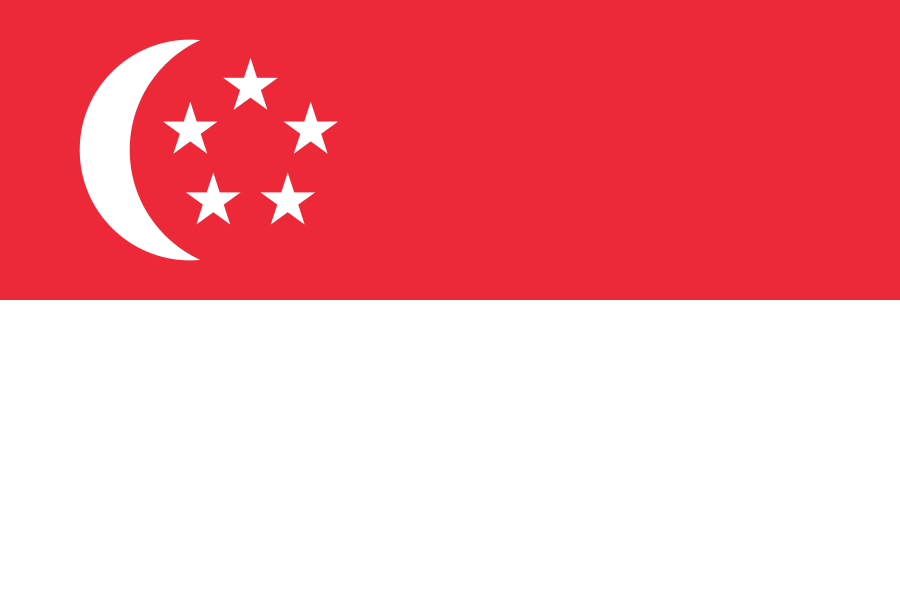
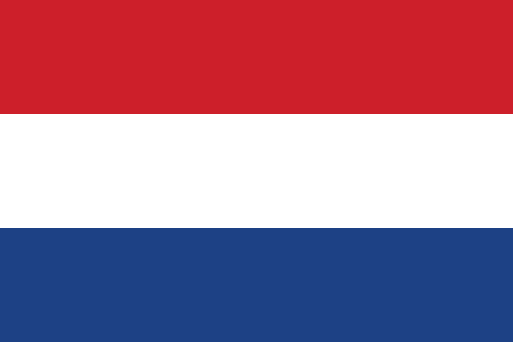
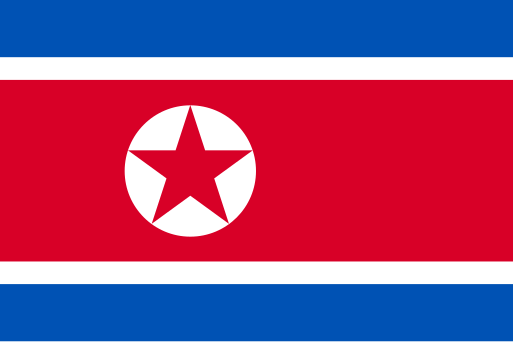
Singapore, the Netherlands and Ireland are among the most trade-open economies, while countries with high barriers or heavy self-sufficiency goals, such as North Korea, are among the most closed. Most countries use a mix, for example an open economy with tariffs on a few sectors. Estimated profiles of countries and ideologies at each end of this axis.

These are editorial estimates for discussion, not rankings of quality.

What do people get wrong about Isolationism vs Globalism?

  • Globalism in this test means economic openness and integration. It does not refer to a single world government.
  • Isolationism is about trade and foreign entanglement. It is not the same as nationalism, which is on a different axis.

Frequently asked questions about Isolationism vs Globalism

Protectionism is an economic policy of shielding domestic industries from imports. Isolationism is the broader stance of limiting involvement with other countries, including politically and militarily. The axis covers both.

The growing connection of economies, cultures and people across the world through trade, investment, travel and communication.

Trade between countries with few or no tariffs, quotas or other restrictions.

Something else on your mind? Get in touch

Ready for all twelve?

Three statements show one axis. The full test scores every axis and finds your closest countries and ideologies.