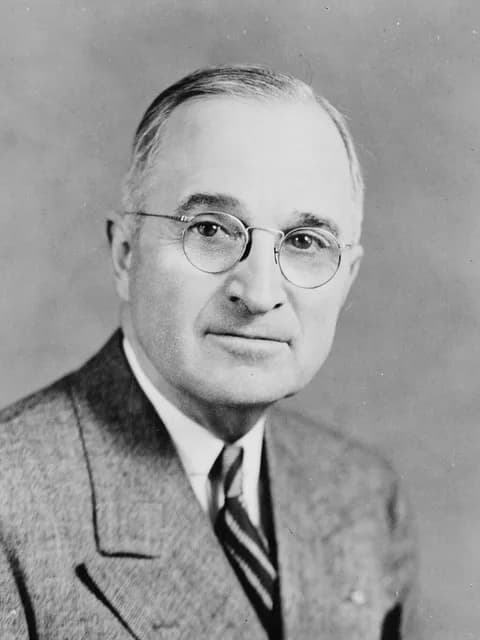
Thirty-third US president
Harry S. Truman’s political views
The president who ended the Second World War, launched the Truman Doctrine, the Marshall Plan and NATO, desegregated the armed forces and sent US troops to Korea.
- Presidency
- 33rd, 1945–1953
- Party
- Democratic
- Lived
- 1884–1972
- Scored on
- 11 of 12 axes
Strongest documented leanings
- Internationalism78%
- Planned75%
- Globalism72%
Where Truman stood on the twelve axes
Each bar is one axis, between its two poles. Only axes with a documented position are scored; the others are shown as faint stubs on the icon and listed below, never as neutral.
Based on his foreign-policy record and his domestic Fair Deal proposals, most of which Congress blocked. Scores follow what he did and proposed, not what passed.
- Federal vs UnitaryUnitary 70%FederalUnitary
Ordered equal treatment in the armed forces in July 1948 and pressed a federal civil-rights agenda after the 1947 report To Secure These Rights.
- Democratic vs AutocraticDemocratic 68%DemocraticAutocratic
Sent troops to Korea without a declaration of war and seized the steel mills, but obeyed the Court and relieved General MacArthur on 11 April 1951 over a public challenge to policy.
- Security vs FreedomSecurity 55%SecurityFreedom
Set up federal loyalty boards by Executive Order 9835 in March 1947, under which just over 300 employees were dismissed, yet vetoed the McCarran Internal Security Act of 1950 as a threat to civil liberties; Congress overrode him.
- Nationalism vs InternationalismInternationalism 78%NationalismInternationalism
Announced the Truman Doctrine in March 1947, signed the Marshall Plan’s Foreign Assistance Act in April 1948 and brought the United States into NATO in 1949.
- Militarist vs PacifistMilitarist 70%MilitaristPacifist
Ordered the atomic bombings of Hiroshima and Nagasaki in August 1945 and sent troops to Korea in 1950; defence spending rose from about 5% of national output in 1948 to 13% in 1952.
- Assimilationist vs MulticulturalistMulticulturalist 65%AssimilationistMulticulturalist
Vetoed the McCarran–Walter Act of 1952 for keeping national-origins quotas, which Congress overrode, and signed the Displaced Persons Act of 1948.
- Collectivize vs PrivatizeCollectivize 62%CollectivizePrivatize
Proposed national health insurance in November 1945 and won the Housing Act of 1949, but Congress blocked most of the Fair Deal.
- Planned vs Laissez-fairePlanned 75%PlannedLaissez-faire
Won an extension of price controls in July 1946, backed the Employment Act of 1946 and seized the steel mills in April 1952, a move the Supreme Court struck down 6–3.
- Isolationism vs GlobalismGlobalism 72%IsolationismGlobalism
The United States signed the General Agreement on Tariffs and Trade at Geneva on 30 October 1947, though his administration dropped the International Trade Organization charter in December 1950.
- Irreligious vs ReligiousReligious 65%IrreligiousReligious
Signed the bill of 17 April 1952 that required each president to proclaim an annual National Day of Prayer.
- Progressive vs TraditionalProgressive 70%ProgressiveTraditional
Commissioned the 1947 civil-rights report and desegregated the armed forces in 1948.
No documented position, so not scored: Acceleration vs Bioconservative.
What shaped the scores
Dated actions from the record. Each is tied to the axis it informs.
In an address to Congress he sets out the Truman Doctrine, asking for $400 million in aid for Greece and Turkey.
Nationalism vs Internationalism
Presidency of Harry S. Truman · WikipediaHe signs Executive Order 9835, which creates loyalty boards for federal employees; just over 300 are dismissed.
Security vs Freedom
Executive Order 9835 · WikipediaHe signs the Foreign Assistance Act, the Marshall Plan; Congress eventually allocates $12.4 billion over four years.
Nationalism vs Internationalism
Presidency of Harry S. Truman · WikipediaHe orders equal treatment and opportunity in the armed forces with Executive Order 9981.
Federal vs Unitary
Presidency of Harry S. Truman · WikipediaHe relieves General MacArthur of his commands after public statements that undercut his Korean War policy.
Democratic vs Autocratic
Presidency of Harry S. Truman · WikipediaHe orders the seizure of the steel mills; the Supreme Court rules against him 6–3.
Planned vs Laissez-faire
Presidency of Harry S. Truman · Wikipedia
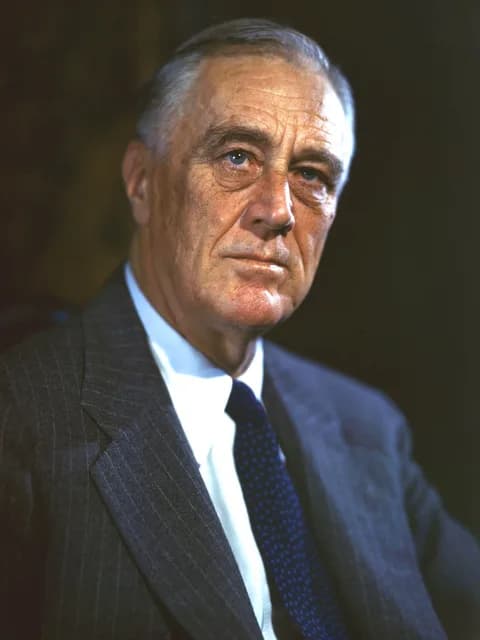
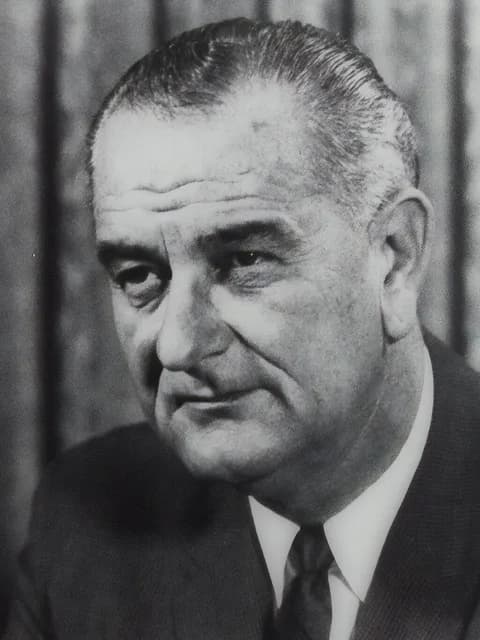
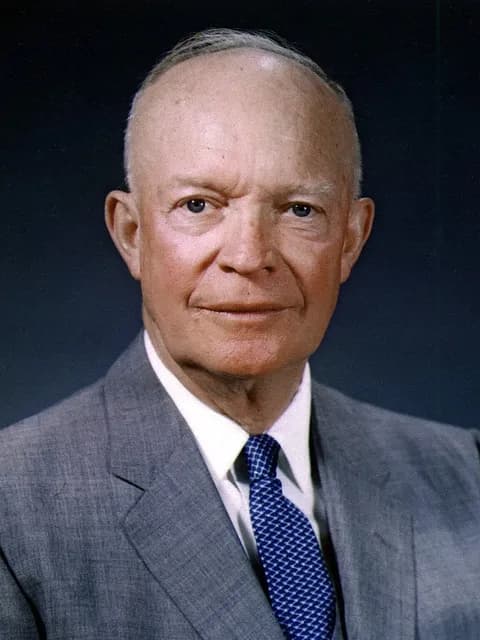
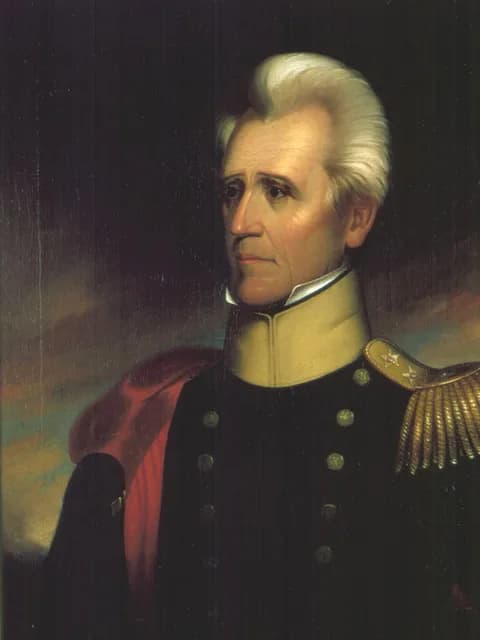
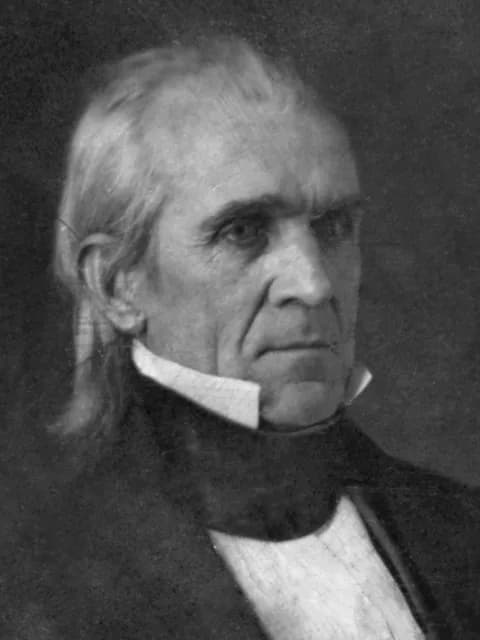
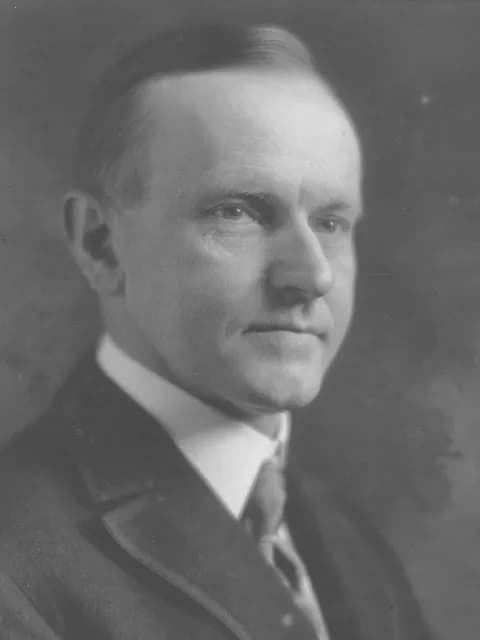
Truman compared with other presidents
Measured on the axes both presidents are scored on, with the same rules as the quiz.
Questions about Harry S. Truman’s politics
Something else on your mind? Get in touch
Sources and credits
Main source: Truman Doctrine · The Avalon Project
Also read
Portrait: Edmonston Studio, 1945 · Public domain
Scores are editorial estimates from the public record, not measurements. A place on this site is not praise.
Keep exploring
- All presidents in the quizTake the test and see which president you are closest to.
- Franklin D. RooseveltThe president before Truman in our list.
- Dwight D. EisenhowerThe president after Truman in our list.
- United StatesWhere the United States sits on the twelve axes.
- MethodologyHow the axes, the scoring and the matching work.
How close are you to Truman?
Take the test and see how your twelve scores compare, axis by axis.