Skip to content
12 Axes Test

Anarcho-Communism

Anarcho-communism seeks a stateless society without private property or hierarchy, in which free communities share resources according to need through voluntary cooperation.

How close are you to Anarcho-Communism?

Take the test and your match with Anarcho-Communism shows up here. It is worked out in your browser and never sent anywhere.

Your alignment--%
Agree onTop 3 axes
Differ onKey gaps

What is Anarcho-Communism?

Anarcho-communists reject both the state and capitalism. They imagine federations of self-governing communes and workplaces that coordinate by mutual agreement and distribute goods according to need.

Thinkers such as Peter Kropotkin argued that cooperation is as natural to humans as competition and that society can organize itself without coercive authority.

What are the core ideas of Anarcho-Communism?

The ideas that most people in this tradition would sign up to.

  • Abolition of the state and of private ownership of productive property
  • Voluntary federations of communes and workplaces
  • Distribution according to need
  • Direct democracy and mutual aid
  • Opposition to all forms of hierarchy

Where does Anarcho-Communism come from?

It emerged in the 1870s and 1880s from the anarchist wing of the First International, with Kropotkin as its best-known theorist.

Which historical thinkers are closest to Anarcho-Communism?

Thinkers whose documented positions on the 12 axes align most closely with this ideology.

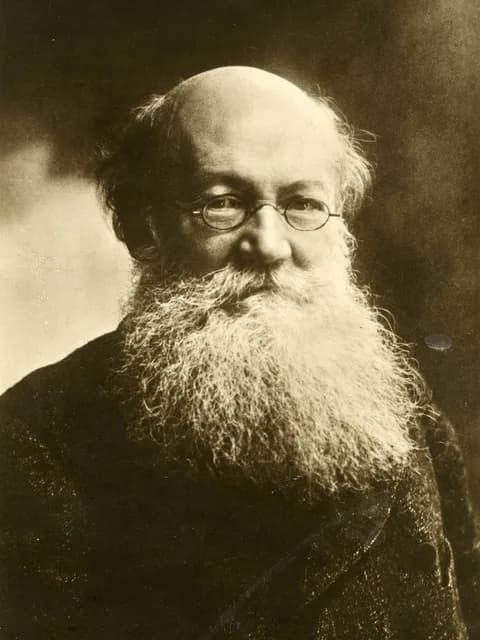
Peter Kropotkin

Peter Kropotkin

Geographer & anarchist thinker · 1842–1921

He imagined a society organized through voluntary cooperation and shared resources, replacing centralized authority with freely associated communities.

Closest aligned axisDemocratic vs Autocratic

“Voluntary participation rather than rule by a sovereign authority.”

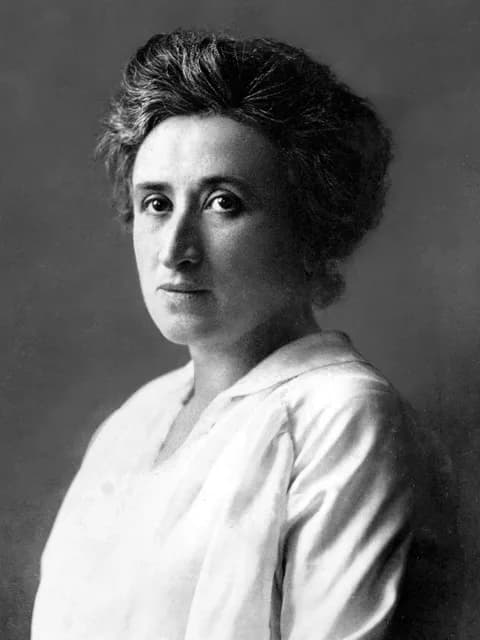
Rosa Luxemburg

Rosa Luxemburg

Revolutionary socialist · 1871–1919

A Polish-born German socialist who argued for revolution through mass action, opposed the First World War, and warned that socialism without freedom of opinion would die.

Closest aligned axisDemocratic vs Autocratic

“The Russian Revolution says that without elections, a free press and free assembly, life dies out in every public institution.”

Rabindranath Tagore

Rabindranath Tagore

Poet & philosopher · 1861–1941

A Bengali poet and Nobel laureate who criticised nationalism, founded a school and university for open exchange, and renounced his knighthood after the 1919 Amritsar massacre.

“His 1917 lectures call the nation an organised selfishness that threatens humanity.”

Where does Anarcho-Communism sit on the 12 axes?

These are its strongest leanings, followed by all twelve axes. They describe the typical version of the tradition.

Strongest leanings

Governmental

Federal vs Unitary
Federal 98%2% Unitary
Democratic vs Autocratic
Democratic 95%5% Autocratic
Security vs Freedom
Security 8%92% Freedom

Diplomatic

Nationalism vs Internationalism
Nationalism 5%95% Internationalism
Militarist vs Pacifist
Militarist 15%85% Pacifist
Assimilationist vs Multiculturalist
Assimilationist 15%85% Multiculturalist

Economic

Collectivize vs Privatize
Collectivize 97%3% Privatize
Planned vs Laissez-faire
Planned 90%10% Laissez-faire
Isolationism vs Globalism
Isolationism 30%70% Globalism

Societal

Irreligious vs Religious
Irreligious 96%4% Religious
Progressive vs Traditional
Progressive 88%12% Traditional
Acceleration vs Bioconservative
Acceleration 65%35% Bioconservative

Editorial estimates for comparison and discussion. Real people and parties in this tradition vary.

What are the main criticisms of Anarcho-Communism?

Every tradition has critics. These are the objections most often raised.

  • Critics argue that a large, complex society cannot function without some authority and enforceable rules.
  • Others say that without a state, power would pass to whoever is strongest.

Anarcho-Communism: frequently asked questions

Anarcho-communism seeks a stateless society without private property or hierarchy, in which free communities share resources according to need through voluntary cooperation.

It depends on the question, because left and right mix several things. On the 12 axes, Anarcho-Communism sits closest to public ownership and state direction on economics and to faster social change on social values.

Critics argue that a large, complex society cannot function without some authority and enforceable rules. Others say that without a state, power would pass to whoever is strongest.

Take the 12 axes test. It scores you on twelve axes and shows how closely your profile matches Anarcho-Communism and every other ideology on this site. The calculation happens in your browser.

Something else on your mind? Get in touch

Do you agree with Anarcho-Communism?

The test scores you on all twelve axes and ranks every ideology by how well it matches you.