
Skip to content
12 Axes Test

Communism

Communism is the aim of a classless, stateless society with common ownership of the means of production, as described in the writings of Karl Marx and Friedrich Engels.

How close are you to Communism?

Take the test and your match with Communism shows up here. It is worked out in your browser and never sent anywhere.

Your alignment--%
Agree onTop 3 axes
Differ onKey gaps

What is Communism?

In Marxist theory, history is driven by class struggle, and capitalism will eventually be replaced by a society in which the means of production are owned in common and goods are distributed according to need.

In everyday speech, “communism” often refers to the one-party states that ruled the Soviet Union, China and other countries in the 20th century. Those states called themselves socialist and described communism as a future goal.

What are the core ideas of Communism?

The ideas that most people in this tradition would sign up to.

  • Common ownership of the means of production
  • The abolition of social classes
  • Distribution according to need
  • Internationalism, with the working class acting across borders
  • The eventual withering away of the state

Where does Communism come from?

Its modern form comes from The Communist Manifesto (1848) and Marx’s later work, and was developed by many movements and thinkers afterward.

Which historical thinkers are closest to Communism?

Thinkers whose documented positions on the 12 axes align most closely with this ideology.

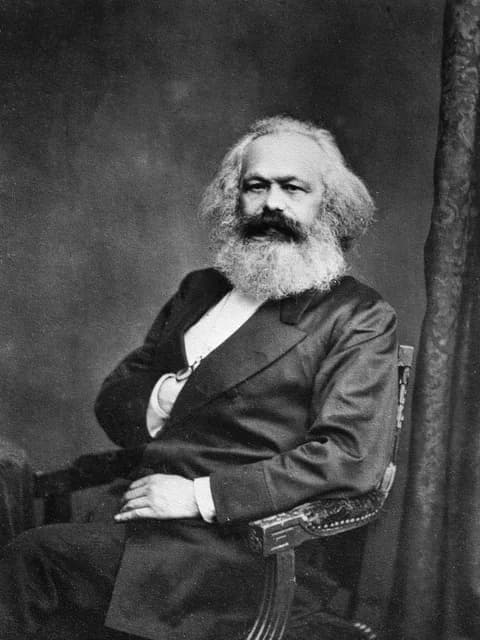
Karl Marx

Karl Marx

Philosopher & critic of political economy · 1818–1883

His critique of capitalism connected economic ownership with power, and looked toward emancipation from class domination.

“Working-class solidarity is conceived across national borders.”

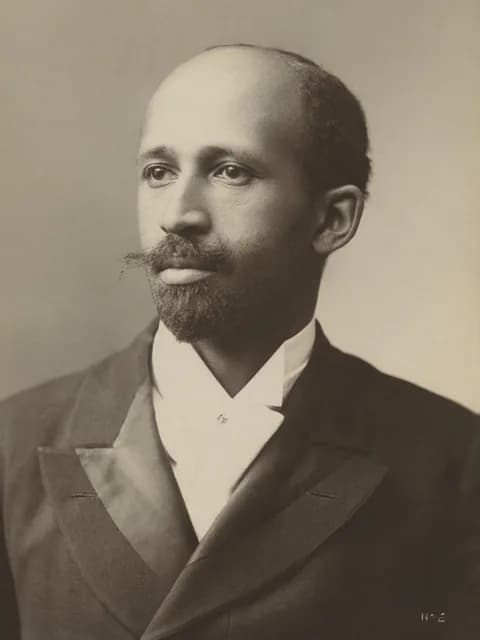
W. E. B. Du Bois

W. E. B. Du Bois

Sociologist & civil rights leader · 1868–1963

An American sociologist who co-founded the NAACP and argued that Black Americans should claim full citizenship without giving up a spirit of their own, then turned to Pan-Africanism, socialism and the peace movement.

Closest aligned axisProgressive vs Traditional

“The Stanford Encyclopedia reads his early politics as expressive modernization, which brings the masses into the norms of modern life while heeding the ethos of the folk.”

Jawaharlal Nehru

Jawaharlal Nehru

Prime Minister of India · 1889–1964

The first prime minister of independent India, who built a secular parliamentary democracy, a mixed economy with five-year plans, and a policy of non-alignment.

Closest aligned axisProgressive vs Traditional

“The Discovery of India urges a “scientific temper” in place of superstition and custom.”

Where does Communism sit on the 12 axes?

These are its strongest leanings, followed by all twelve axes. They describe the typical version of the tradition.

Strongest leanings

Governmental

Federal vs Unitary
Federal 40%60% Unitary
Democratic vs Autocratic
Democratic 75%25% Autocratic
Security vs Freedom
Security 55%45% Freedom

Diplomatic

Nationalism vs Internationalism
Nationalism 8%92% Internationalism
Militarist vs Pacifist
Militarist 45%55% Pacifist
Assimilationist vs Multiculturalist
Assimilationist 25%75% Multiculturalist

Economic

Collectivize vs Privatize
Collectivize 98%2% Privatize
Planned vs Laissez-faire
Planned 95%5% Laissez-faire
Isolationism vs Globalism
Isolationism 30%70% Globalism

Societal

Irreligious vs Religious
Irreligious 97%3% Religious
Progressive vs Traditional
Progressive 80%20% Traditional
Acceleration vs Bioconservative
Acceleration 65%35% Bioconservative

Editorial estimates for comparison and discussion. Real people and parties in this tradition vary.

What are the main criticisms of Communism?

Every tradition has critics. These are the objections most often raised.

  • Critics point to the record of one-party states that claimed the name, including repression and economic failures.
  • Economists argue that without market prices it is hard to coordinate a complex economy.
  • Defenders reply that those states did not reflect the vision described by Marx.

Communism: frequently asked questions

Communism is the aim of a classless, stateless society with common ownership of the means of production, as described in the writings of Karl Marx and Friedrich Engels.

It depends on the question, because left and right mix several things. On the 12 axes, Communism sits closest to public ownership and state direction on economics and to faster social change on social values.

Critics point to the record of one-party states that claimed the name, including repression and economic failures. Economists argue that without market prices it is hard to coordinate a complex economy. Defenders reply that those states did not reflect the vision described by Marx.

Take the 12 axes test. It scores you on twelve axes and shows how closely your profile matches Communism and every other ideology on this site. The calculation happens in your browser.

Something else on your mind? Get in touch

Do you agree with Communism?

The test scores you on all twelve axes and ranks every ideology by how well it matches you.