
Skip to content
12 Axes Test

Market Socialism

Market socialism combines social or cooperative ownership of enterprises with a market for goods and services, rather than a centrally planned economy.

How close are you to Market Socialism?

Take the test and your match with Market Socialism shows up here. It is worked out in your browser and never sent anywhere.

Your alignment--%
Agree onTop 3 axes
Differ onKey gaps

What is Market Socialism?

Market socialists want firms to be owned by workers, communities or the public, but to compete and respond to prices in markets. The idea is to keep the efficiency of markets while avoiding the concentration of private capital.

Real-world examples are partial. Yugoslavia’s worker self-management was an earlier experiment, and cooperatives such as Mondragon in Spain show the idea at the scale of a firm.

What are the core ideas of Market Socialism?

The ideas that most people in this tradition would sign up to.

  • Workers, communities or the public own firms
  • Prices and competition allocate goods and services
  • Wider ownership of capital to reduce inequality
  • Democratic governance inside the workplace

Where does Market Socialism come from?

Early versions go back to 19th-century cooperative thinkers; the economic case was debated in the 1920s and 1930s “socialist calculation” controversy.

Which historical thinkers are closest to Market Socialism?

Thinkers whose documented positions on the 12 axes align most closely with this ideology.

Albert Camus

Albert Camus

French-Algerian author · 1913–1960

A French-Algerian writer who wrote on the absurd and on revolt, broke with the communist left over its tolerance of terror, and opposed the death penalty.

Closest aligned axisDemocratic vs Autocratic

“Democracy as a system built on humility and dialogue that curbs the temptation to tyranny.”

John Rawls

John Rawls

Harvard political philosopher · 1921–2002

An American philosopher who proposed that just institutions are those people would choose behind a veil of ignorance, with equal basic liberties and inequalities only where they help the worst off.

Closest aligned axisSecurity vs Freedom

“First principle of justice guarantees an extensive scheme of equal basic liberties.”

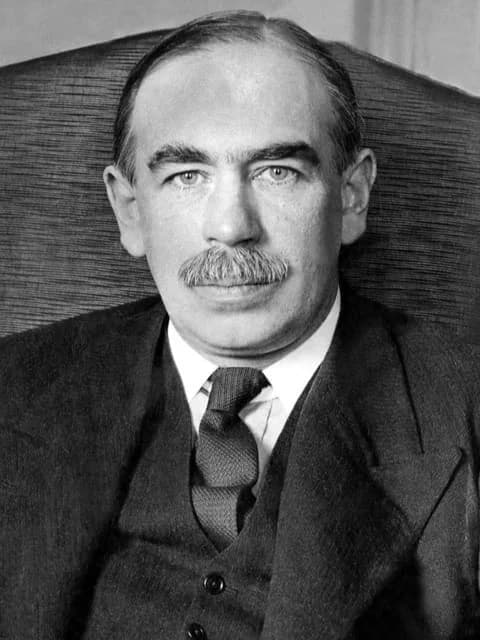
John Maynard Keynes

John Maynard Keynes

British economist & civil servant · 1883–1946

A British economist who argued that governments should spend to counter slumps, and who helped design the post-war monetary order at Bretton Woods.

“Attacked punitive reparations in The Economic Consequences of the Peace (1919) and led the British delegation on the post-war institutions that became the IMF and World Bank.”

Where does Market Socialism sit on the 12 axes?

These are its strongest leanings, followed by all twelve axes. They describe the typical version of the tradition.

Strongest leanings

Governmental

Federal vs Unitary
Federal 50%50% Unitary
Democratic vs Autocratic
Democratic 85%15% Autocratic
Security vs Freedom
Security 25%75% Freedom

Diplomatic

Nationalism vs Internationalism
Nationalism 30%70% Internationalism
Militarist vs Pacifist
Militarist 30%70% Pacifist
Assimilationist vs Multiculturalist
Assimilationist 32%68% Multiculturalist

Economic

Collectivize vs Privatize
Collectivize 78%22% Privatize
Planned vs Laissez-faire
Planned 50%50% Laissez-faire
Isolationism vs Globalism
Isolationism 38%62% Globalism

Societal

Irreligious vs Religious
Irreligious 82%18% Religious
Progressive vs Traditional
Progressive 78%22% Traditional
Acceleration vs Bioconservative
Acceleration 60%40% Bioconservative

Editorial estimates for comparison and discussion. Real people and parties in this tradition vary.

Which countries are closest to Market Socialism?

Countries whose estimated profile is most like this ideology. No country follows a single ideology, so read this as a comparison, not a label.

What are the main criticisms of Market Socialism?

Every tradition has critics. These are the objections most often raised.

  • Critics argue that worker-owned firms can under-invest or struggle to raise capital.
  • Others say the model is unstable and tends to drift toward either capitalism or central planning.

Market Socialism: frequently asked questions

Market socialism combines social or cooperative ownership of enterprises with a market for goods and services, rather than a centrally planned economy.

It depends on the question, because left and right mix several things. On the 12 axes, Market Socialism sits closest to public ownership and state direction on economics and to faster social change on social values.

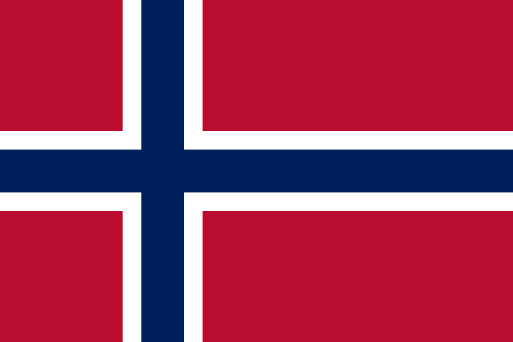
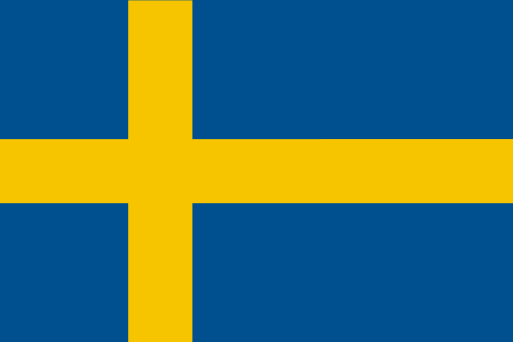
By estimated profile, the closest are Spain, Norway, and Sweden. No country follows one ideology purely, so treat this as a comparison, not a label.

Critics argue that worker-owned firms can under-invest or struggle to raise capital. Others say the model is unstable and tends to drift toward either capitalism or central planning.

Take the 12 axes test. It scores you on twelve axes and shows how closely your profile matches Market Socialism and every other ideology on this site. The calculation happens in your browser.

Something else on your mind? Get in touch

Do you agree with Market Socialism?

The test scores you on all twelve axes and ranks every ideology by how well it matches you.