

Skip to content
12 Axes Test

Ordoliberalism

Ordoliberalism, the thinking behind Germany’s “social market economy”, holds that a free market needs strong rules and a strong state to keep competition fair.

Strongest leanings

  1. Democratic92%
  2. Globalism80%
  3. Freedom75%
See all twelve axes

How close are you to Ordoliberalism?

Take the test and your match with Ordoliberalism shows up here. It is worked out in your browser and never sent anywhere.

Your alignment--%
Agree onTop 3 axes
Differ onKey gaps

What is Ordoliberalism?

Ordoliberals reject both central planning and laissez-faire. They argue that the state must set and enforce clear rules, preventing monopolies, keeping money stable and providing a basic social safety net, so that markets serve everyone.

It has shaped German economic policy since the 1940s and many of the EU’s competition and budget rules.

What are the core ideas of Ordoliberalism?

The ideas that most people in this tradition would sign up to.

  • A strong legal framework for markets
  • Active prevention of monopolies and cartels
  • Price and monetary stability
  • A social safety net within a market economy
  • Sound public finances

Where does Ordoliberalism come from?

It was developed in the 1930s and 1940s by economists of the Freiburg School such as Walter Eucken, and put into practice by Ludwig Erhard after 1948.

Which historical thinkers are closest to Ordoliberalism?

Thinkers whose documented positions on the 12 axes align most closely with this ideology.

John Rawls

John Rawls

Harvard political philosopher · 1921–2002

An American philosopher who proposed that just institutions are those people would choose behind a veil of ignorance, with equal basic liberties and inequalities only where they help the worst off.

Closest aligned axisSecurity vs Freedom

“First principle of justice guarantees an extensive scheme of equal basic liberties.”
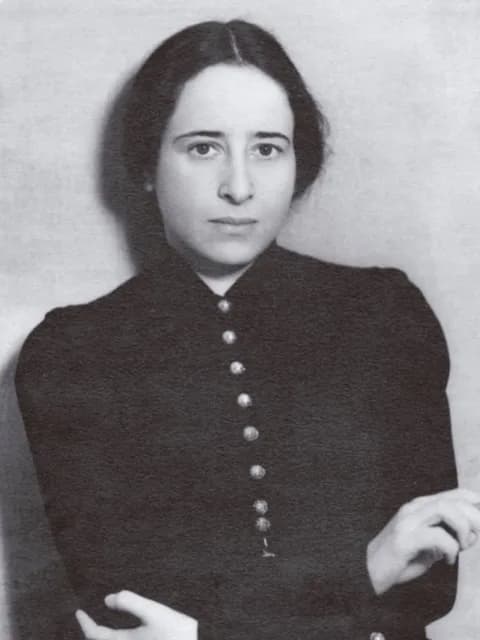
Hannah Arendt

Hannah Arendt

Political theorist · 1906–1975

A German-Jewish philosopher who fled the Nazis and wrote on totalitarianism, on the dignity of public action, and on the stateless having no right to have rights.

“In the 1940s she criticised the nation-state and urged a Jewish–Arab federation in Palestine instead of a Jewish state.”

Adam Smith

Adam Smith

Scottish moral philosopher & economist · 1723–1790

A Scottish moral philosopher whose Wealth of Nations explained how specialisation and competition create wealth, and who criticised monopolies and trade restrictions.

Closest aligned axisFederal vs Unitary

“Local administration manages revenue and community needs better than distant centralization.”

Where does Ordoliberalism sit on the 12 axes?

These are its strongest leanings, followed by all twelve axes. They describe the typical version of the tradition.

Strongest leanings

Governmental

Federal vs Unitary
Federal 70%30% Unitary
Democratic vs Autocratic
Democratic 92%8% Autocratic
Security vs Freedom
Security 25%75% Freedom

Diplomatic

Nationalism vs Internationalism
Nationalism 30%70% Internationalism
Militarist vs Pacifist
Militarist 38%62% Pacifist
Assimilationist vs Multiculturalist
Assimilationist 45%55% Multiculturalist

Economic

Collectivize vs Privatize
Collectivize 45%55% Privatize
Planned vs Laissez-faire
Planned 42%58% Laissez-faire
Isolationism vs Globalism
Isolationism 20%80% Globalism

Societal

Irreligious vs Religious
Irreligious 65%35% Religious
Progressive vs Traditional
Progressive 65%35% Traditional
Acceleration vs Bioconservative
Acceleration 45%55% Bioconservative

Editorial estimates for comparison and discussion. Real people and parties in this tradition vary.

Which countries are closest to Ordoliberalism?

Countries whose estimated profile is most like this ideology. No country follows a single ideology, so read this as a comparison, not a label.

What are the main criticisms of Ordoliberalism?

Every tradition has critics. These are the objections most often raised.

  • Critics say its emphasis on rules and budget discipline can be too rigid in a recession.
  • Others argue that its emphasis on stability favors creditors over debtors.

Ordoliberalism: frequently asked questions

Ordoliberalism, the thinking behind Germany’s “social market economy”, holds that a free market needs strong rules and a strong state to keep competition fair.

It depends on the question, because left and right mix several things. On the 12 axes, Ordoliberalism sits closest to a mix of public and private on economics and to faster social change on social values.

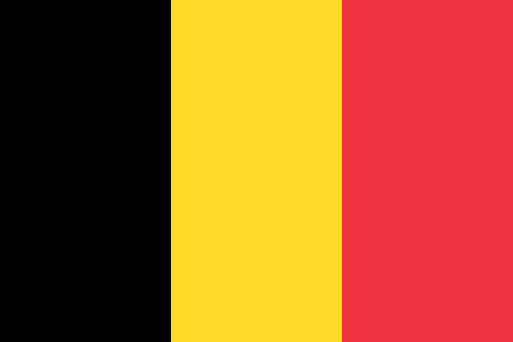
By estimated profile, the closest are Germany, Spain, and Belgium. No country follows one ideology purely, so treat this as a comparison, not a label.

Critics say its emphasis on rules and budget discipline can be too rigid in a recession. Others argue that its emphasis on stability favors creditors over debtors.

Take the 12 axes test. It scores you on twelve axes and shows how closely your profile matches Ordoliberalism and every other ideology on this site. The calculation happens in your browser.

Something else on your mind? Get in touch

Do you agree with Ordoliberalism?

The test scores you on all twelve axes and ranks every ideology by how well it matches you.