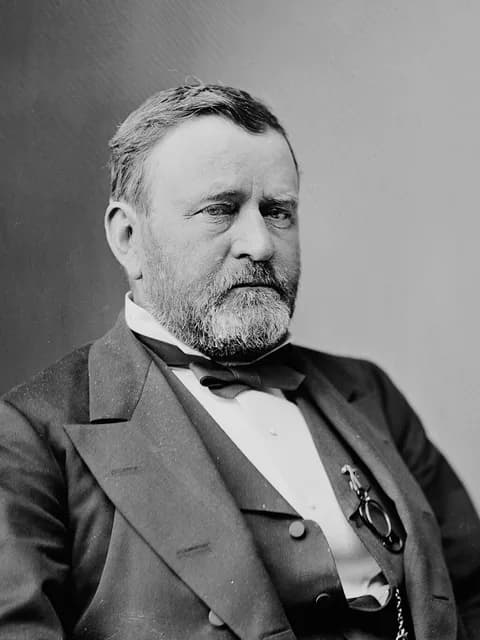
Eighteenth US president
Ulysses S. Grant’s political views
The eighteenth president, who used federal power against the Ku Klux Klan, backed the Fifteenth Amendment, settled the Alabama claims by arbitration and vetoed the Inflation Bill.
- Presidency
- 18th, 1869–1877
- Party
- Republican
- Lived
- 1822–1885
- Scored on
- 7 of 12 axes
Strongest documented leanings
- Unitary80%
- Laissez-faire72%
- Irreligious70%
Where Grant stood on the twelve axes
Each bar is one axis, between its two poles. Only axes with a documented position are scored; the others are shown as faint stubs on the icon and listed below, never as neutral.
Based on his two terms from 1869 to 1877 and the Reconstruction laws he enforced. Corruption in his administration is part of the story but is not scored; only the record on the axes is.
- Federal vs UnitaryUnitary 80%FederalUnitary
Backed the Fifteenth Amendment, ratified on 3 February 1870, created the Department of Justice on 22 June 1870 and signed the Force Act of 31 May 1870.
- Security vs FreedomSecurity 55%SecurityFreedom
Suspended habeas corpus in nine South Carolina counties on 17 October 1871 to break the Ku Klux Klan, using the power the Klan Act of 20 April 1871 gave him.
- Nationalism vs InternationalismInternationalism 52%NationalismInternationalism
Signed the Treaty of Washington on 8 May 1871, which sent the Alabama claims to arbitration and won $15.5 million in 1872, but pressed the annexation of Santo Domingo, which the Senate rejected in 1870.
- Militarist vs PacifistPacifist 60%MilitaristPacifist
The Virginius affair of October 1873 set off war scares with Spain but ended quietly after Spain agreed to reparations, and the Alabama claims went to arbitration rather than war.
- Assimilationist vs MulticulturalistAssimilationist 58%AssimilationistMulticulturalist
His Peace Policy gave Indian agencies to church appointees and pressed the Sioux onto reservations, cutting wars from 101 in 1869 to 15 in 1875, while he signed the Civil Rights Act of 1875.
- Planned vs Laissez-faireLaissez-faire 72%PlannedLaissez-faire
Vetoed the Inflation Bill on 22 April 1874 and signed the Resumption of Specie Act on 14 January 1875, which set 1 January 1879 for paper money to be redeemable in gold.
- Irreligious vs ReligiousIrreligious 70%IrreligiousReligious
Told the Army of the Tennessee at Des Moines on 29 September 1875 that no public money should go to sectarian schools and that religion belonged to the family, the church and the private school.
No documented position, so not scored: Democratic vs Autocratic, Collectivize vs Privatize, Isolationism vs Globalism, Progressive vs Traditional, and Acceleration vs Bioconservative.
What shaped the scores
Dated actions from the record. Each is tied to the axis it informs.
The Fifteenth Amendment, which Grant worked to get ratified, becomes part of the Constitution.
Federal vs Unitary
Presidency of Ulysses S. Grant · WikipediaGrant signs the first Enforcement Act, to protect Black voters from violence and intimidation.
Federal vs Unitary
Enforcement Acts · WikipediaHe signs the bill creating the Department of Justice.
Federal vs Unitary
Presidency of Ulysses S. Grant · WikipediaHe signs the Treaty of Washington, which sends the Alabama claims to an international tribunal.
Nationalism vs Internationalism
Treaty of Washington (1871) · WikipediaHe suspends habeas corpus in all nine South Carolina counties to break the Klan.
Security vs Freedom
Enforcement Acts · WikipediaHe vetoes the Inflation Bill that Congress passed on 14 April.
Planned vs Laissez-faire
Presidency of Ulysses S. Grant · WikipediaAt Des Moines he calls for free public schools with no public money for sectarian ones.
Irreligious vs Religious
Remarks at the Ninth Annual Meeting of the Army of the Tennessee, Des Moines, Iowa · The American Presidency Project
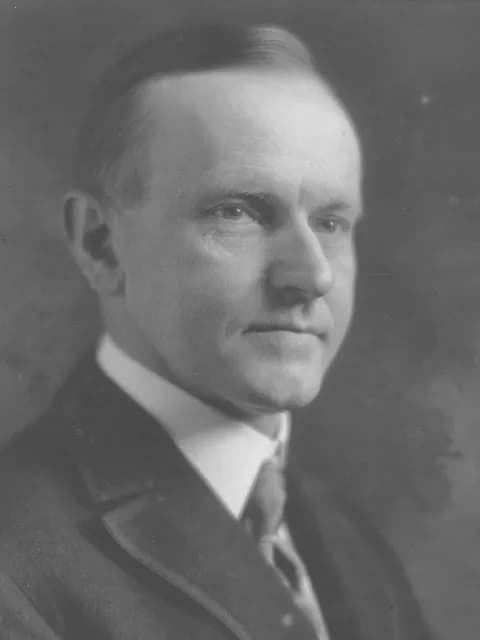
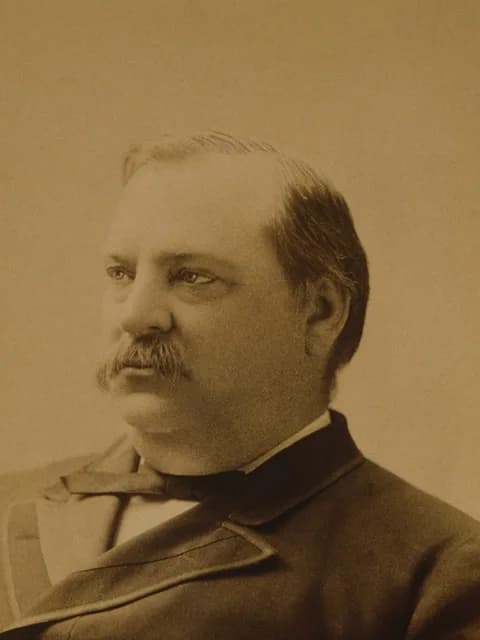
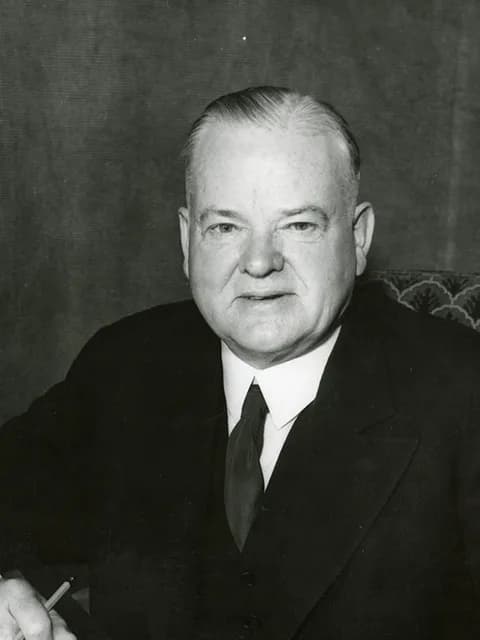
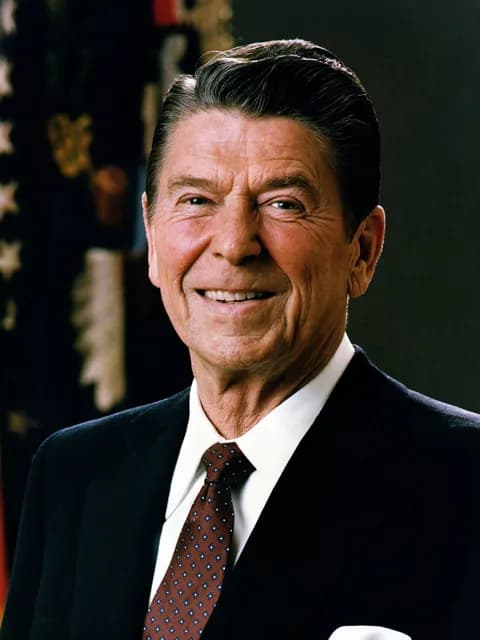
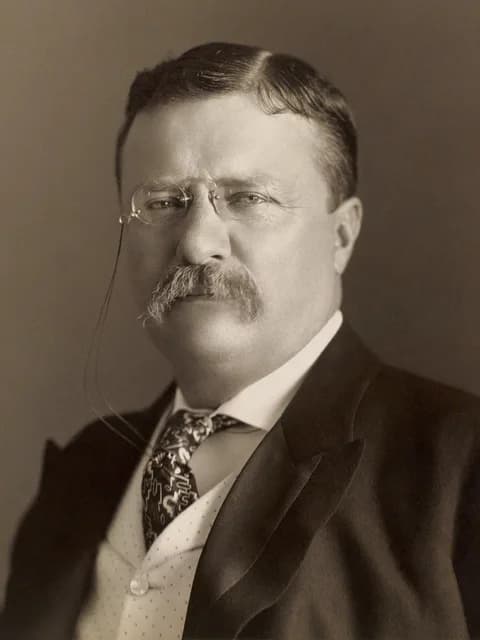
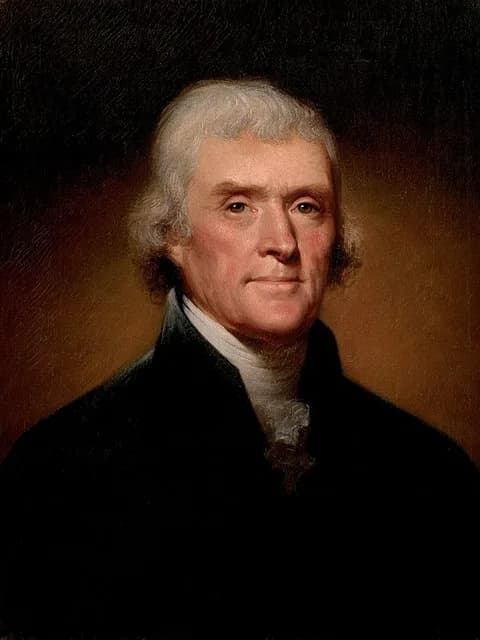
Grant compared with other presidents
Measured on the axes both presidents are scored on, with the same rules as the quiz.
Questions about Ulysses S. Grant’s politics
Something else on your mind? Get in touch
Sources and credits
Main source: First Inaugural Address of Ulysses S. Grant · The Avalon Project
Also read
Portrait: Brady-Handy Photograph Collection, c. 1870–1880 · Public domain
Scores are editorial estimates from the public record, not measurements. A place on this site is not praise.
Keep exploring
- All presidents in the quizTake the test and see which president you are closest to.
- Abraham LincolnThe president before Grant in our list.
- Grover ClevelandThe president after Grant in our list.
- United StatesWhere the United States sits on the twelve axes.
- MethodologyHow the axes, the scoring and the matching work.
How close are you to Grant?
Take the test and see how your twelve scores compare, axis by axis.