Skip to content
12 Axes Test

Marxism–Leninism

Marxism–Leninism is the ideology of the 20th-century communist party states: a single vanguard party leads the state to build socialism through a planned, state-owned economy.

Family: Socialist and communistKwame NkrumahHan FeiziKarl MarxKey thinkers:Kwame Nkrumah, Han Feizi, Karl Marx

How close are you to Marxism–Leninism?

Take the test and your match with Marxism–Leninism shows up here. It is worked out in your browser and never sent anywhere.

Your alignment--%
Agree onTop 3 axes
Differ onKey gaps

What is Marxism–Leninism?

Building on Marx, Vladimir Lenin argued that a disciplined vanguard party should lead the working class and hold power during the transition to socialism. After 1917 this model was adopted in the Soviet Union and later in China, Cuba, Vietnam and elsewhere.

In practice it produced one-party rule, central planning and state ownership, with the party controlling politics, the economy and often culture.

What are the core ideas of Marxism–Leninism?

The ideas that most people in this tradition would sign up to.

  • A single vanguard party leads the state
  • Central planning and state ownership of major industry
  • “Democratic centralism”: decisions made at the top bind everyone below
  • Atheism, or strong limits on religion in public life
  • Anti-imperialism and support for like-minded movements abroad

Where does Marxism–Leninism come from?

The name joins Marx with Lenin, whose ideas about party organization shaped the Soviet state; the label itself was popularized under Stalin.

Which historical thinkers are closest to Marxism–Leninism?

Thinkers whose documented positions on the 12 axes align most closely with this ideology.

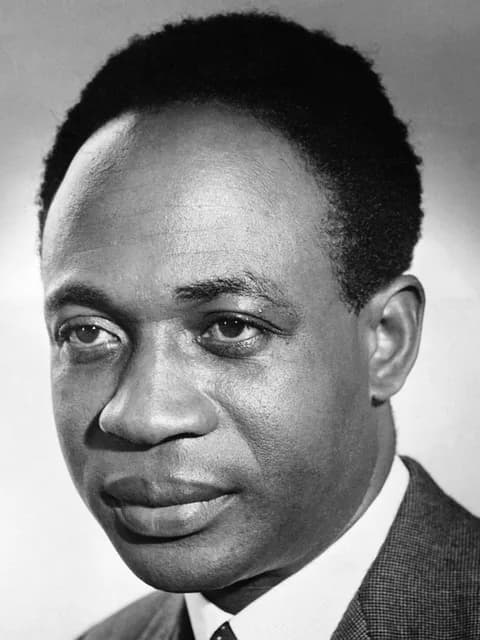
Kwame Nkrumah

Kwame Nkrumah

First president of Ghana · 1909–1972

Led the Gold Coast to independence as Ghana in 1957, championed African unity, and moved his government toward state-led socialism and one-party rule.

Closest aligned axisFederal vs Unitary

“Held that Africa needed a single central government, and at home abolished the regional assemblies in 1958.”

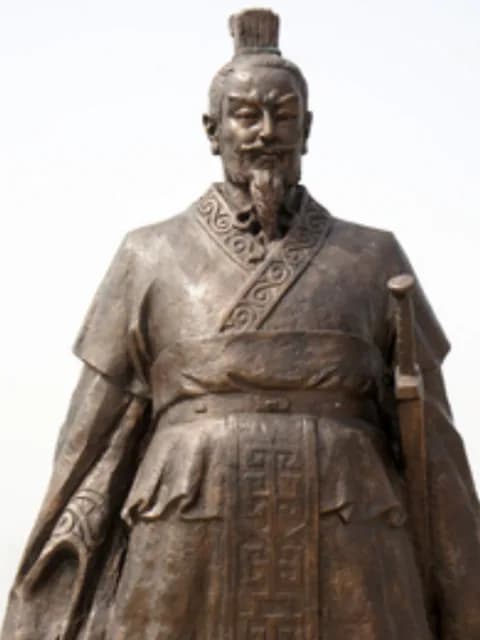
Han Feizi

Han Feizi

Legalist philosopher · c. 280–233 BC

A prince of Han who argued that a ruler should govern through fixed laws, rewards and punishments applied by officials, not through virtue or hereditary privilege.

Closest aligned axisFederal vs Unitary

“Wants hereditary lords replaced by officials appointed and dismissed by the ruler under one set of laws.”

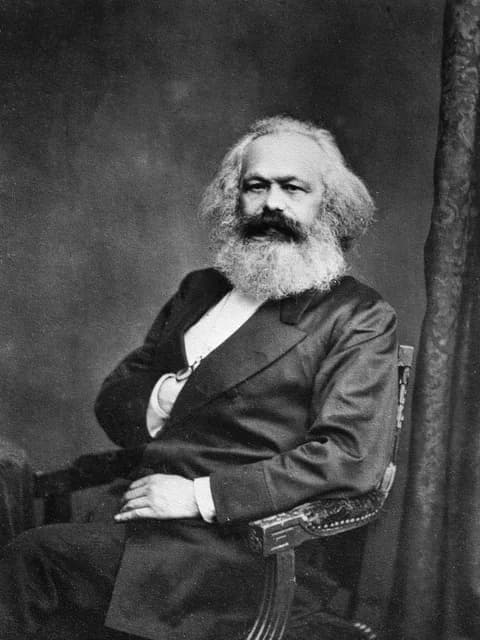
Karl Marx

Karl Marx

Philosopher & critic of political economy · 1818–1883

His critique of capitalism connected economic ownership with power, and looked toward emancipation from class domination.

Closest aligned axisIrreligious vs Religious

“Religion is interpreted through human social relations rather than divine authority.”

Where does Marxism–Leninism sit on the 12 axes?

These are its strongest leanings, followed by all twelve axes. They describe the typical version of the tradition.

Strongest leanings

Governmental

Federal vs Unitary
Federal 12%88% Unitary
Democratic vs Autocratic
Democratic 15%85% Autocratic
Security vs Freedom
Security 88%12% Freedom

Diplomatic

Nationalism vs Internationalism
Nationalism 30%70% Internationalism
Militarist vs Pacifist
Militarist 60%40% Pacifist
Assimilationist vs Multiculturalist
Assimilationist 45%55% Multiculturalist

Economic

Collectivize vs Privatize
Collectivize 97%3% Privatize
Planned vs Laissez-faire
Planned 97%3% Laissez-faire
Isolationism vs Globalism
Isolationism 60%40% Globalism

Societal

Irreligious vs Religious
Irreligious 95%5% Religious
Progressive vs Traditional
Progressive 60%40% Traditional
Acceleration vs Bioconservative
Acceleration 60%40% Bioconservative

Editorial estimates for comparison and discussion. Real people and parties in this tradition vary.

Which countries are closest to Marxism–Leninism?

Countries whose estimated profile is most like this ideology. No country follows a single ideology, so read this as a comparison, not a label.

What are the main criticisms of Marxism–Leninism?

Every tradition has critics. These are the objections most often raised.

  • Critics point to the lack of political competition, limits on free speech and widespread repression in states that followed it.
  • Many economists point to the inefficiencies of central planning.
  • Other Marxists argue that it betrayed the goal of a democratic, stateless socialism.

Marxism–Leninism: frequently asked questions

Marxism–Leninism is the ideology of the 20th-century communist party states: a single vanguard party leads the state to build socialism through a planned, state-owned economy.

It depends on the question, because left and right mix several things. On the 12 axes, Marxism–Leninism sits closest to public ownership and state direction on economics and to a balance of change and tradition on social values.

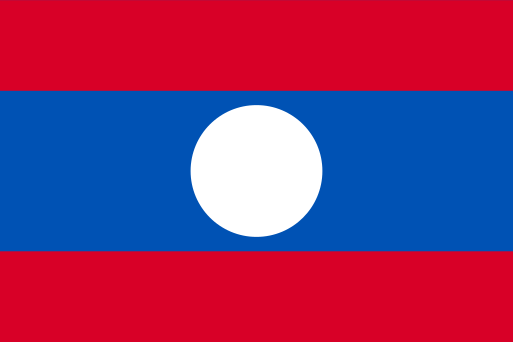
By estimated profile, the closest are Cuba, Vietnam, and Laos. No country follows one ideology purely, so treat this as a comparison, not a label.

Critics point to the lack of political competition, limits on free speech and widespread repression in states that followed it. Many economists point to the inefficiencies of central planning. Other Marxists argue that it betrayed the goal of a democratic, stateless socialism.

Take the 12 axes test. It scores you on twelve axes and shows how closely your profile matches Marxism–Leninism and every other ideology on this site. The calculation happens in your browser.

Something else on your mind? Get in touch

Do you agree with Marxism–Leninism?

The test scores you on all twelve axes and ranks every ideology by how well it matches you.