

Skip to content
12 Axes Test

Paleoconservatism

Paleoconservatism is a form of American conservatism that stresses tradition, nationalism and skepticism of foreign intervention, immigration and free trade.

How close are you to Paleoconservatism?

Take the test and your match with Paleoconservatism shows up here. It is worked out in your browser and never sent anywhere.

Your alignment--%
Agree onTop 3 axes
Differ onKey gaps

What is Paleoconservatism?

Paleoconservatives define themselves against the neoconservatives. They favor a restrained foreign policy, limits on immigration, protection for domestic industry and the defense of regional, religious and cultural traditions.

The term arose in the 1980s as a label for these older conservative currents.

What are the core ideas of Paleoconservatism?

The ideas that most people in this tradition would sign up to.

  • A restrained, non-interventionist foreign policy
  • Restrictions on immigration
  • Economic nationalism
  • Religion, family and regional tradition
  • Suspicion of centralized power

Where does Paleoconservatism come from?

It took shape in the 1980s in opposition to neoconservatism, with the label popularized by writers such as Paul Gottfried and politicians such as Pat Buchanan.

Which historical thinkers are closest to Paleoconservatism?

Thinkers whose documented positions on the 12 axes align most closely with this ideology.

George Washington

George Washington

First US president · 1732–1799

The commander of the Continental Army and first US president, who set precedents for the office and stepped down after two terms.

Closest aligned axisIrreligious vs Religious

“The Farewell Address calls religion and morality indispensable supports of political prosperity.”


Aristotle

Aristotle

Greek philosopher & polymath · 384–322 BC

A Greek philosopher who studied the constitutions of many city-states and held that people flourish by taking part in a well-ordered community, best governed under a mixed constitution.

Closest aligned axisIrreligious vs Religious

“Civic religion and ethical piety support the shared moral ends of the political community.”

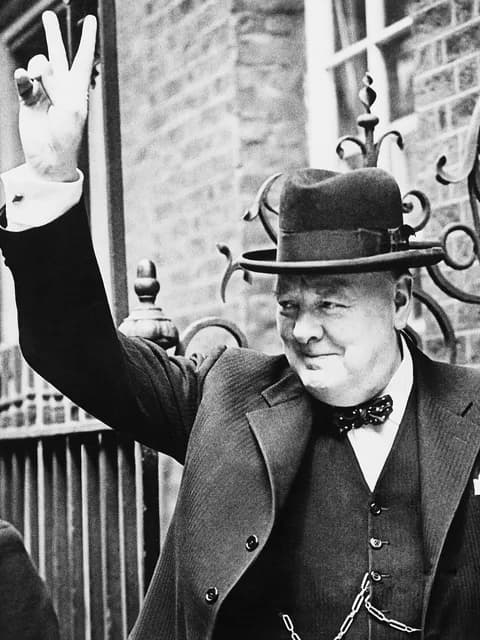
Winston Churchill

Winston Churchill

Statesman & writer · 1874–1965

British prime minister during the Second World War, a defender of the empire and of parliamentary democracy who moved from Liberal social reform to Conservative opposition to socialism.

Closest aligned axisDemocratic vs Autocratic

“Said in 1947 that democracy is the worst form of government except all the others that have been tried.”

Where does Paleoconservatism sit on the 12 axes?

These are its strongest leanings, followed by all twelve axes. They describe the typical version of the tradition.

Strongest leanings

Governmental

Federal vs Unitary
Federal 50%50% Unitary
Democratic vs Autocratic
Democratic 78%22% Autocratic
Security vs Freedom
Security 45%55% Freedom

Diplomatic

Nationalism vs Internationalism
Nationalism 90%10% Internationalism
Militarist vs Pacifist
Militarist 50%50% Pacifist
Assimilationist vs Multiculturalist
Assimilationist 85%15% Multiculturalist

Economic

Collectivize vs Privatize
Collectivize 40%60% Privatize
Planned vs Laissez-faire
Planned 40%60% Laissez-faire
Isolationism vs Globalism
Isolationism 78%22% Globalism

Societal

Irreligious vs Religious
Irreligious 35%65% Religious
Progressive vs Traditional
Progressive 15%85% Traditional
Acceleration vs Bioconservative
Acceleration 35%65% Bioconservative

Editorial estimates for comparison and discussion. Real people and parties in this tradition vary.

Which countries are closest to Paleoconservatism?

Countries whose estimated profile is most like this ideology. No country follows a single ideology, so read this as a comparison, not a label.

What are the main criticisms of Paleoconservatism?

Every tradition has critics. These are the objections most often raised.

  • Critics argue that its immigration and trade views are exclusionary and economically harmful.
  • Others say it overlooks the benefits of international engagement.

Paleoconservatism: frequently asked questions

Paleoconservatism is a form of American conservatism that stresses tradition, nationalism and skepticism of foreign intervention, immigration and free trade.

It depends on the question, because left and right mix several things. On the 12 axes, Paleoconservatism sits closest to a mix of public and private on economics and to traditional values on social values.

By estimated profile, the closest are Hungary, Poland, and Serbia. No country follows one ideology purely, so treat this as a comparison, not a label.

Critics argue that its immigration and trade views are exclusionary and economically harmful. Others say it overlooks the benefits of international engagement.

Take the 12 axes test. It scores you on twelve axes and shows how closely your profile matches Paleoconservatism and every other ideology on this site. The calculation happens in your browser.

Something else on your mind? Get in touch

Do you agree with Paleoconservatism?

The test scores you on all twelve axes and ranks every ideology by how well it matches you.