
Skip to content
12 Axes Test

National Conservatism

National conservatism emphasizes national sovereignty, cultural identity and traditional values, often with skepticism of immigration, supranational institutions and globalization.

How close are you to National Conservatism?

Take the test and your match with National Conservatism shows up here. It is worked out in your browser and never sent anywhere.

Your alignment--%
Agree onTop 3 axes
Differ onKey gaps

What is National Conservatism?

National conservatives want strong nation-states with a shared culture and a government willing to protect domestic industry and borders. They tend to be critical of free-trade orthodoxy, open immigration and international bodies that limit national decisions.

The label covers a range of movements in Europe, the United States and elsewhere, which differ on economic policy.

What are the core ideas of National Conservatism?

The ideas that most people in this tradition would sign up to.

  • National sovereignty and secure borders
  • Preserving national culture and traditions
  • Skepticism toward supranational institutions
  • Often protectionist or state-supportive economic policies
  • Family, religion and community

Where does National Conservatism come from?

The label became prominent in the 2010s, building on older nationalist and conservative traditions.

Which historical thinkers are closest to National Conservatism?

Thinkers whose documented positions on the 12 axes align most closely with this ideology.

George Washington

George Washington

First US president · 1732–1799

The commander of the Continental Army and first US president, who set precedents for the office and stepped down after two terms.

Closest aligned axisDemocratic vs Autocratic

“Voluntary surrender of executive power after two terms, enshrining republican norms.”
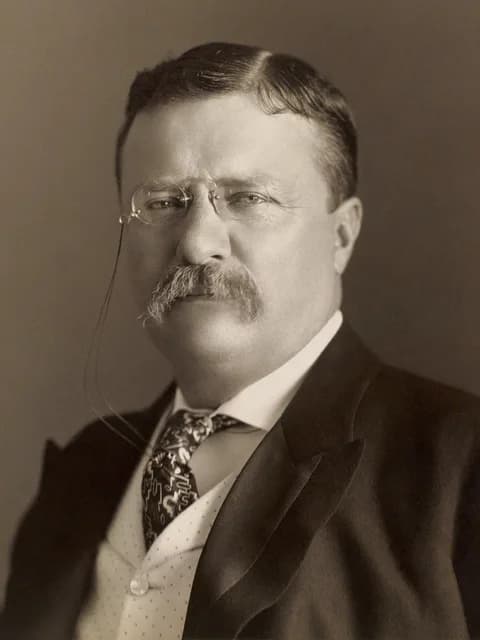
Theodore Roosevelt

Theodore Roosevelt

Twenty-sixth US president · 1858–1919

The US president who broke up trusts, protected large areas of land for conservation and pursued an assertive foreign policy, and who ran again in 1912 on the Progressive ticket.

“Big Stick diplomacy: robust projection of national power and naval preparedness.”

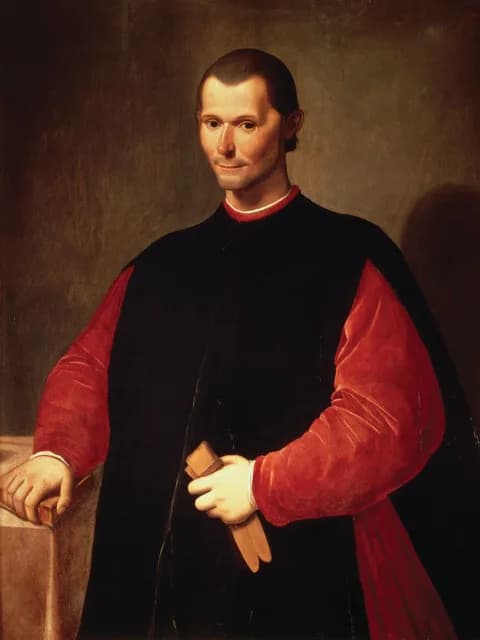
Niccolò Machiavelli

Niccolò Machiavelli

Diplomat & political theorist · 1469–1527

A Florentine official who argued that rulers should judge action by what keeps the state secure, and who also praised the Roman republic, its citizen army and its mixed constitution.

Closest aligned axisIrreligious vs Religious

“The Discourses say rulers should uphold religion for civic discipline, as Numa did, while blaming the Church for Italy’s weakness.”

Where does National Conservatism sit on the 12 axes?

These are its strongest leanings, followed by all twelve axes. They describe the typical version of the tradition.

Strongest leanings

Governmental

Federal vs Unitary
Federal 25%75% Unitary
Democratic vs Autocratic
Democratic 70%30% Autocratic
Security vs Freedom
Security 55%45% Freedom

Diplomatic

Nationalism vs Internationalism
Nationalism 88%12% Internationalism
Militarist vs Pacifist
Militarist 70%30% Pacifist
Assimilationist vs Multiculturalist
Assimilationist 82%18% Multiculturalist

Economic

Collectivize vs Privatize
Collectivize 48%52% Privatize
Planned vs Laissez-faire
Planned 55%45% Laissez-faire
Isolationism vs Globalism
Isolationism 68%32% Globalism

Societal

Irreligious vs Religious
Irreligious 40%60% Religious
Progressive vs Traditional
Progressive 18%82% Traditional
Acceleration vs Bioconservative
Acceleration 38%62% Bioconservative

Editorial estimates for comparison and discussion. Real people and parties in this tradition vary.

Which countries are closest to National Conservatism?

Countries whose estimated profile is most like this ideology. No country follows a single ideology, so read this as a comparison, not a label.

What are the main criticisms of National Conservatism?

Every tradition has critics. These are the objections most often raised.

  • Critics argue that it can tip into the exclusion of minorities and weaken international cooperation.
  • Free-market conservatives argue that its economic nationalism harms prosperity.

National Conservatism: frequently asked questions

National conservatism emphasizes national sovereignty, cultural identity and traditional values, often with skepticism of immigration, supranational institutions and globalization.

It depends on the question, because left and right mix several things. On the 12 axes, National Conservatism sits closest to a mix of public and private on economics and to traditional values on social values.

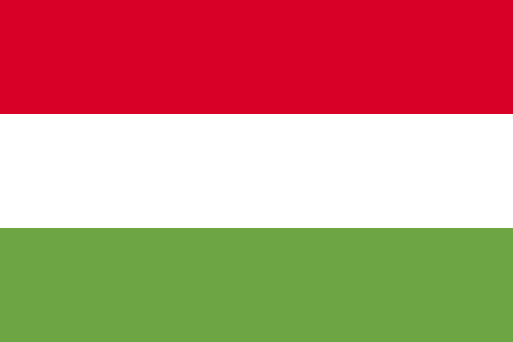
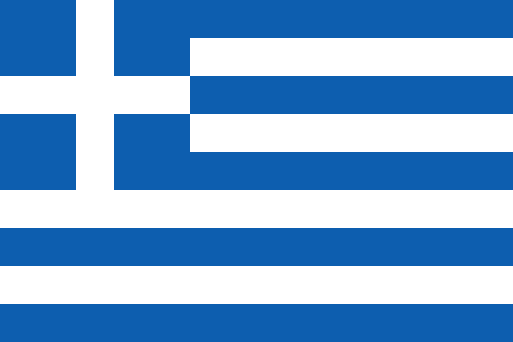
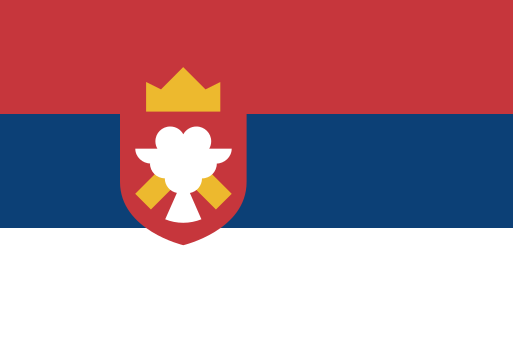
By estimated profile, the closest are Serbia, Hungary, and Greece. No country follows one ideology purely, so treat this as a comparison, not a label.

Critics argue that it can tip into the exclusion of minorities and weaken international cooperation. Free-market conservatives argue that its economic nationalism harms prosperity.

Take the 12 axes test. It scores you on twelve axes and shows how closely your profile matches National Conservatism and every other ideology on this site. The calculation happens in your browser.

Something else on your mind? Get in touch

Do you agree with National Conservatism?

The test scores you on all twelve axes and ranks every ideology by how well it matches you.