Skip to content
12 Axes Test

Conservatism

Conservatism values tradition, stability and gradual change, favoring institutions and customs that have proved their worth over radical reform.

Family: Conservative and nationalistLudwig ErhardGeorge WashingtonCiceroKey thinkers:Ludwig Erhard, George Washington, Cicero

How close are you to Conservatism?

Take the test and your match with Conservatism shows up here. It is worked out in your browser and never sent anywhere.

Your alignment--%
Agree onTop 3 axes
Differ onKey gaps

What is Conservatism?

Conservatives tend to trust time-tested institutions such as the family, religion, the local community and the nation, and to be cautious about rapid social change. Many also favor free markets, lower taxes and a strong national defense, though this varies by country.

Because it is defined by what is being conserved, conservatism looks different in different places and times.

What are the core ideas of Conservatism?

The ideas that most people in this tradition would sign up to.

  • Respect for tradition and established institutions
  • Gradual, cautious reform
  • Personal responsibility and the family
  • Often free enterprise and limited government
  • Strong national defense and law and order

Where does Conservatism come from?

Its modern form is often traced to Edmund Burke’s Reflections on the Revolution in France (1790).

Which historical thinkers are closest to Conservatism?

Thinkers whose documented positions on the 12 axes align most closely with this ideology.

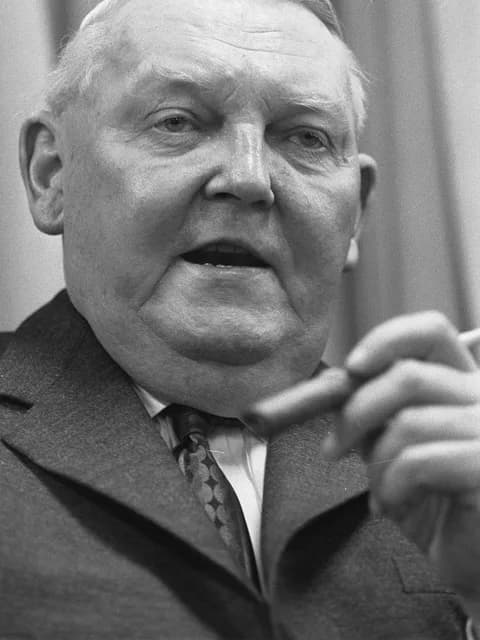
Ludwig Erhard

Ludwig Erhard

German economics minister & chancellor · 1897–1977

The West German economics minister and later chancellor who lifted price controls in 1948 and promoted the “social market economy”, competition backed by social provision.

Closest aligned axisMilitarist vs Pacifist

“As chancellor he endorsed the American aim of military victory in Vietnam, seeking closer ties with Washington than with Paris.”


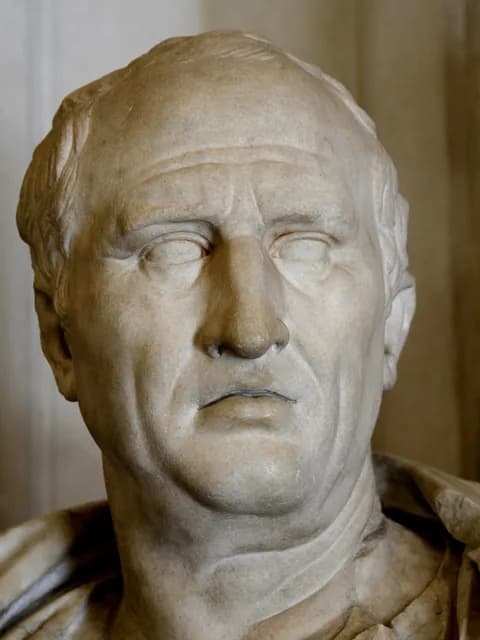
Cicero

Cicero

Roman orator & statesman · 106–43 BC

A Roman lawyer, consul and orator who wrote on republican government and natural law, and who was killed on Mark Antony’s orders.

“De Officiis ranks the claims of country above those of family and friends, and he defends Rome’s empire as just rule, even as he writes of a universal natural law.”

Where does Conservatism sit on the 12 axes?

These are its strongest leanings, followed by all twelve axes. They describe the typical version of the tradition.

Strongest leanings

Governmental

Federal vs Unitary
Federal 45%55% Unitary
Democratic vs Autocratic
Democratic 88%12% Autocratic
Security vs Freedom
Security 38%62% Freedom

Diplomatic

Nationalism vs Internationalism
Nationalism 60%40% Internationalism
Militarist vs Pacifist
Militarist 62%38% Pacifist
Assimilationist vs Multiculturalist
Assimilationist 62%38% Multiculturalist

Economic

Collectivize vs Privatize
Collectivize 32%68% Privatize
Planned vs Laissez-faire
Planned 32%68% Laissez-faire
Isolationism vs Globalism
Isolationism 32%68% Globalism

Societal

Irreligious vs Religious
Irreligious 48%52% Religious
Progressive vs Traditional
Progressive 28%72% Traditional
Acceleration vs Bioconservative
Acceleration 40%60% Bioconservative

Editorial estimates for comparison and discussion. Real people and parties in this tradition vary.

Which countries are closest to Conservatism?

Countries whose estimated profile is most like this ideology. No country follows a single ideology, so read this as a comparison, not a label.

What are the main criticisms of Conservatism?

Every tradition has critics. These are the objections most often raised.

  • Critics say it can defend unfair privileges and resist needed change.
  • Some on the right argue that mainstream conservatives give up too much too easily.

Conservatism: frequently asked questions

Conservatism values tradition, stability and gradual change, favoring institutions and customs that have proved their worth over radical reform.

It depends on the question, because left and right mix several things. On the 12 axes, Conservatism sits closest to private ownership and free markets on economics and to traditional values on social values.

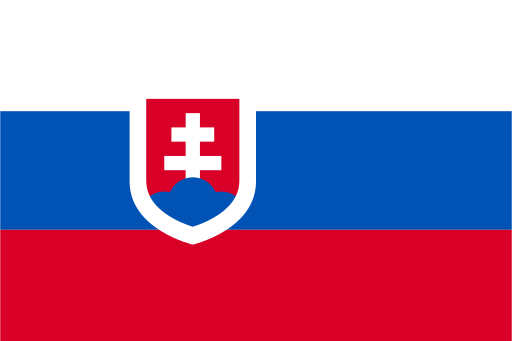
By estimated profile, the closest are Poland, Lithuania, and Slovakia. No country follows one ideology purely, so treat this as a comparison, not a label.

Critics say it can defend unfair privileges and resist needed change. Some on the right argue that mainstream conservatives give up too much too easily.

Take the 12 axes test. It scores you on twelve axes and shows how closely your profile matches Conservatism and every other ideology on this site. The calculation happens in your browser.

Something else on your mind? Get in touch

Do you agree with Conservatism?

The test scores you on all twelve axes and ranks every ideology by how well it matches you.