Skip to content
12 Axes Test

Authoritarian Capitalism

Authoritarian capitalism, also called state capitalism, combines market economics and private business with strong state control over politics and strategic sectors.

Strongest leanings

  1. Unitary88%
  2. Autocratic88%
  3. Security88%
See all twelve axes

How close are you to Authoritarian Capitalism?

Take the test and your match with Authoritarian Capitalism shows up here. It is worked out in your browser and never sent anywhere.

Your alignment--%
Agree onTop 3 axes
Differ onKey gaps

What is Authoritarian Capitalism?

In this model, governments keep tight political control, limit opposition and media freedom, and steer the economy through state-owned enterprises, directed credit and industrial policy, while still allowing markets and private firms.

The label is often applied to systems such as those of China, Russia or Singapore, though these differ greatly in their politics and institutions, and many scholars dispute how well it fits.

What are the core ideas of Authoritarian Capitalism?

The ideas that most people in this tradition would sign up to.

  • Political stability under one dominant authority
  • A market economy steered by the state
  • State-owned or state-linked champions in key industries
  • Priority for growth and order over political competition

Where does Authoritarian Capitalism come from?

The label became common after the end of the Cold War, as scholars noted that economic openness and authoritarian politics could coexist.

Which historical thinkers are closest to Authoritarian Capitalism?

Thinkers whose documented positions on the 12 axes align most closely with this ideology.

Theodore Roosevelt

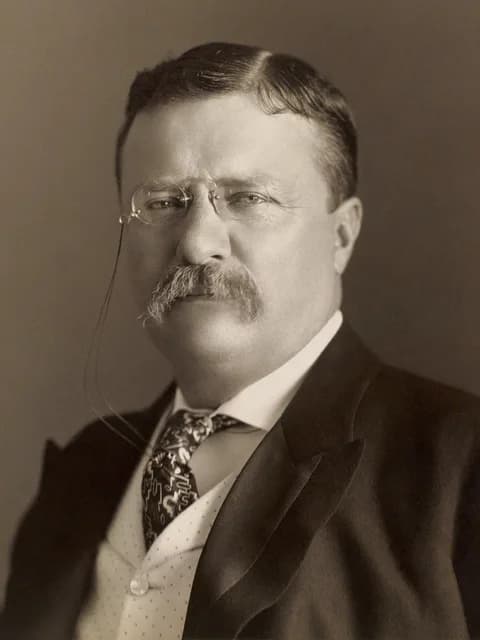
Theodore Roosevelt

Twenty-sixth US president · 1858–1919

The US president who broke up trusts, protected large areas of land for conservation and pursued an assertive foreign policy, and who ran again in 1912 on the Progressive ticket.

“Americanization: total devotion to a single national identity without hyphenated loyalties.”
Charles de Gaulle

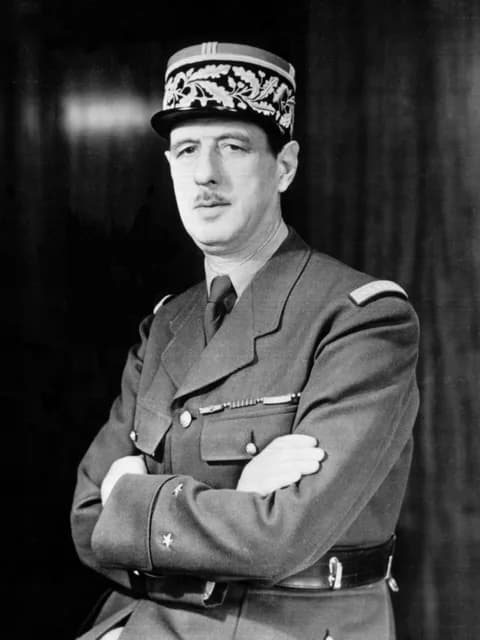
Charles de Gaulle

Soldier & statesman · 1890–1970

The leader of Free France who returned to power in 1958, wrote the Fifth Republic’s constitution and pursued a foreign policy of national independence.

Closest aligned axisMilitarist vs Pacifist

“Built France’s independent nuclear force, insisting that a great nation must be able to defend itself, though he ended the Algerian war by granting independence in 1962.”

Sun Yat-sen

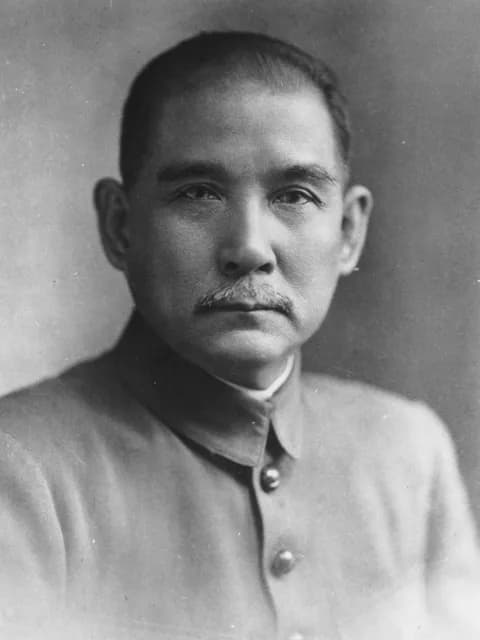
Sun Yat-sen

Founder of the Chinese Republic · 1866–1925

A Chinese revolutionary and first provisional president of the Republic of China in 1912, who set out the Three Principles of the People: nationalism, democracy and livelihood.

Closest aligned axisCollectivize vs Privatize

“Principle of People’s Livelihood (Minsheng): regulation of private capital and equalization of land rights.”

Where does Authoritarian Capitalism sit on the 12 axes?

These are its strongest leanings, followed by all twelve axes. They describe the typical version of the tradition.

Strongest leanings

Governmental

Federal vs Unitary
Federal 12%88% Unitary
Democratic vs Autocratic
Democratic 12%88% Autocratic
Security vs Freedom
Security 88%12% Freedom

Diplomatic

Nationalism vs Internationalism
Nationalism 70%30% Internationalism
Militarist vs Pacifist
Militarist 70%30% Pacifist
Assimilationist vs Multiculturalist
Assimilationist 72%28% Multiculturalist

Economic

Collectivize vs Privatize
Collectivize 60%40% Privatize
Planned vs Laissez-faire
Planned 62%38% Laissez-faire
Isolationism vs Globalism
Isolationism 50%50% Globalism

Societal

Irreligious vs Religious
Irreligious 75%25% Religious
Progressive vs Traditional
Progressive 38%62% Traditional
Acceleration vs Bioconservative
Acceleration 62%38% Bioconservative

Editorial estimates for comparison and discussion. Real people and parties in this tradition vary.

Which countries are closest to Authoritarian Capitalism?

Countries whose estimated profile is most like this ideology. No country follows a single ideology, so read this as a comparison, not a label.

What are the main criticisms of Authoritarian Capitalism?

Every tradition has critics. These are the objections most often raised.

  • Critics argue that without free elections and a free press, corruption and policy mistakes are hard to correct.
  • Defenders point to rapid growth in several such states.

Authoritarian Capitalism: frequently asked questions

Authoritarian capitalism, also called state capitalism, combines market economics and private business with strong state control over politics and strategic sectors.

It depends on the question, because left and right mix several things. On the 12 axes, Authoritarian Capitalism sits closest to a mix of public and private on economics and to a balance of change and tradition on social values.

By estimated profile, the closest are China, Vietnam, and Kazakhstan. No country follows one ideology purely, so treat this as a comparison, not a label.

Critics argue that without free elections and a free press, corruption and policy mistakes are hard to correct. Defenders point to rapid growth in several such states.

Take the 12 axes test. It scores you on twelve axes and shows how closely your profile matches Authoritarian Capitalism and every other ideology on this site. The calculation happens in your browser.

Something else on your mind? Get in touch

Do you agree with Authoritarian Capitalism?

The test scores you on all twelve axes and ranks every ideology by how well it matches you.