

Skip to content
12 Axes Test

Green Politics

Green politics puts ecological sustainability first, alongside social justice, grassroots democracy and nonviolence.

How close are you to Green Politics?

Take the test and your match with Green Politics shows up here. It is worked out in your browser and never sent anywhere.

Your alignment--%
Agree onTop 3 axes
Differ onKey gaps

What is Green Politics?

Greens argue that economic growth must stay within the limits of the planet and that policies should be judged by their long-term effect on ecosystems and communities. Climate action, biodiversity and clean energy are central.

Green parties usually combine environmental goals with a progressive social agenda, and many are wary of unrestrained technological change, genetically modified food and, in some cases, nuclear power.

What are the core ideas of Green Politics?

The ideas that most people in this tradition would sign up to.

  • Ecological sustainability as a first principle
  • Social justice and equality
  • Grassroots and participatory democracy
  • Nonviolence and peace
  • Localism, with caution about unrestrained technology

Where does Green Politics come from?

The movement took shape in the 1970s, with the first national Green parties appearing in the early 1980s; the German Greens are the best known.

Which historical thinkers are closest to Green Politics?

Thinkers whose documented positions on the 12 axes align most closely with this ideology.

Albert Camus

Albert Camus

French-Algerian author · 1913–1960

A French-Algerian writer who wrote on the absurd and on revolt, broke with the communist left over its tolerance of terror, and opposed the death penalty.

“In 1944 he founded the French Committee for the European Federation, saying Europe could advance in economic progress, democracy and peace only if its nation-states became a federation.”

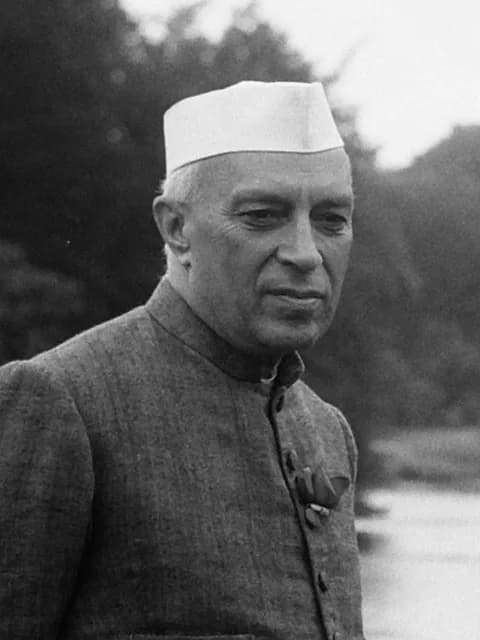
Jawaharlal Nehru

Jawaharlal Nehru

Prime Minister of India · 1889–1964

The first prime minister of independent India, who built a secular parliamentary democracy, a mixed economy with five-year plans, and a policy of non-alignment.

Closest aligned axisCollectivize vs Privatize

“The 1956 Industrial Policy Resolution put heavy industry, mining and power in the public sector.”

John Rawls

John Rawls

Harvard political philosopher · 1921–2002

An American philosopher who proposed that just institutions are those people would choose behind a veil of ignorance, with equal basic liberties and inequalities only where they help the worst off.

Closest aligned axisIrreligious vs Religious

“Public reason keeps religious doctrines out of the justification of basic laws.”

Where does Green Politics sit on the 12 axes?

These are its strongest leanings, followed by all twelve axes. They describe the typical version of the tradition.

Strongest leanings

Governmental

Federal vs Unitary
Federal 60%40% Unitary
Democratic vs Autocratic
Democratic 92%8% Autocratic
Security vs Freedom
Security 20%80% Freedom

Diplomatic

Nationalism vs Internationalism
Nationalism 20%80% Internationalism
Militarist vs Pacifist
Militarist 20%80% Pacifist
Assimilationist vs Multiculturalist
Assimilationist 28%72% Multiculturalist

Economic

Collectivize vs Privatize
Collectivize 70%30% Privatize
Planned vs Laissez-faire
Planned 65%35% Laissez-faire
Isolationism vs Globalism
Isolationism 55%45% Globalism

Societal

Irreligious vs Religious
Irreligious 75%25% Religious
Progressive vs Traditional
Progressive 82%18% Traditional
Acceleration vs Bioconservative
Acceleration 30%70% Bioconservative

Editorial estimates for comparison and discussion. Real people and parties in this tradition vary.

Which countries are closest to Green Politics?

Countries whose estimated profile is most like this ideology. No country follows a single ideology, so read this as a comparison, not a label.

What are the main criticisms of Green Politics?

Every tradition has critics. These are the objections most often raised.

  • Critics say green policies can raise energy costs and burden industry and workers.
  • Some environmentalists say Green parties compromise too much in government.

Green Politics: frequently asked questions

Green politics puts ecological sustainability first, alongside social justice, grassroots democracy and nonviolence.

It depends on the question, because left and right mix several things. On the 12 axes, Green Politics sits closest to public ownership and state direction on economics and to faster social change on social values.

By estimated profile, the closest are Spain, Portugal, and Norway. No country follows one ideology purely, so treat this as a comparison, not a label.

Critics say green policies can raise energy costs and burden industry and workers. Some environmentalists say Green parties compromise too much in government.

Take the 12 axes test. It scores you on twelve axes and shows how closely your profile matches Green Politics and every other ideology on this site. The calculation happens in your browser.

Something else on your mind? Get in touch

Do you agree with Green Politics?

The test scores you on all twelve axes and ranks every ideology by how well it matches you.