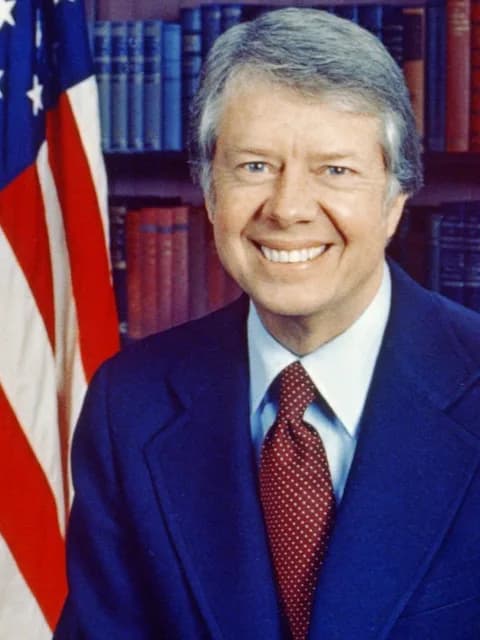
Thirty-ninth US president
Jimmy Carter’s political views
The thirty-ninth president, who signed the Panama Canal treaties, helped broker the Camp David Accords, deregulated airlines, railroads and trucking, and made human rights a theme of foreign policy.
- Presidency
- 39th, 1977–1981
- Party
- Democratic
- Lived
- 1924–2024
- Scored on
- 7 of 12 axes
Strongest documented leanings
- Internationalism78%
- Democratic75%
- Globalism70%
Where Carter stood on the twelve axes
Each bar is one axis, between its two poles. Only axes with a documented position are scored; the others are shown as faint stubs on the icon and listed below, never as neutral.
Based on his record from 1977 to 1981. His deregulation and his new federal departments point in opposite directions on the planning axis, so it sits just above the middle.
- Democratic vs AutocraticDemocratic 75%DemocraticAutocratic
Signed the Civil Service Reform Act and the Ethics in Government Act in October 1978.
- Nationalism vs InternationalismInternationalism 78%NationalismInternationalism
Signed the Panama Canal treaties on 7 September 1977, which the Senate approved 68–32 in 1978 and which handed the canal to Panama on 31 December 1999, and helped broker the Camp David Accords between Israel and Egypt in 1978.
- Militarist vs PacifistPacifist 55%MilitaristPacifist
Pulled the United States out of the 1980 Moscow Olympics and in January 1980 declared that the country would use force to defend the Persian Gulf, but he also cancelled the B-1 bomber in 1977.
- Collectivize vs PrivatizeCollectivize 62%CollectivizePrivatize
Signed the Department of Education Organization Act in October 1979, the Alaska lands act in 1980 and the Superfund law in 1980.
- Planned vs Laissez-faireLaissez-faire 58%PlannedLaissez-faire
Signed the Airline Deregulation Act on 24 October 1978 and the Staggers Rail Act and Motor Carrier Act of 1980, while creating a Department of Energy in 1977.
- Isolationism vs GlobalismGlobalism 70%IsolationismGlobalism
Signed the Trade Agreements Act of 1979, which put the Tokyo Round tariff cuts into law.
- Progressive vs TraditionalProgressive 68%ProgressiveTraditional
Fulfilled a campaign promise by pardoning Vietnam-era draft evaders in January 1977, and reoriented foreign policy toward human rights.
No documented position, so not scored: Federal vs Unitary, Security vs Freedom, Assimilationist vs Multiculturalist, Irreligious vs Religious, and Acceleration vs Bioconservative.
What shaped the scores
Dated actions from the record. Each is tied to the axis it informs.
Carter pardons Vietnam-era draft evaders, the day after his inauguration.
Progressive vs Traditional
Presidency of Jimmy Carter · WikipediaHe and Panama’s leader Omar Torrijos sign the Panama Canal treaties; the Senate approves them 68–32 in March and April 1978.
Nationalism vs Internationalism
Torrijos–Carter Treaties · WikipediaHe brings Egypt and Israel to agreement at Camp David.
Nationalism vs Internationalism
Presidency of Jimmy Carter · WikipediaHe signs the Airline Deregulation Act.
Planned vs Laissez-faire
Airline Deregulation Act · WikipediaHe signs the law creating the Department of Education.
Collectivize vs Privatize
Presidency of Jimmy Carter · WikipediaHe signs the Staggers Rail Act, the Motor Carrier Act, the Superfund law and the Alaska lands act, and pulls out of the Moscow Olympics.
Planned vs Laissez-faire
Presidency of Jimmy Carter · Wikipedia
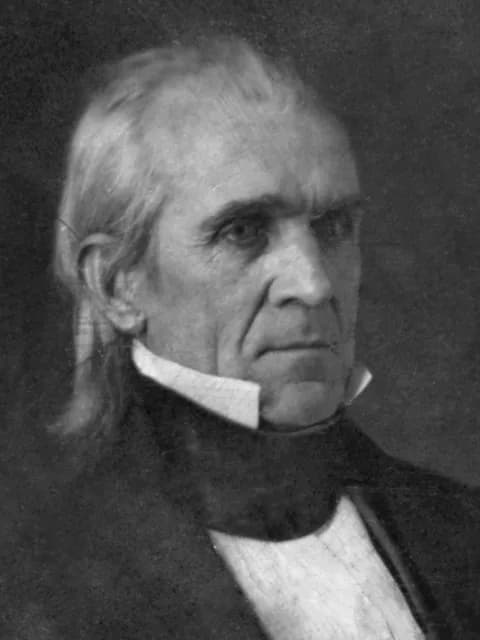
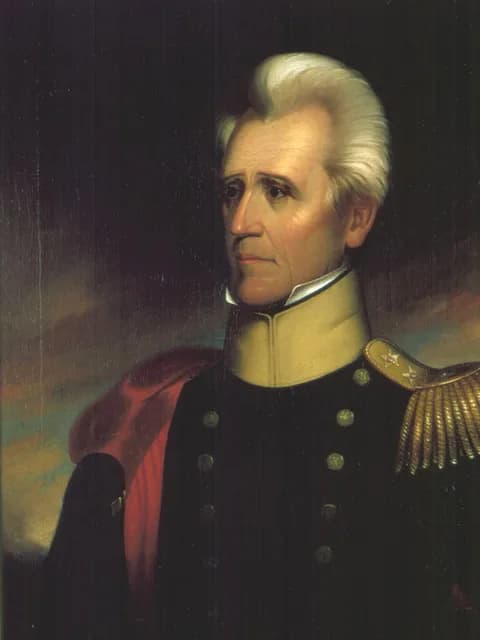
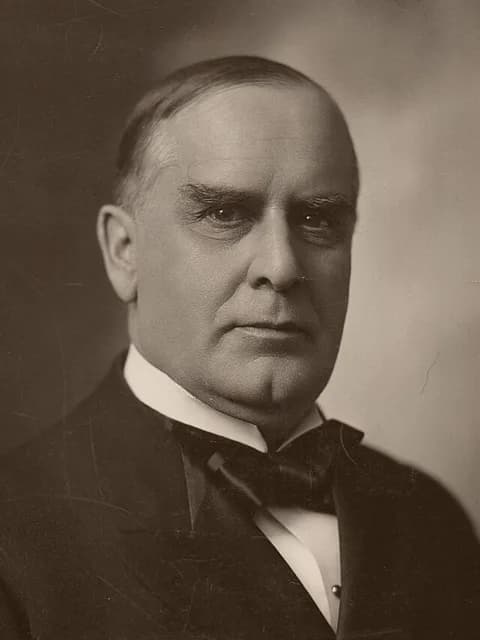
Carter compared with other presidents
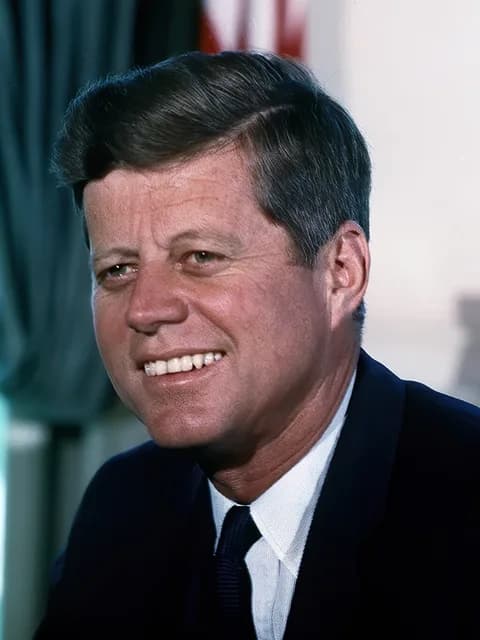
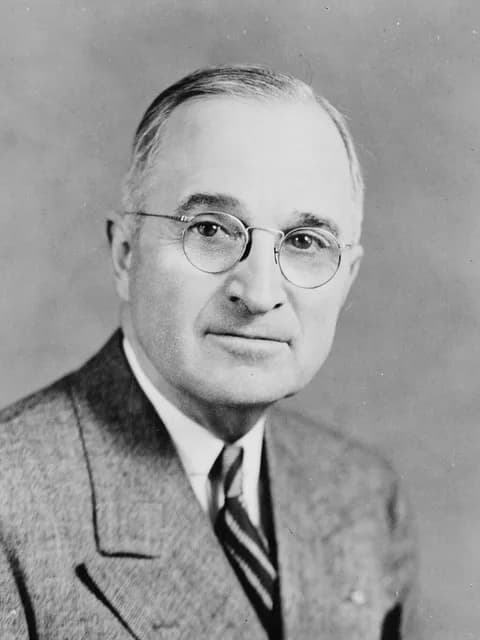
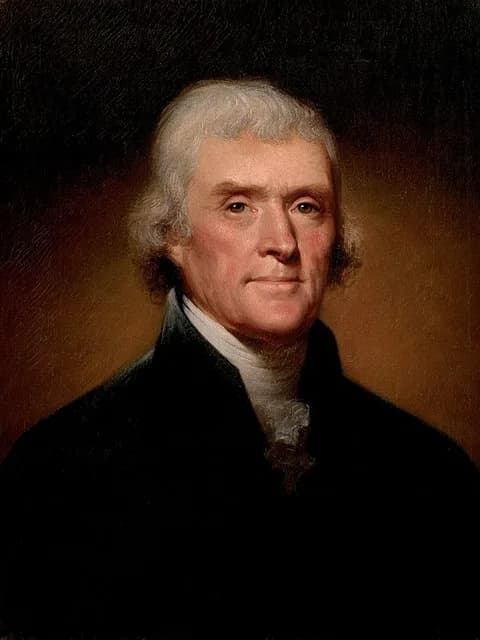
Measured on the axes both presidents are scored on, with the same rules as the quiz.
Questions about Jimmy Carter’s politics
Something else on your mind? Get in touch
Sources and credits
Main source: Inaugural Address of Jimmy Carter · The Avalon Project
Also read
Portrait: White House, 1977 · Public domain
Scores are editorial estimates from the public record, not measurements. A place on this site is not praise.
Keep exploring
- All presidents in the quizTake the test and see which president you are closest to.
- Richard NixonThe president before Carter in our list.
- Ronald ReaganThe president after Carter in our list.
- United StatesWhere the United States sits on the twelve axes.
- MethodologyHow the axes, the scoring and the matching work.
How close are you to Carter?
Take the test and see how your twelve scores compare, axis by axis.