
Skip to content
12 Axes Test

Neoconservatism

Neoconservatism combines conservative views on social order and markets with a belief that democratic powers should actively promote their values abroad, including by force when necessary.

Family: Conservative and nationalistGeorge WashingtonCiceroLudwig ErhardKey thinkers:George Washington, Cicero, Ludwig Erhard

How close are you to Neoconservatism?

Take the test and your match with Neoconservatism shows up here. It is worked out in your browser and never sent anywhere.

Your alignment--%
Agree onTop 3 axes
Differ onKey gaps

What is Neoconservatism?

Neoconservatives arose among US intellectuals who left the political left in the 1960s and 1970s. They stress American leadership, military strength and the spread of democracy, and are suspicious of détente and of international institutions.

The approach was influential in US foreign policy in the early 2000s, notably around the Iraq War.

What are the core ideas of Neoconservatism?

The ideas that most people in this tradition would sign up to.

  • A strong military and an active foreign policy
  • Promotion of democracy abroad
  • Skepticism of multilateral limits on action
  • Support for market capitalism
  • Concern about social decline

Where does Neoconservatism come from?

It emerged in the United States in the 1960s and 1970s around thinkers such as Irving Kristol and Norman Podhoretz.

Which historical thinkers are closest to Neoconservatism?

Thinkers whose documented positions on the 12 axes align most closely with this ideology.

George Washington

George Washington

First US president · 1732–1799

The commander of the Continental Army and first US president, who set precedents for the office and stepped down after two terms.

Closest aligned axisFederal vs Unitary

“Presided over the Constitutional Convention and, in his 1783 Circular to the States, named an indissoluble union as the first essential of well-being.”
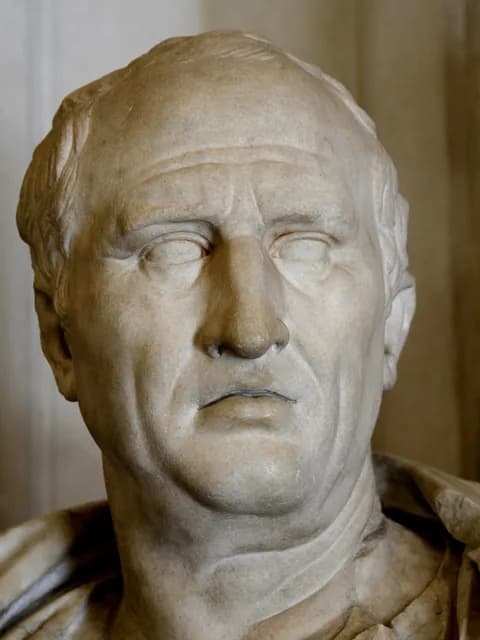
Cicero

Cicero

Roman orator & statesman · 106–43 BC

A Roman lawyer, consul and orator who wrote on republican government and natural law, and who was killed on Mark Antony’s orders.

“De Officiis ranks the claims of country above those of family and friends, and he defends Rome’s empire as just rule, even as he writes of a universal natural law.”

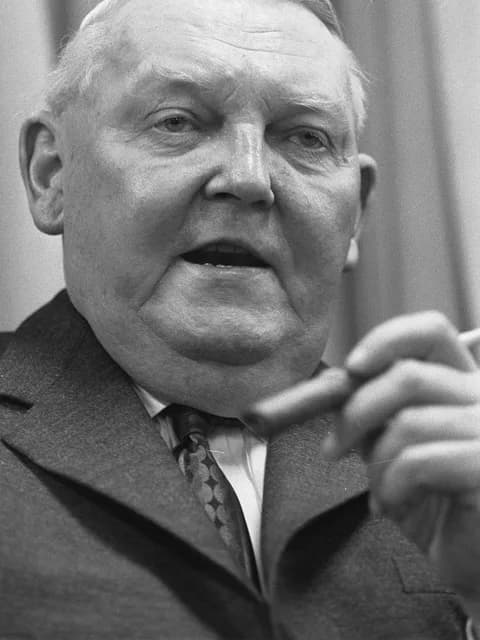
Ludwig Erhard

Ludwig Erhard

German economics minister & chancellor · 1897–1977

The West German economics minister and later chancellor who lifted price controls in 1948 and promoted the “social market economy”, competition backed by social provision.

“Was deeply critical of integrating Europe through bureaucratic institutions on the Coal and Steel Community model.”

Where does Neoconservatism sit on the 12 axes?

These are its strongest leanings, followed by all twelve axes. They describe the typical version of the tradition.

Strongest leanings

Governmental

Federal vs Unitary
Federal 35%65% Unitary
Democratic vs Autocratic
Democratic 85%15% Autocratic
Security vs Freedom
Security 45%55% Freedom

Diplomatic

Nationalism vs Internationalism
Nationalism 62%38% Internationalism
Militarist vs Pacifist
Militarist 88%12% Pacifist
Assimilationist vs Multiculturalist
Assimilationist 60%40% Multiculturalist

Economic

Collectivize vs Privatize
Collectivize 32%68% Privatize
Planned vs Laissez-faire
Planned 35%65% Laissez-faire
Isolationism vs Globalism
Isolationism 35%65% Globalism

Societal

Irreligious vs Religious
Irreligious 50%50% Religious
Progressive vs Traditional
Progressive 40%60% Traditional
Acceleration vs Bioconservative
Acceleration 48%52% Bioconservative

Editorial estimates for comparison and discussion. Real people and parties in this tradition vary.

Which countries are closest to Neoconservatism?

Countries whose estimated profile is most like this ideology. No country follows a single ideology, so read this as a comparison, not a label.

What are the main criticisms of Neoconservatism?

Every tradition has critics. These are the objections most often raised.

  • Critics argue that attempts to impose democracy by force are costly and often fail.
  • Foreign-policy realists argue that it overreaches.

Neoconservatism: frequently asked questions

Neoconservatism combines conservative views on social order and markets with a belief that democratic powers should actively promote their values abroad, including by force when necessary.

It depends on the question, because left and right mix several things. On the 12 axes, Neoconservatism sits closest to private ownership and free markets on economics and to a balance of change and tradition on social values.

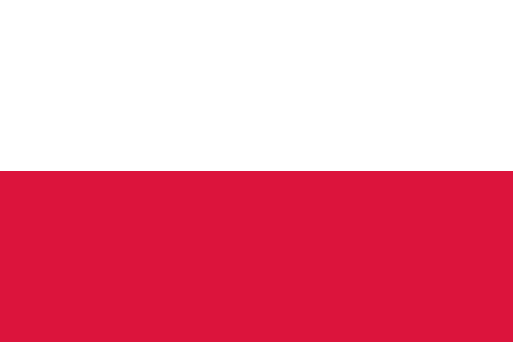
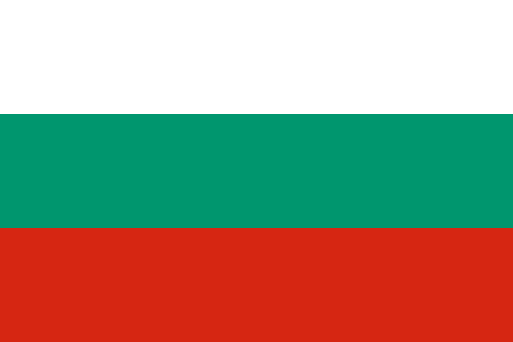
By estimated profile, the closest are Ukraine, Israel, and Poland. No country follows one ideology purely, so treat this as a comparison, not a label.

Critics argue that attempts to impose democracy by force are costly and often fail. Foreign-policy realists argue that it overreaches.

Take the 12 axes test. It scores you on twelve axes and shows how closely your profile matches Neoconservatism and every other ideology on this site. The calculation happens in your browser.

Something else on your mind? Get in touch

Do you agree with Neoconservatism?

The test scores you on all twelve axes and ranks every ideology by how well it matches you.